
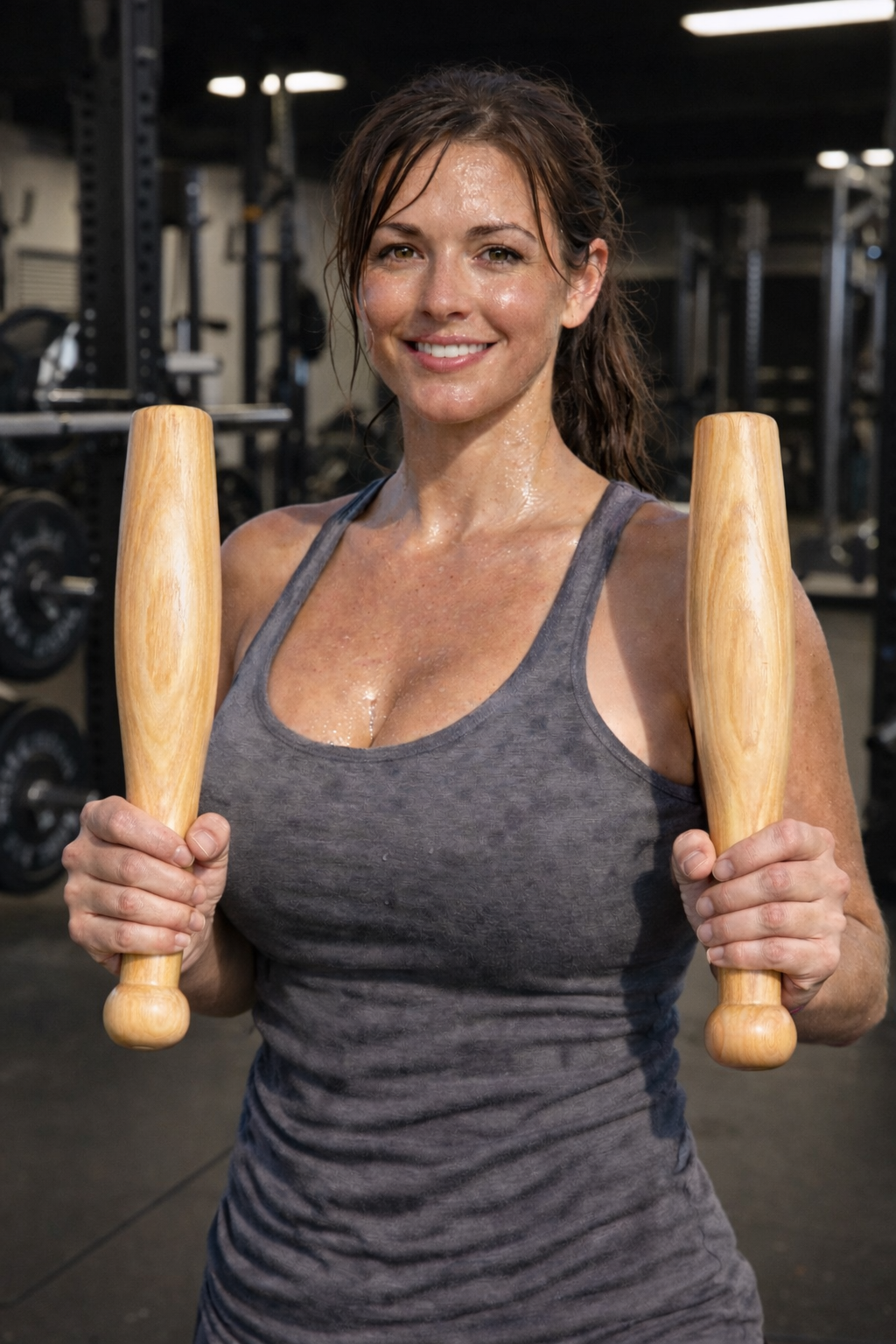
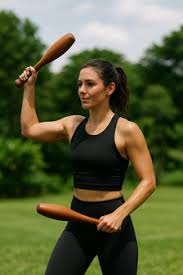
If you are searching for indian clubs training, there are 4 essential things beginners must know, you are likely at the stage of curiosity. You may have seen people swinging clubs in smooth circles & wondered what it actually does for the body. At the beginning of your Indian club training, it is important to focus on foundational steps and initial techniques to build a strong base.
I write from my personal & professional background in sports medicine, movement coaching & years within the local Singapore fitness scene. The aim is to educate first while showing how proper indian club training can fit into real life, whether you are an office worker, athlete or one of many fitness enthusiasts.
Today, many are rediscovering Indian club training as part of a renewed interest in traditional fitness methods & functional movement.
For best results, beginners should start with light Indian clubs, typically weighing between 1 & 2kg, to master the movements before choosing to heavier weights.
Benefits of Swinging Indian Clubs
When people search for benefits of swinging indian clubs, they want to know what will change in the body. Indian club swinging uses circular movements rather than linear movements, encouraging joint mobility & functional strength.
Detailed benefits include:
- improved shoulder mobility & healthier rotator cuff function
- better scapular rhythm through full range of motion
- increased joint mobility of wrists, elbows & shoulder girdle
- stronger grip strength without heavy free weights
- enhanced posture & core stability
- development of movement patterns that support athletic performance
- improved agility, coordination, and rotational movement, which are especially beneficial for athletes in sports like tennis, martial arts, baseball, and golf
- gentle full body workout effect with low stress
- calmer breathing & ability to maintain balance
Indian club training also improves shoulder mobility and health by promoting joint lubrication, flexibility, and stability in the shoulders.
The motion hydrates tissues & supports restoring mobility. The practice rewards relaxation rather than tension, creating a flow state that many other forms of exercise cannot offer.
Full Body Workout – Natural Demands Over Asymmetry
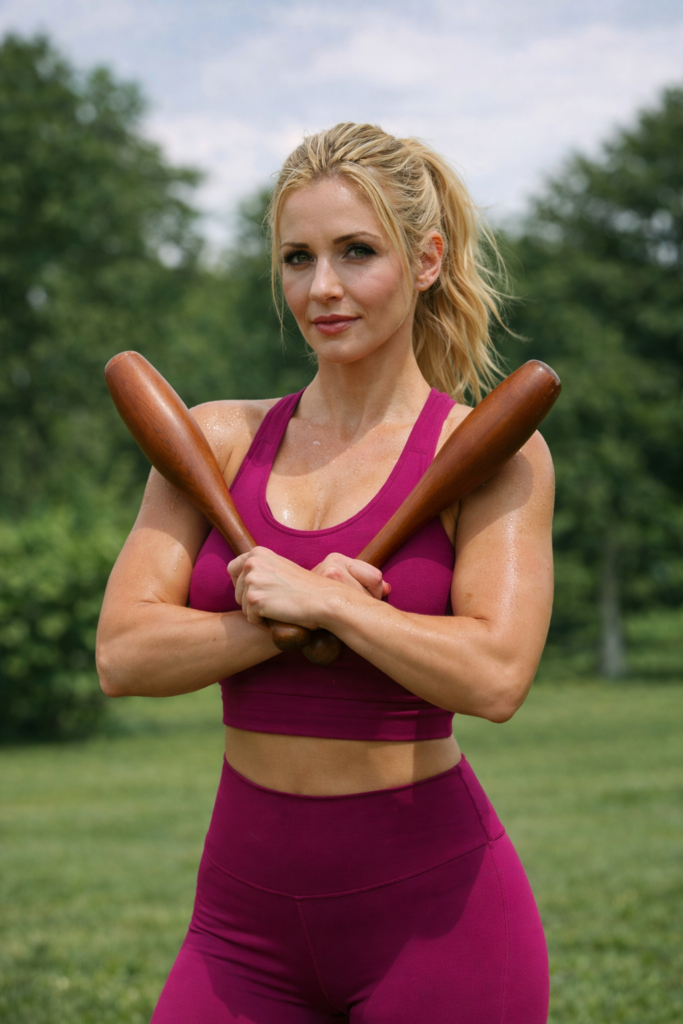
Typical gym routines often build asymmetrical muscles by focusing on isolated strength training. Indian club training instead asks the whole system to cooperate as one unit, helping you build strength in the upper body through coordinated, flowing movements.
What makes it a genuine full challenging workout:
- legs organise the base while the arms create circular patterns
- core stability manages rotation
- shoulders explore full range instead of partial angles
- breathing follows the rhythm of the swing
- both sides learn equal contribution
Indian clubs develop functional strength and endurance by promoting multi-directional movement, which translates into better overall athletic performance.
For those who prefer to move the body naturally rather than chase mirror muscles, swining motion is an excellent tool. It suits beginners, athletes & anyone wanting balanced strength rather than only size.
1. What Indian Clubs Actually Train
Indian clubs come from a brief history of physical culture used by British soldiers & later the western world. Historically, Indian clubs were used by warriors to develop strength, agility, and endurance for battle and sport. Modern Indian club exercises connect the entire body. During club swinging the arms travel around the torso while the core & legs respond.
Indian clubs were introduced to India around 1256 AD during the Mongol invasion of Iran.
This trains:
- shoulder mobility through large arcs
- coordination between wrists, elbows & shoulders
- grip strength & wrist strength
- full functional workout patterns
- rotational strength rather than only linear movements
2. Why Weight Selection Matters
Choosing the correct weight is critical. Swinging heavier clubs too soon can irritate the shoulders. The rule is always start light. The reason for starting with lighter weights is to ensure proper form, prevent injury, and allow your body to adapt to the unique movement patterns of Indian clubs.
Guidelines:
- 0.5 to 1 kg lighter clubs for most beginners
- A recommended starting weight for beginners is 2 pounds per club, as it allows for effective movement patterns without excessive strain.
- 1 to 2 kg for experienced fitness enthusiasts
- very light weight for joint health or shoulder rehabilitation
Exercise for example should be smooth. Jerky motion means the club is too heavy.
3. Lighter Clubs vs Heavier Clubs – What Each Is Best For
Beginners often think heavier must be better, yet in indian clubs training the purpose of the weight changes the entire outcome. Indian clubs have a lot of history and have been used by a lot of people worldwide, making them a staple in physical culture for generations. Lighter & heavier clubs train different qualities, & understanding this early prevents frustration & shoulder irritation.
Indian clubs come in various weights, typically ranging from 1 to 3 pounds for beginners.
Lighter – Mobility & Skill
Usually around 0.5 to 1 kg, are best for:
- learning clean technique & smooth circles
- improving shoulder mobility & joint range
- exploring complex patterns without strain
- rehabilitation & joint health sessions
- longer practice focused on coordination & balance
Because the load is small, the nervous system can focus on precision. This is where beginners build the foundation of indian club swinging, teaching the wrists, elbows & shoulders to cooperate.
Heavier Clubs – Strength & Endurance
Heavier clubs, roughly 1.5 to 3 kg for most people, are used for:
- building grip strength & forearm resilience
- conditioning the upper body & core stability
- shorter sets aimed at functional strength
- athletes who already own good technique
Swinging heavier Indian clubs is hard and requires significant physical strength and endurance, making it a demanding exercise even for experienced practitioners.
The heavier weight magnifies any mistake, so these clubs should come only after the basics feel effortless. In singapore’s humid climate, fatigue can appear quickly, making smart progression even more important.
4. Grip Strength – The Hidden Foundation of Swinging
Many people do not realise that indian club swinging exercise demands a surprising amount of grip strength from the very first session. Even with lighter ones, the hand must constantly control direction, speed & momentum. This challenge is why beginners often feel their forearms working more than expected, yet after a few sessions the body adapts quickly & the swing becomes smoother.
A key technique for beginners is the Hammer Grip, which requires holding the club handle with a fist and a straight wrist, with the pinky finger on the pommel. When casting or swinging the club away from the body, the Saber Grip is used—here, the wrist drops and the club extends from the arm.
Grip strength is not only about the hand. Through the law of irradiation, tension created in the fingers & forearms spreads into the shoulders, core & even the hips. When the grip becomes active, the whole body switches on to support the movement, which is why indian club training often improves strength without heavy weights.
How stronger grip influences the rest of the body:
- increased core strength as the torso reacts to hand tension
- better shoulder control & rotator cuff engagement
- more confident posture during overhead positions
- improved endurance for daily tasks & other sports
This relationship explains why many athletes notice gains in pull ups, kettlebells or climbing after consistent club practice. The swing trains the hand to lead while the body organises behind it, creating a natural chain of strength from fingers to feet.
As sessions continue, the initial forearm fatigue fades & is replaced by resilience. The clubs teach the grip to be firm yet relaxed, a quality that carries into every other form of training.
5. BONUS: Mastering Basic Movements
Mastering basic movements is the cornerstone of effective Indian club training. At the heart of this process is developing strong grip, which allows you to control the clubs with confidence & precision (something I’ve seen transform countless movement patterns over the years). Start by learning how to hold the clubs correctly—your grip should be firm but relaxed, allowing for smooth, controlled circles that flow with natural rhythm.
Equally important is your stance, & this is where many people miss the foundation entirely. Stand tall with feet about hip-width apart, knees slightly bent, & core engaged. This stable base helps you perform parallel movements, where both clubs swing in unison, creating symmetrical circles that are key to building coordination & mobility. Think of it as creating harmony between your body & the tools—when this clicks, everything changes.
For beginners, it’s recommended to use light clubs, & there’s real wisdom in this approach. This allows you to focus on technique without straining your joints or muscles (the ego often wants heavier, but the body learns better with lighter). As you become more comfortable, you can gradually increase the weight to continue improving your strength & mobility. Watching a video demonstration can provide better understanding of the correct form & rhythm, making it easier to follow along & avoid common mistakes that I see repeatedly.
The process of mastering these basic movements takes patience & consistent practice—there’s no shortcut that genuinely works. By focusing on the fundamentals—grip, stance, & parallel circles—you’ll lay a strong foundation for all future Indian club training, setting yourself up for long-term progress & injury-free workouts. This is what creates lasting results, not quick fixes or flashy techniques.
Safety Concerns & Precautions
Safety should always be your top prioritisation when beginning Indian club training. It’s essential to use the clubs in a clear, open space, free from obstacles or fragile items, to prevent accidents. Beginners should always start with light ones—this isn’t just common sense, it’s what actually works. Light clubs reduce the risk of strain & allow you to focus on mastering proper technique, which is where real progress begins.
As you adapt & your mobility improves, you may choose heavier weights. However, it’s crucial to maintain proper form & avoid rushing the process. In over two decades of movement practice, I’ve seen too many people jump ahead too quickly. Heavier weights can be excellent for building strength, but only when your technique is solid & your body is genuinely ready for the increased load.
A commonly overlooked aspect of Indian club training is the warm-up—& frankly, it’s one of those details that separates those who progress from those who plateau. Before you begin, perform a simple routine such as light cardio & dynamic stretching to prepare your muscles & joints for the movements ahead. A few minutes of arm circles, shoulder rolls, & gentle wrist stretches can make a significant difference in preventing injuries. It’s not glamorous, but it works.
Listen to your body throughout your training—this isn’t wellness fluff, it’s practical wisdom. Take regular breaks, especially if you feel fatigue or tightness setting in. Your body communicates constantly; learning to hear it is part of mastering movement. By following these straightforward precautions, you’ll create a safe & effective environment to improve your mobility & strength with Indian clubs.
Mind-Body Connection and Indian Club Training
One of the most profound aspects of Indian club training is the mind-body connection it cultivates. This practice demands your complete presence, requiring focus on each movement & how your body responds. As you swing the clubs, you’ll notice measurable improvements in coordination, balance, & overall strength—benefits that extend well beyond your training session.
Indian club training has been utilised for centuries, not merely for physical conditioning but for its proven ability to enhance mental clarity & reduce stress. Queen Victoria herself championed this form of exercise, & it became integral to British army routines, valued for building robust, resilient bodies & sharp minds. The science behind this historical wisdom is solid.
Simply by incorporating Indian club training into your routine, you’ll find it’s an exceptional method to improve mobility, challenge your coordination, & develop genuine flow in your movement. As you continue practising, you’ll discover that Indian clubs offer far more than physical benefits—they help you reconnect with your body, sharpen your focus, & truly enjoy the movement process.
Whether you’re seeking better balance, a stronger body, or a fresh way to engage your mind during training, Indian club work is a time-tested method that delivers real results. Keep exploring, stay curious, & embrace the journey as you build both physical & mental strength through this remarkable practice.
Technique Before Speed
Proper technique keeps the practice beneficial.
- tall posture before every swing
- standing with proper posture: feet hip-width apart, weight balanced, & aligned spine
- shoulders guide instead of wrists
- consistent tempo
- warm up before longer sessions
Calm positioning includes standing tall, with the chin back and stomach pulled in.
This approach supports injury prevention & long term joint health.
Certified Trainers & Why They Matter
Learning with certified trainers makes a major difference. Coaches help you understand single club basics & its various forms before moving to advanced flows.
Benefits of guided learning:
- safer progression of exercises
- reduced risks of injury
- clearer understanding of movement patterns
- feedback on grip & position
- techniques are demonstrated by trainers for better understanding
Single-club practice is recommended for identifying mobility imbalances before advancing to double-club routines.
Who Should Begin
Indian clubs suit:
- office workers
- athletes
- beginners
- older adults
Those with acute pain should seek guidance first.
Before starting, ask yourself this question: Does Indian clubs training align with your fitness needs and goals?
How to Start in Singapore
- learn two basic swings
- practise short sets
- rest often
- add skills gradually
Common Questions
What is a good starting weight for Indian clubs?
Most begin with 0.5 to 1 kg to protect range of motion.
Can you build muscle with Indian clubs?
Yes, they build functional strength rather than only size.
Which is better Indian club or Persian Meel?
Indian clubs are lighter for coordination, meel uses heavier clubs for strength.
Can Indian clubs be used for rehabilitation and injury prevention?
Yes, Indian clubs are excellent for rehabilitation and injury prevention because their low-impact movements focus on improving joint mobility and stability.
Have more questions or want to share your experience? Leave your thoughts in the comments below!
Learn Indian Clubs Training in Singapore
For readers who want practical guidance rather than trial & error, Movement & Sports Medicine Centre in Singapore offers classes led by experienced trainers. Sessions focus on safe progress, shoulder health & building confidence from beginner to advanced movement.
Indian clubs are often made of wood or metal, with wooden clubs being preferred for their aesthetic and traditional qualities.
Starting with a structured class helps you understand the 4 essential things beginners must know while lowering the risks of injury & improving mobility.
For more information or to join our Indian club training classes, follow this link to access additional resources and class schedules.
A Personal Note
Indian clubs showed me that training can be intelligent & enjoyable. I came from years of traditional gym work where more weight always seemed like the answer. The clubs taught me the opposite lesson – that quality of movement can change a shoulder more than another heavy set ever could.
In my early sessions I felt awkward, my forearms burned, & the circles refused to behave. That frustration became curiosity. I began to notice how my breathing settled when the swing was calm, how my posture lifted without forcing it, & how old aches around the shoulder blade slowly faded. I tend to specific details like hand position, movement flow, & body alignment during each session to ensure correct practice and prevent injury. Those small changes convinced me to keep going.
Today I see the same story with many beginners in Singapore. People arrive stiff from desks or tired from intense sport, & within a few practices they discover a different relationship with their bodies. The clubs become less of a tool & more of a conversation – between grip, shoulder, hips & breath.
If you are at the start of that journey, be patient with yourself. Choose lighter weights, enjoy simple circles, & allow progress to arrive quietly. The real reward is not a trick or a record but a shoulder that feels younger & a body that moves with confidence.
For best results, perform daily training for 5–10 minutes to enhance shoulder mobility & grip strength. Want to learn with a professional? Book in a class today to learn with us! Leave your interest to join a 4 week course to +6587693235
