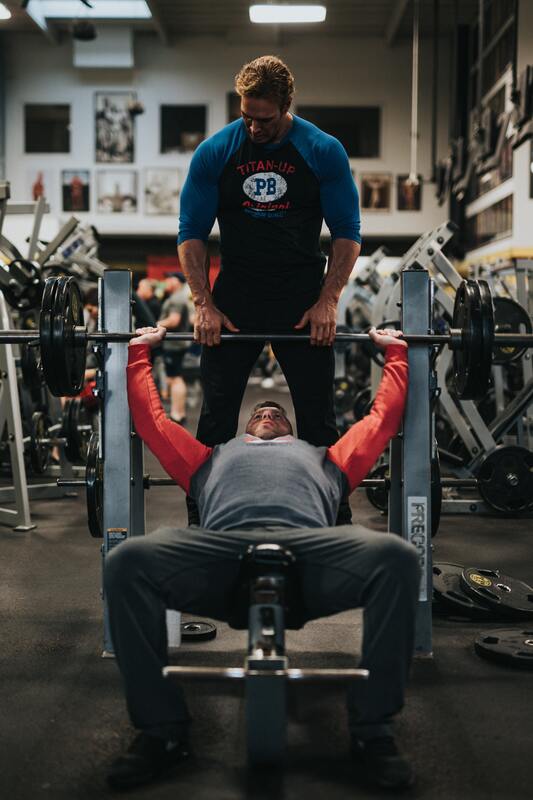
To bench press properly, lie with your eyes under the bar, plant your feet, set your shoulder blades back & down, grip the bar a little wider than shoulder width & “bend the bar” to switch on your lats. That small twist rotates your upper arms outward, so the ball of your shoulder sits stable in its socket & your elbows stay at about 45-70 degrees instead of flaring out. Unrack with straight arms, breathe in & brace, lower the bar to your lower chest, then press it up & slightly back over your shoulders. Below is how to bench press properly for beginners: my 10 steps, the 7 mistakes I see most, a self-check & a simple 4-week plan.
By Jab, sports medicine trainer. I’ve spent 20+ years helping people train, recover & move without pain, & I founded MSMC in Singapore & ITI, which trains physios, chiropractors & personal trainers. The bench press is the lift I correct most for sore shoulders. Last updated 26 November 2026.
Key facts: how to bench press properly
- Set-up: eyes under the bar, feet flat, a slight arch, shoulder blades back & down “into your back pockets”.
- Grip: a little wider than shoulder width, thumbs wrapped, so your forearms are vertical at the bottom.
- The cue that saves shoulders: “bend the bar” to turn on your lats & keep the shoulder joint stable.
- Elbows: about 45-70 degrees from your body, never flared out to 90.
- Bar path: touch your lower chest, press up & slightly back over your shoulders.
- Beginners: 3 sets of 8 with 2-3 reps left in the tank, twice a week.
- Safety: set the safety arms or use a spotter; stop for sharp pain, clicking with pain or numbness.

How to bench press properly: my 10 steps
Learn proper bench press form on a flat bench with an empty bar (a standard Olympic bar weighs 20 kg, about 45 lb) or a lighter bar. If that’s too heavy, start with the push-ups & dumbbell versions further down.
1. Set the bench & the safety arms
Use a flat bench inside a power rack or a flat bench press station, with the bench set level. Set the hooks so you can reach the bar with your arms almost straight, & the safety arms (pins) just below the height of your chest when your back is arched. If the bar drops, the safety arms catch it, not your ribs.
2. Eyes under the bar
Lie flat on the bench so the bar is directly above your eyes. Too far down the bench & you’ll hit the hooks on every rep; too far up & unracking becomes a front raise that strains your shoulders.
3. Feet flat & planted
Put your feet flat on the floor, about hip width or a little wider, knees bent around 90 degrees or a bit more. Shorter lifters can put plates under their feet. Your feet are your base: they shouldn’t move once you start.
4. Shoulder blades back & down, a slight arch
Squeeze your shoulder blades together, then pull them down “into your back pockets”. Your chest lifts & you get a slight, natural arch in your lower back. Your head, upper back & glutes stay flat on the bench. This starting position keeps the front of your shoulder out of the squeeze at the bottom of the rep.
5. Grip width
Take a firm, overhand grip a little wider than shoulder width apart, so your forearms are vertical (straight up & down) when the bar touches your chest. Wrap your thumbs around the bar, & keep your wrists stacked over your forearms, with the bar in the heel of your palm rather than your fingers.
6. “Bend the bar”: switch on your lats
This is the part almost nobody teaches. Try to bend the bar into a U, as if you were snapping it, or think “screw your hands into the bar” with your elbow pits turning to face your feet. The bar won’t move, but your upper arms rotate outward (external rotation). That tension switches on your lats & the small rotator cuff muscles, holds the ball of your upper arm centred in the shoulder socket for real shoulder stability & brings your elbows in to about 45-70 degrees from your body. You should feel your armpits & the sides of your back tighten. If you only remember one cue from this guide, make it this one.
7. Unrack with straight arms
Press the bar off the hooks with your arms straight & bring the weight straight out until it sits over your shoulders. Keep your shoulder blades pinned while you do it. A friend handing it off (“lift-off”) makes this easier.
8. Breathe in & brace
Take a deep breath into your belly & chest, brace your stomach as if someone were about to poke it, & hold that breath while you lower the bar. Breathe out near the top of the press or between reps.
9. Lower to the lower chest, then press up & slightly back
Lower the bar slowly, for about 2 seconds, & touch your lower chest, around your nipple line or just below it. That full range of motion works the chest muscles best. Think of rowing the bar down with your lats. Then press it up & slightly back so it finishes over your shoulders, not your face or your stomach. That gentle diagonal is the normal bar path.
10. Leg drive & the re-rack
As you press, push your feet into the floor as if sliding yourself up the bench, but keep your glutes on it. That leg drive keeps you tight. When your set is done, finish the last rep with straight arms, then move the bar back until it touches the uprights & lower it into the hooks. Don’t aim for the hooks with bent arms; that’s how people fail to rack the weight safely.
The 7 bench press mistakes I see most (& how to fix them)
| Mistake | What it feels like | The fix |
|---|---|---|
| Flared elbows (90 degrees from your body) | An ache at the front of the shoulder, sore shoulders the next day | “Bend the bar” & tuck your elbows to 45-70 degrees |
| Bouncing the bar off your chest | A thud on your breastbone, the bar wobbles off the chest | Lower for 2 seconds; touch, don’t bounce; try paused reps |
| Bum lifting off the bench | Your lower back pinches, the press feels easier than it should | Drive your feet forward, not up; keep glutes down; lower the weight |
| Wrists bent back | Sore wrists, the bar feels like it’s rolling out of your hands | Bar in the heel of the palm, knuckles to the ceiling, wrists straight |
| No lat tension | Shoulders roll forward, the bar drifts & feels heavy at the bottom | Shoulder blades back & down, then bend the bar before you unrack |
| Uneven bar | One arm finishes first, one side of the chest or shoulder works harder | Check your grip with the rings on the bar; film it; try dumbbells |
| No spotter or safety arms | You avoid hard sets, or you get stuck under the bar | Set the safety arms or ask for a spot every time you go heavy |
Most “bad shoulder” benchers I see don’t have a bad shoulder. They have flared elbows, rounded shoulders & no lat tension. Fix the set-up & the bench press becomes one of the best exercises for upper body strength gains.
Self-check: is your bench press form right?
Film one set from the side & one from the head end, with a light weight. Then tick these off:
- Eyes under the bar when you lie down.
- Feet & glutes don’t move for the whole set.
- Shoulder blades stay pinned; your shoulders don’t roll up towards your ears.
- Forearms are vertical at the bottom when seen from the front.
- Elbows sit at 45-70 degrees, not straight out to the sides.
- The bar touches the same spot on your lower chest each rep.
- The bar path moves up & slightly back, ending over your shoulders.
- Both arms finish at the same time.
- Next day: your chest & triceps are sore, your shoulder joint isn’t.
If you can tick all nine, add a little more weight next week. If you can’t, keep the weight where it is & fix one thing at a time.
Muscles worked by the bench press
The bench press is a compound lift: it trains several large muscles & muscle groups at once, which is why it builds upper body strength so well.
- Chest (pectoralis major & the other pectoral muscles): the main mover.
- Shoulder muscles (anterior deltoids): the front of the shoulders helps press the bar.
- Triceps: straighten your elbows at the top, more so with a close grip.
- Lats & upper back muscles: control the bar on the way down & keep the shoulder joints stable.
- Serratus anterior: holds the shoulder blade against your ribs, especially in push-ups.
- Rotator cuff: keeps the ball of the shoulder centred.
- Glutes, legs & core: leg drive & a braced trunk give you a stable base.
Easier & harder bench press variations
Start where you can do every rep with proper form, then work up. These bench press variations build the same pressing pattern & suit different fitness levels.
| Level | Exercise | Why it helps |
|---|---|---|
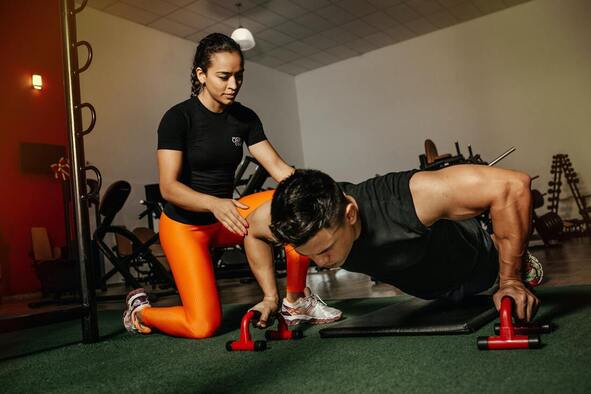
| Easiest | Incline push-up (hands on a bench or wall) | Learn to keep the body tight & elbows at 45 degrees |
| Easier | Push-up from the floor | Teaches shoulder blades & core to work together |
| Easier | Dumbbell floor press | The floor stops the elbows going too deep; kind to sore shoulders |
| Easier | Dumbbell bench press | Each arm works on its own; fixes an uneven bar |
| The lift | Barbell bench press | Lets you lift the most weight & track progress |
| Harder | Paused bench press (1-2 seconds on the chest) | Kills the bounce & builds strength at the bottom |
| Harder | Close grip bench press (hands shoulder width apart) | More triceps, often easier on the shoulders |
| Different angle | Incline bench press (bench at 30-45 degrees) | A more upright position works the upper pecs & front of the shoulders |
| Different angle | Decline bench press | More of the lower chest; not needed for beginners |
| Not for beginners | Wide grip bench press | Shorter range of motion but more stress on the shoulders |
Sets, reps & how heavy for your fitness goals
- Beginners: 3 sets of 8 reps, twice a week, stopping with 2-3 good reps left in the tank.
- Muscle growth: 3-4 sets of 6-12 reps.
- Building strength: 3-5 sets of 3-6 reps, once your form is solid.
- Rest: 2-3 minutes between heavy sets.
- How heavy: pick a weight you could lift for 2-3 more reps with the same form. If the last rep slows down a lot or your elbows flare, it’s too heavy.
- Adding weight: 1-2.5 kg (2.5-5 lb) a week while every rep stays clean. Small plates are your friend. Steady strength gains come from proper technique, not from forcing more weight.

Warm-up & shoulder prep (8-10 minutes)
- 5 minutes of easy cardio, such as a bike or rower, to get warm.
- Band pull-aparts: 2 sets of 15.
- Band external rotations: 2 sets of 12 each arm, elbow at your side.
- Scapular push-ups: 2 sets of 10, moving only your shoulder blades.
- Empty bar: 2 sets of 10 with perfect form.
- Ramp up: about 50% of your working weight for 5 reps, 70% for 3, then start your working sets.
Red flags: when to stop
Stop benching & get it checked if you feel:
- Sharp pain in the front of or deep inside the shoulder.
- Clicking or catching with pain, or a shoulder that feels like it slips. MSMC also has a session on stabilising a clicking shoulder.
- Numbness, tingling or pins & needles down your arm.
- A pop near your armpit or chest, especially with bruising or weakness.
- Chest pain, pressure or feeling faint: stop & seek medical help straight away.
A quick word from me: if you’ve had a shoulder injury or surgery, have high blood pressure or are pregnant, check with your doctor before heavy bench pressing.
A simple 4-week bench press plan
Bench twice a week, for example Monday & Thursday, with at least 2 days between sessions.
| Week | Day A: barbell bench | Day B: lighter variation | The rule |
|---|---|---|---|
| Week 1 | 3 x 8, leaving 3 reps in the tank | Push-ups or dumbbell bench, 3 x 10 | Learn the set-up; film one set |
| Week 2 | 3 x 8, +1-2.5 kg if week 1 was clean | Paused bench, 3 x 6, about 20% lighter | Add weight only if the self-check passes |
| Week 3 | 4 x 6, +1-2.5 kg | Dumbbell bench or close-grip, 3 x 10 | Keep 2 reps in the tank |
| Week 4 | 3 x 5, +1-2.5 kg | Push-ups, 2 x 10 (an easier week) | Note your best clean set for next month |
After week 4, repeat the block starting a little heavier than week 1, or move on to the full plan in my beginner strength training programme.
Where the bench press fits in a full-body week
| Day | Workout |
|---|---|
| Monday (Day A) | Barbell back squat 3 x 5-8 · bench press · one-arm dumbbell row 3 x 10 · plank 3 x 30 seconds |
| Thursday (Day B) | Dumbbell Romanian deadlift 3 x 8-10 · bench variation · lat pulldown 3 x 10 · split squat 2 x 8 each leg |
| Other days | Walk, rest or easy cardio |
Every push gets a pull. Rows & pulldowns balance your shoulders, & that matters as much as anything you do on the bench.
If you’d rather have someone coach you (Singapore)
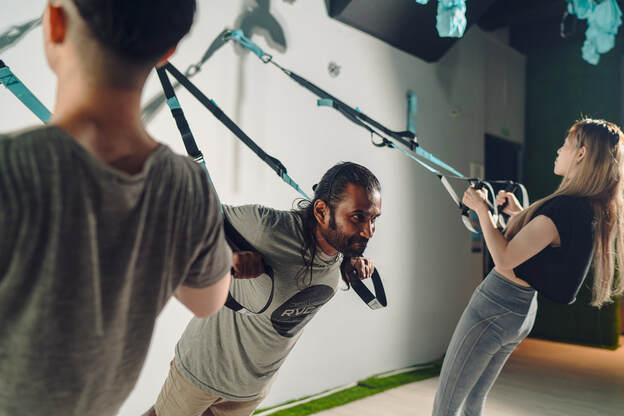
If your shoulders ache when you bench, or you’ve never been taught, my team of sports medicine trainers at MSMC in Singapore can help. We start with a $190 full assessment: we test how your shoulders, upper back & trunk move, watch your bench press, then build personal training around it so you can press without pain. We don’t diagnose; if something needs a doctor, we’ll tell you.
Prefer a class? Use my code READ10 for 10% off one class at MSMC (once per person), such as the beginner barbell lifting class. Book on MSMC’s class schedule & enter READ10 at checkout.
Confused, scared or don’t know where to start?
Lots of people give up on the bench press after one sore shoulder, or never try it because the gym feels intimidating. You don’t have to. Here’s what happens if you come to us:
- Book the full assessment or message MSMC.
- We listen: what hurts, what you’ve tried & what you want to lift.
- We test gently: your shoulders, upper back & press, stopping if anything hurts.
- You get a plan: what’s safe today & how to build to the barbell.
- We coach you through it, rep by rep.
FAQs: how to bench press properly
How much should a beginner bench press?
There’s no number you have to hit. Most beginners start with the empty bar (20 kg, about 45 lb) or lighter, & add 1-2.5 kg a week while their form stays clean. Someone who trains consistently for a year often benches close to their bodyweight, but good form matters more than the number.
Should I bench 2 or 3 times a week?
Twice a week is plenty for most beginners: one heavier day & one lighter variation. Three times can work later, but only if your shoulders feel fine between sessions.
Should your elbows be tucked during the bench press?
Partly. Keep them at about 45-70 degrees from your body. Flared out to 90 degrees stresses the front of the shoulder; glued to your sides makes the bar drift towards your stomach.
Why can’t I feel my chest when I bench press?
Usually your shoulders are rolling forward & doing the work. Set your shoulder blades back & down, bend the bar, lower slowly & pause on your chest for a second. A slightly wider grip also brings the chest in.
Is it okay to arch your back on the bench press?
A slight, natural arch is fine & helps keep your shoulders safe. Your head, upper back & glutes should stay on the bench. A big powerlifting arch is a skill for later, not for beginners.
Can you bench press without a spotter?
Yes, if you set the safety arms just below your chest height in a power rack. Without a rack or a spotter, use dumbbells, which you can lower to the floor if you get stuck.
Is the bench press bad for your shoulders?
No. Done properly, it’s a safe way to build a stronger chest & shoulders. Most shoulder pain from benching comes from flared elbows, no lat tension & going too heavy too soon. If it hurts even with good form, get it assessed.
My verdict
The bench press isn’t hard on your shoulders; bad bench press form is. Set up with your eyes under the bar, pin your shoulder blades, bend the bar to switch on your lats, & let the bar travel from your lower chest up & slightly back. Start light, follow the 4-week plan & add weight only when the self-check passes. If your shoulders still ache, get someone to watch you lift.
Book your $190 full assessment at MSMC