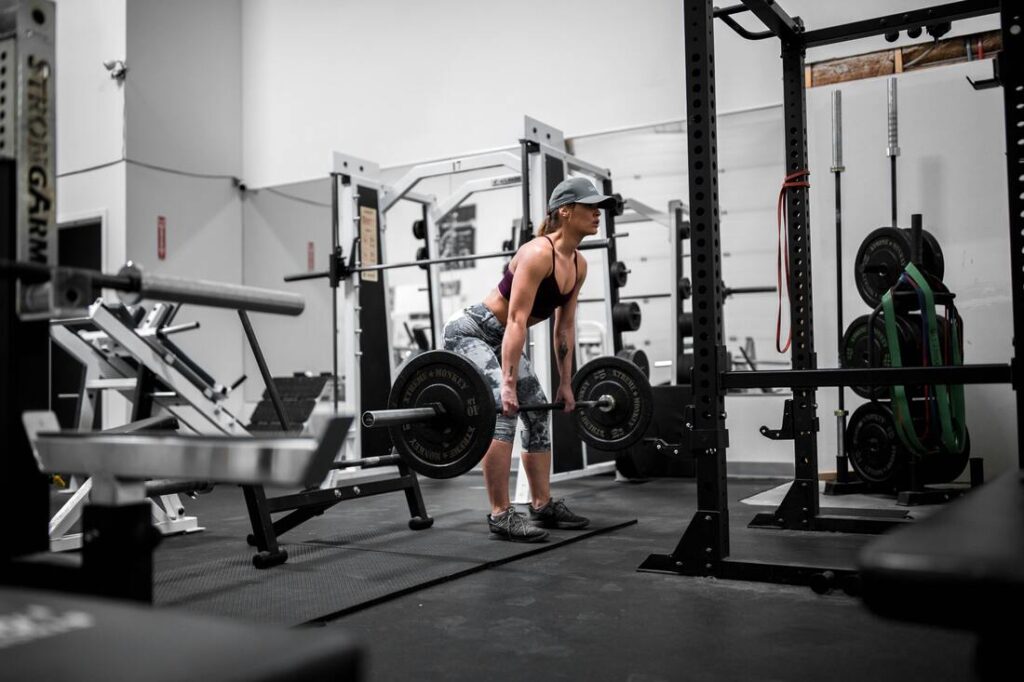
To do a dumbbell Romanian deadlift properly, stand tall with a dumbbell in each hand, unlock your knees slightly, then push your hips back as the dumbbells slide down the front of your thighs, keeping your back flat. Stop when you feel a strong stretch in your hamstrings (usually around mid-shin), then drive your hips forward & squeeze your glutes to stand upright. It’s a hip hinge, not a squat: your hips move a lot & your knees barely move. Get that one idea right & most of the other mistakes disappear. Below you’ll find my step-by-step setup, the 6 mistakes I correct most, two self-checks you can do at home, & a simple 4-week plan. If you’re new to lifting or coming back to it, & a little worried about your lower back, this guide is written for you.
By Jab, sports medicine trainer. I’ve spent 20+ years helping people train, recover & move without pain, & I founded MSMC in Singapore & ITI, which trains physios, chiropractors & personal trainers. Last updated 26 November 2026.
Key facts: the dumbbell Romanian deadlift
- What it is: a hip hinge. Hips go back, knees stay slightly bent & fixed, back stays flat.
- Muscles worked: hamstrings & glutes first; back extensors, lats, grip & core as secondary muscles.
- How low: until your hamstrings stretch & your back is still flat, usually just below the knee to mid-shin.
- Biggest mistake: too much knee bend, which turns it into a squat.
- Beginner dose: 3 sets of 8-10 reps, twice a week, stopping 2-3 reps before your form breaks.
- Red flag: sharp back pain means stop; pain, numbness or tingling down the leg means see a doctor.
What is a dumbbell Romanian deadlift?
The Romanian deadlift (RDL) is a deadlift that starts from the top, not the floor. You lower the weight by hinging at the hips, keeping your knees slightly bent, then stand back up. Holding dumbbells instead of a barbell makes it easier to learn at home or in a busy gym: the weights are lighter, each side works on its own, & your hands can sit in a comfortable neutral grip.
The skill you’re really learning is the hip hinge: bending at the hips while your spine stays long & still. It’s the same pattern you use to pick a bag off the floor or lift a child out of a car seat, which is why I think it’s one of the most useful exercises a beginner can learn. Why it’s worth your time:
- It builds hamstring strength & glute power you use for walking, running & lifting.
- It teaches your back to stay still while your hips do the work.
- It can improve hip mobility as your hamstrings get used to working in a stretch.
- It needs minimal space & equipment: two dumbbells & a patch of floor at home.
- Dumbbells allow a slightly greater range of motion than a barbell, because there are no plates to hit the floor.

How to do a dumbbell Romanian deadlift properly: step by step
- Set your feet. Stand with your feet hip width apart, toes pointing forward or turned out very slightly. Hold a dumbbell in each hand in front of your thighs, palms facing you, arms extended & relaxed.
- Stand tall & brace. Shoulders down & back, chest proud, ribs stacked over your hips. Take a breath into your belly & tighten your core as if someone’s about to poke your stomach.
- Turn your lats on. Gently pull the dumbbells into your thighs, as if squeezing an orange in each armpit. This keeps the weights close & gives your upper back stability.
- Soften your knees. Unlock them slightly, about 15-20 degrees, then keep them at that angle for the whole rep. This is your starting position.
- Push your hips back. Start the movement by sending your hips back, as if closing a car door with your bum. Your chest tips forward as a result, not the other way round.
- Slide the dumbbells down your legs. Keep them brushing your thighs, then your knees, then your shins. Your back stays flat & your neck stays long, eyes on the floor a metre or so in front of you.
- Stop at the stretch. When your hamstrings feel tight & your hips won’t go further back without your back rounding, that’s your range of motion. For most beginners it’s just below the knee to mid-shin.
- Drive your hips forward. Push the floor away through your whole foot & bring your hips forward until you stand upright. Squeeze your glutes at the top, but don’t lean back.
- Breathe & repeat. Breathe out as you finish at the top, take a fresh breath & brace before the next rep. Perform each rep slowly: lower for about 3 seconds & come up in about 1, maintaining a flat back the whole time.
Hips back, not a squat: the knee rule
The most common thing I see is people bending their knees more & more as they go down, until the dumbbell RDL becomes a squat with a forward lean. Here’s the difference in one line: in a squat, your hips go down; in a Romanian deadlift, your hips go back.
Your shins should stay close to vertical from start to finish. If your knees travel forward over your toes & the dumbbells hit your knees on the way down, you’re squatting. The fix is to soften your knees once at the start, then stop thinking about them. Move only your hips, as if your hips are on a hinge & your legs are the door frame. If you’d like to learn the squat properly too, my guide to the barbell squat covers it.
Dumbbell RDL form: 6 mistakes I correct most
Here’s what to avoid, what each mistake feels like & how to fix it.
| Mistake | What it feels like | Fix |
|---|---|---|
| 1. Too much knee bend | Thighs & knees working hard; dumbbells bump your knees; it feels like a squat | Unlock the knees once, keep shins nearly vertical, & push hips back to a wall |
| 2. Rounding your back | Lower back working hard or aching; shoulders roll forward | Shorten the range, brace before each rep, & stop where your back is still flat |
| 3. Dumbbells drifting forward | Weights feel heavier, grip burns, lower back takes over | Turn your lats on & keep the dumbbells brushing your legs the whole way |
| 4. Overextending at the top | Leaning back, pinching in the lower back at lockout | Finish by squeezing your glutes; stand tall with ribs over hips, no further |
| 5. Looking up | Neck strain; chin pokes forward at the bottom | Keep your neck long & look at the floor about a metre ahead |
| 6. Going too heavy | Reps get fast & jerky; form changes from the first rep to the last | Drop the weight so you finish every set with 2-3 good reps left |
If any of these has given you a sore back already, my article on lower back pain after deadlift helps you work out whether it’s soreness or something to get checked.
Coaching cues for better technique
- “Hips back to the wall” for the start of every rep.
- “Shave your legs with the dumbbells” to keep them close.
- “Squeeze an orange in each armpit” for lats on.
- “Long neck, proud chest” to keep a flat back.
- “Push the floor away, then squeeze” to stand up with your glutes, not your lower back.
Check your own form: two self-checks
The wall hinge drill. Stand with your back to a wall, heels about one foot length away from it. With your hands on your hips & knees soft, push your hips back until your bum touches the wall without your knees moving forward. Step a few centimetres further away & repeat. When you can reach the wall from 2-3 foot lengths away with a flat back, you own the hinge.
The dowel drill. Hold a broomstick or dowel along your spine, one hand behind your neck & one behind your lower back. It should touch three points: the back of your head, between your shoulder blades & your tailbone. Hinge forward. If you lose any contact point, your back is rounding or your neck is moving.
Film yourself. Prop your phone at hip height, side-on, about 2-3 metres away. Check four things: shins stay close to vertical, the dumbbells travel in a straight line close to your legs, your back is flat from head to hips, & you stand tall at the top without leaning back.
Muscles worked by the dumbbell Romanian deadlift
The hamstrings & glutes are the main movers; everything else works as secondary muscles, mostly to hold your position.
- Hamstrings: the main movers. They lengthen under load as you lower, which is why you feel that stretch.
- Glutes (gluteus maximus): drive your hips forward to stand up.
- Back extensors (erector spinae): hold your spine still; they work hard but shouldn’t hurt.
- Adductors: the inner thigh helps extend the hip, especially at the bottom.
- Lats & upper back: keep the dumbbells close to your body.
- Forearms & grip, plus your core: for holding the weights & bracing.
Together this is your posterior chain, the muscles down the back of your body that help you stand tall, lift, run & jump with power. Building strength in your posterior chain is one of the best things you can do for everyday lifting.
Dumbbell RDL variations: easier & harder versions
| Version | What it is | Use it when |
|---|---|---|
| Dowel hip hinge | The dowel drill above, no weight | You’re learning the movement or returning after time off |
| Kettlebell RDL | A similar movement with one kettlebell held in both hands | Dumbbells feel awkward; it’s easier to keep one weight close |
| Dumbbell RDL | The version in this guide | You can hinge with a flat back & no knee creep |
| B-stance (kickstand) RDL | Most of your weight on one leg, back toe on the floor for balance | You want more work per leg without balance being the limit |
| Single-leg RDL | One leg straight back as you hinge, one or two dumbbells | You want to train balance & each side on its own |
| Barbell RDL | Same movement with a barbell, held just outside shoulder width | You’re ready for heavier loads & have access to a barbell |
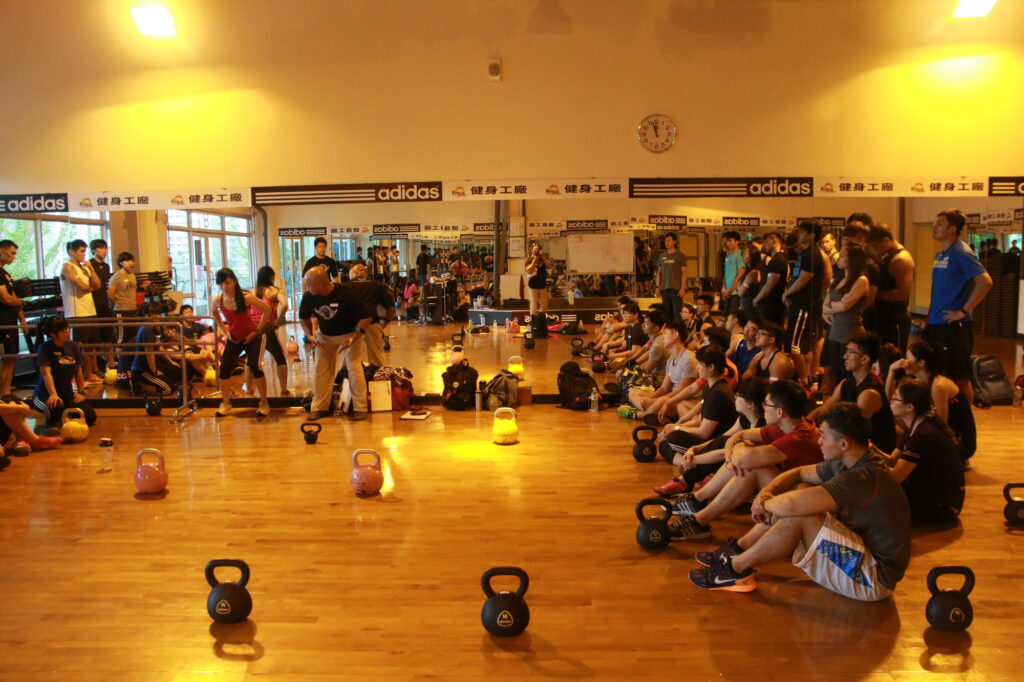
The single-leg version is a great exercise, but it’s two skills at once: the hinge & balance. Learn the two-leg dumbbell RDL first, with your arms long & relaxed. If you’re a trainer who wants to teach the hinge to others, ITI’s Certified Kettlebell Coach course goes much deeper.
Romanian deadlift vs conventional deadlift vs stiff-leg deadlift
| Romanian deadlift | Conventional deadlift | Stiff-leg deadlift | |
|---|---|---|---|
| Starts from | Standing, at the top | The floor, every rep | Usually the floor or standing |
| Knees | Slightly bent & fixed | Bend more; hips start lower | Nearly straight |
| Range | Until the hamstrings stretch, often mid-shin | Full range from the floor | Often to the floor, so the back may round more |
| Main muscles | Hamstrings & glutes | Glutes, hamstrings, quads & back | Hamstrings, with more stretch |
| Best for | Learning the hinge, hamstring & glute strength | Lifting the most weight | Hamstring stretch under load, for experienced lifters |
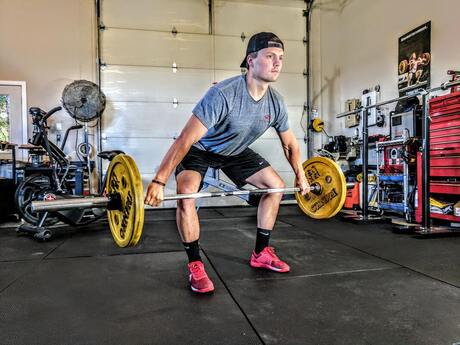
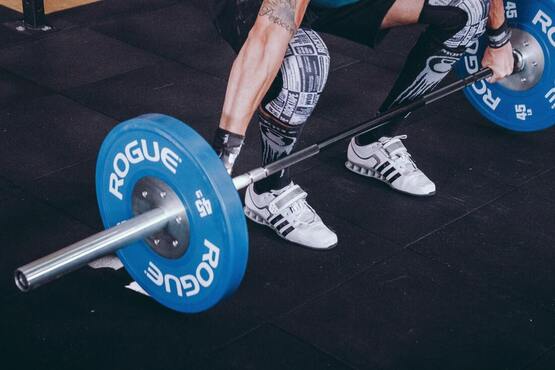
A conventional deadlift starts every rep from the floor, with more knee bend & lower hips, so your quads help more. A Romanian deadlift never touches the floor & keeps the knees nearly fixed, so the hamstrings & glutes do more of the work. A stiff-leg deadlift keeps the legs straighter still & usually feels harder on the hamstrings at a lighter weight.
How heavy, how many sets & reps
- Weight: pick dumbbells you could lift for about 12 clean reps, then do 8-10. Many beginners start around 5-10 kg (10-25 lb) in each hand; stronger lifters go much heavier. Your grip often gives out before your legs do.
- Sets & reps: 3 sets of 8-10 for strength & muscle; 2-3 sets of 12 if you’re very new or using light dumbbells at home.
- Rest: 90 seconds to 2 minutes between sets.
- Tempo: about 3 seconds down, 1 second up. Slow is your friend here.
- How often: twice a week, with at least one rest day between.
Warm-up before you lift
- 3-5 minutes of easy walking, cycling or rowing.
- 10 glute bridges.
- 10 wall hinge drills or dowel hinges.
- 1-2 light sets of 5-6 dumbbell RDLs before your working weight.
A simple 4-week dumbbell RDL plan
Do this twice a week (for example Monday & Thursday). Effort is how hard the last rep feels out of 10; stop every set with good reps left.
| Week | Sets × reps | Weight | Effort (out of 10) | Focus |
|---|---|---|---|---|
| 1 | 3 × 10 | Light: you could do 14-15 | 6 | Learn the setup; film one set each session |
| 2 | 3 × 10 | Same, or +1-2 kg (2-5 lb) per hand if every rep was clean | 7 | 3-second lowering, dumbbells close |
| 3 | 4 × 8 | Add 1-2 kg (2-5 lb) per hand | 7-8 | Same depth on rep 8 as on rep 1 |
| 4 | 3 × 8 | Keep week 3’s weight, or add a little if your film looks the same | 8 | Glute squeeze at the top, no leaning back |
After week 4, keep adding a small amount of weight every 1-2 weeks while your form holds, or move on to the B-stance or barbell RDL. If a week feels bad (poor sleep, sore back), repeat it rather than pushing on.
Where the dumbbell RDL fits in a full-body week
- Day A (Monday): squat, dumbbell RDL, bench press or push-ups, a row.
- Day B (Thursday): split squat, dumbbell RDL, overhead press, lat pulldown or band pull-aparts.
Keep the RDL second or third in the session, after your squat & before your upper-body work. My 4-week beginner strength training programme puts it all together, with the bench press & squat set out week by week.
Red flags: when to stop
Some work in your hamstrings, glutes & the muscles along your spine is normal, & a little soreness a day or two later is expected. Stop the set straight away if you feel sharp pain in your back. See a doctor if you get pain, numbness, pins & needles or weakness running down your leg. Numbness around your groin or a change in bladder or bowel control needs urgent medical help.
A quick word from me: if you’re pregnant, recovering from a back injury, or have been told you have a disc problem, check with your doctor before you start.
In Singapore & not sure your form is right?
If you’ve read this far & still feel unsure, scared of hurting your back, or just don’t know where to start, that’s normal, & it’s exactly what we help with at MSMC (Movement & Sports Medicine Centre) near Farrer Park MRT. Here’s what happens:
- Book a $190 full assessment. A sports medicine trainer (our team includes a trainer with a physiotherapy background) checks how you move, your hinge & any back history.
- Get your plan. You leave knowing your starting weight, your fixes & what to do each week.
- Train with us. Personal training to build it up safely, or join a class.
Book your $190 full assessment at MSMC
Prefer a class first? Pick a strength class on MSMC’s schedule & enter READ10 at checkout for 10% off one class. If you’re new to the barbell, see how our beginner barbell lifting class works, or read what makes a good strength training class.
See MSMC’s class schedule (code READ10)
FAQs about the dumbbell Romanian deadlift
Can you do Romanian deadlifts with dumbbells?
Yes. Dumbbells are an easy way to learn the Romanian deadlift at home or in the gym: they’re lighter than a barbell, let you use a neutral grip & make it easy to keep the weight close to your legs.
Do RDLs actually grow glutes?
They help. The dumbbell RDL loads your glutes & hamstrings through a long stretch, which is good for building muscle when you add weight over weeks. For the most glute growth, pair it with exercises such as the glute bridge or hip thrust.
How low should I go in a dumbbell RDL?
Only as low as you can with a flat back, until your hamstrings feel a strong stretch. For most people that’s just below the knee to mid-shin. Touching the floor isn’t the goal.
Should I feel dumbbell RDLs in my lower back?
You’ll feel the muscles along your spine working to hold you still, but your hamstrings & glutes should do most of the work. If your lower back feels it most, lighten the weight, shorten the range & keep the dumbbells closer.
Which is harder, the RDL or the stiff-leg deadlift?
Most people find the stiff-leg deadlift harder on the hamstrings, because the straighter knees give a bigger stretch, so you use less weight. The Romanian deadlift is the better place for beginners to start.
How heavy should my dumbbells be for RDLs?
Heavy enough that the last 2-3 reps of a set of 8-10 feel hard but your form doesn’t change. Many beginners start around 5-10 kg (10-25 lb) per hand.
Are dumbbell RDLs good if I’ve had back pain?
Many people with an old back niggle train them well, starting light with a short range. If you have back pain right now, or pain going down your leg, see a doctor or get assessed before you load the hinge.
My verdict
The dumbbell Romanian deadlift is the lift I’d want every beginner to learn early: hips back, soft knees, flat back, dumbbells close, stand up with your glutes. Master the hinge with light weights, film yourself, follow the 4-week plan, & you’ll build stronger hamstrings & glutes with far less worry about your lower back.