


Meta description:
If you have been searching for a comprehensive guide to Indian clubs in Singapore, you are probably curious about those wooden or steel clubs people swing in smooth circles. Indian clubs look simple, yet they offer a unique form of functional training that develops mobility, coordination, balance & resilient shoulders. This guide explains clearly what Indian clubs are, how indian club training works, & how beginners in Singapore can begin workout in a safe environment. The launch of Indian club training as a new fitness practice in Singapore has created exciting opportunities for those interested in circular strength & functional movement.
Indian clubs are a type of traditional fitness equipment that originated in the Indian subcontinent over a century ago. Historically, these clubs were used by warriors in India & Persia to develop strength, coordination, & joint mobility, forming an important part of physical culture traditions. Their cultural significance extends beyond fitness, as the practice of Indian club training spread globally & influenced modern fitness, athletes training/ workout & rehabilitation methods. Today, Indian clubs remain a specialised piece of equipment valued for enhancing joint health & functional movement/ mobility through circular strength routines.
I approach Indian clubs from my personal & professional background in sports medicine, movement coaching & years of hands-on teaching. My experience in martial arts has also shaped my understanding of movement, transformation, and physical fitness. My interest is not flashy tricks or social media swings, but long-term joint health, smarter movement, & sustainable fitness that real people can keep for life. Since 2019, I have played an active role in developing & promoting Indian clubs classes in Singapore, helping to establish this movement within the rest of our local fitness community.
What Are Indian Clubs?
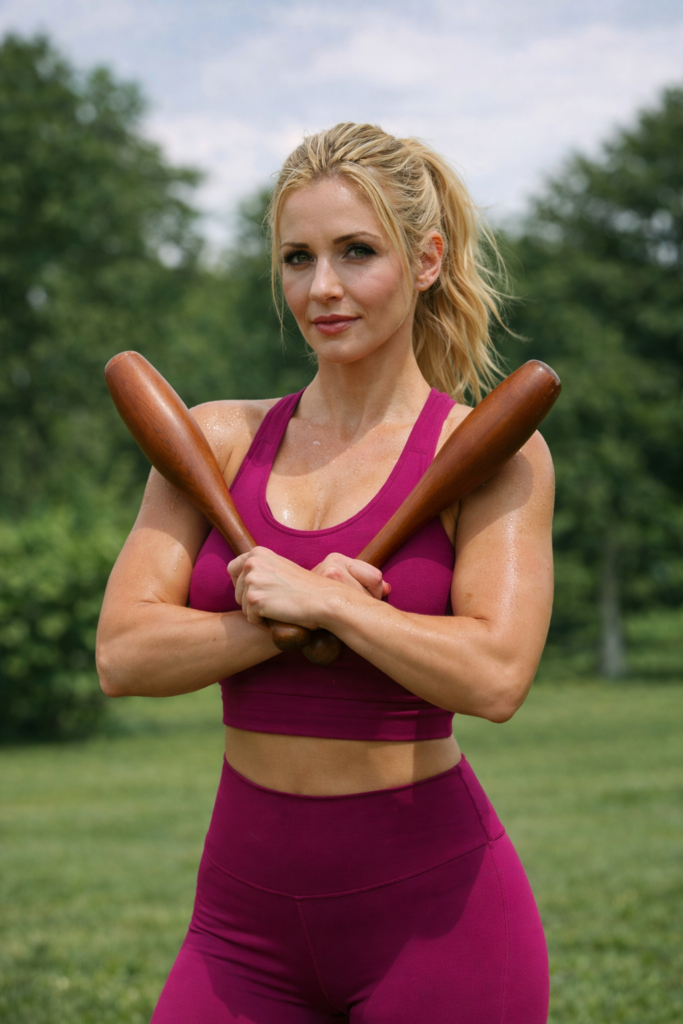
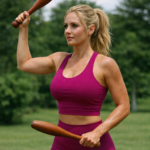
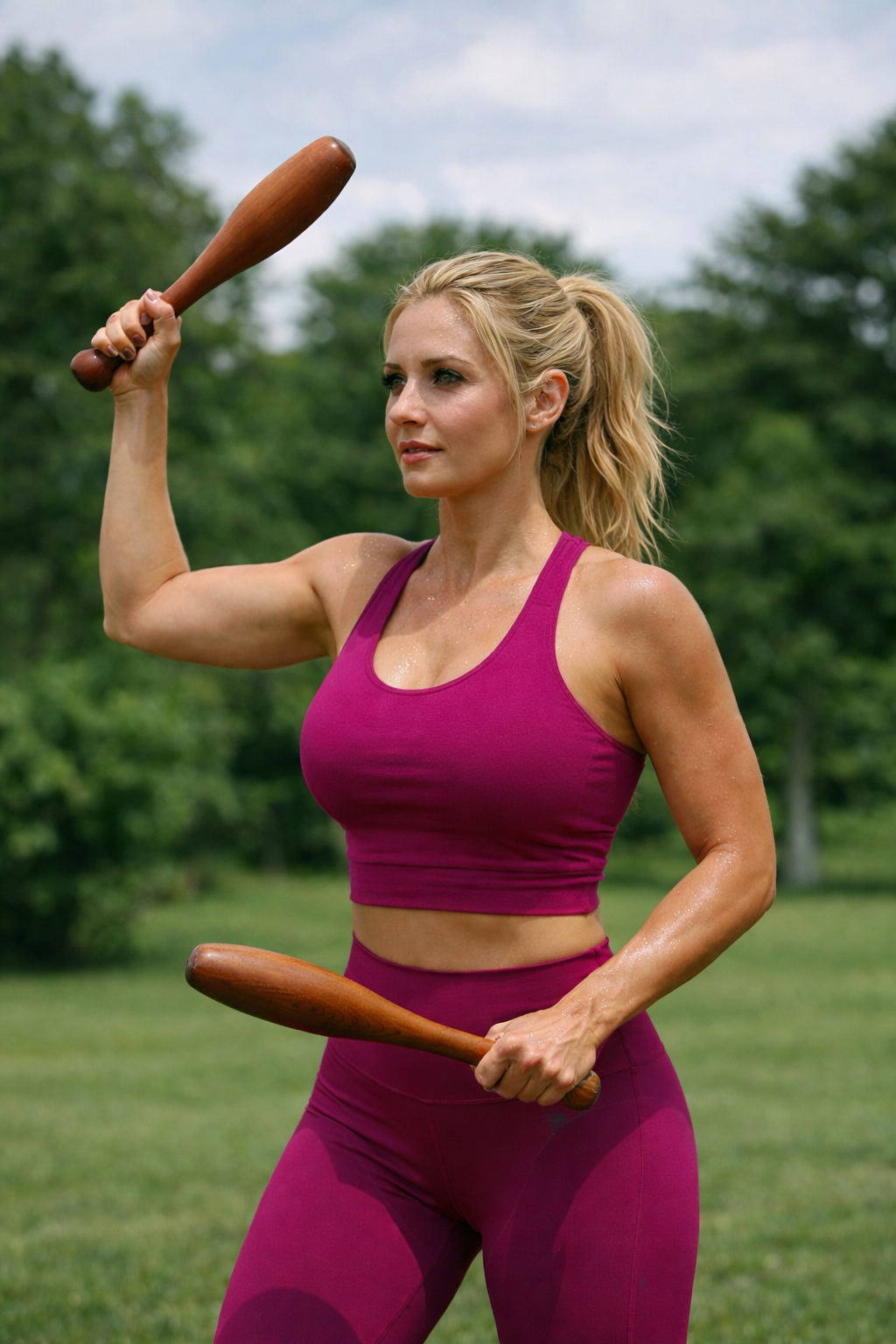
Indian clubs are unique design weighted clubs used for circular functional training patterns. Indian clubs are a type of exercise equipment that resemble a bowling-pin and are used to enhance joint mobility, bilateral coordination, balance, and posture. Unlike straight-line strength training, Indian club exercises move the arms around the body through large arcs, training the mobility of shoulders, & core in a coordinated way. This style of indian club workout is often called circular strength.
The unique design of the club allows momentum to guide the motion, teaching the nervous system to control speed, direction & rhythm. During Indian club training, the nervous system & connective tissues work in unison, promoting a synchronised & integrated approach to range of motion- movement & overall physical health right from the starting position. Rather than isolating single muscles, the entire body learns to work together.
Benefits of Indian Club Training for a Full Body Workout
Regular indian club training can provide:
- improved shoulder mobility & joint mobility
- better coordination & balance
- enhanced range of motion for the upper body
- support for injury prevention in the shoulders & arms
- gentle full body workout without heavy weight
There are a lot of benefits to using Indian clubs, as they offer a wide variety of ways to improve mobility, coordination, & overall fitness. Indian clubs can also provide a more engaging fitness experience compared to traditional weights.
Many clients notice their posture feels lighter & everyday movement becomes easier. The swinging patterns act like moving warm ups, nourishing the joints while building functional strength & improve mobility in the joints.
The Benefits of Indian Clubs Workout
Indian clubs workouts offers more than general exercise to the fitness enthusiasts alike ; it teaches the body to move as one connected unit & balance. The circular paths gently decompress the shoulders while strengthening the smaller stabilising muscles that ordinary gym movements often miss. Over time many people feel their arms move with less stiffness & more freedom.
Key benefits I see in real people include:
- smoother overall performance in rotation without clicking or tightness
- better posture from waking up the upper back muscles
- improved grip & forearm endurance for daily tasks
- calmer breathing as the rhythm of the swing settles the nervous system
- coordination between hips, ribs & arms instead of isolated parts
The beauty of the swing is that it is self-correcting. If you rush or force the club, the circle breaks; when you relax, the circle returns. This feedback teaches patience & skills awareness in a way few other tools can.
Who in the World Should Practise Indian Clubs Skills?
Indian clubs are suitable for:
- office workers seeking better shoulder health
- athletes wanting extra mobility training
- beginners starting a new fitness journey
- people recovering confidence after minor discomfort
Indian club training is inclusive & adaptable, making it suitable for individuals of all fitness levels.
Caution is needed if you have acute injuries. Always learn with certified trainers who can adapt the practice to your individual needs.
Certified Trainers Make the Difference
Learning Indian clubs looks simple, yet the early guidance you receive shapes how your shoulders move for years. A certified trainer with expertise in Indian club training brings extensive professional experience, qualifications, & specialised skills in fitness, sports medicine, & holistic wellness, allowing them to see details beginners cannot feel, such as when the neck is taking over, when the ribs are flaring, or when the wrists are steering the club instead of the shoulder.
With proper coaching you gain:
- safer progression of weight & volume
- clear feedback on posture & grip
- corrections before bad habits settle
- programmes adapted to your history
- confidence to practise on your own
Certified trainers have worked with thousands of clients, which demonstrates their extensive experience and authority in the field.
Good trainers also understand when not to push during your workout. They respect previous injuries, screen movement, & choose patterns that fit the person rather than forcing the person to fit the pattern. This makes the beginning journey smoother & far more enjoyable. Indian club training is recognised as one of the most important movement arts for any serious coach or personal trainer to master.
What Is a Good Starting Weight for Indian Clubs?
Most beginners/ clients in Singapore start with:
- 0.5–1 kg for general fitness
- 1–2 kg for experienced fitness enthusiasts
- lighter clubs for rehabilitation & joint health
The right weight lets you complete swings with relaxed breathing & steady balance.
Can You Build Muscle with Indian Clubs?
Yes, but in a different way from gym strength training. Indian club workout develops lean muscles, tendon resilience, balance & core control rather than bulky size. Many people feel stronger during other sports because the shoulders, arms & upper body move more efficiently.
Indian Clubs vs Persian Meel – Which Is Better?
- indian clubs lighter, focused on coordination, mobility & skills
- persian meel heavier, more about raw strength & legs involvement
Modern steel clubs are inspired by traditional Indian clubs, blending ancient techniques with contemporary exercise science. This approach is grounded in science, combining biomechanics, neurology, and myofascial principles to enhance movement, strength, and coordination.
For most people strating, Indian clubs are the better starting point before progressing to meel.
Safety Tips for Beginners
- always begin with proper warm ups, including dynamic stretches & light cardio such as arm circles, chest stretches, and hip flexor stretches
- keep the shoulders relaxed
- stop if there is sharp pain
- rest between sets
- train in a safe environment
Warming up the chest & hip flexors with dynamic stretches & light cardio is an important safety measure before starting Indian club workouts.
Good practice protects health & supports steady progress.
Indian Club Exercises and Routines
Indian club exercises offer a genuinely effective approach to developing full-body skills, regardless of where you currently stand in your fitness journey. In my years of working with movement patterns, I’ve observed that a well-designed routine typically features flowing swings, circles, & patterns that challenge the shoulders, hips, & core as one connected system. For those just beginning, wisdom suggests starting with lighter clubs whilst mastering the fundamental mobility movements—this foundation skills will serve you far better than rushing into complex mobility flows. Daily practice of 5–10 minutes can help to groove movement patterns into your nervous system.
Some of the most valuable exercises include the classic Indian Club Swing, the Mill, & the Figure 8. The Mill is a foundational circular movement where the club is cast across the body and then circled back to the starting position. The Inside Pendulum is performed by holding the club with a hammer grip, swinging it across the body, and transitioning to a saber grip.
Hammer Grip is when the handle is held like a fist with the pinky finger on the knob and a straight wrist, while Saber Grip involves extending the arm and pointing the club away, dropping the wrist. Each of these movements genuinely improves joint mobility, strengthens grip, & builds resilience throughout the upper body—benefits I’ve witnessed countless times. As your skills grows, you can create a routine by combining these club exercises with bodyweight movements like squats, lunges, or planks. Be sure to count your reps for each exercise to ensure effective workout volume & progress tracking. This practical approach ensures your entire body & core remains engaged, helping you translate the real benefits of Indian club training into everyday movement & fitness.
By regularly practising a series of Indian club exercises, you’ll notice genuine improvements in coordination, balance, & overall joint health. The functional training not only challenges your muscles but teaches you to move as one connected system—something that’s often missing in modern fitness approaches. This makes it a truly valuable addition to any movement journey, one that I’ve seen transform how people feel & perform in their daily lives.
Common Mistakes to Avoid
When starting your journey with Indian club training, wisdom from years of guiding movement tells us that maintaining good habits ensures your sessions are both effective & genuinely safe. One mistake I see repeatedly is choosing clubs that are too heavy—a classic case of enthusiasm overriding wisdom, which compromises your technique & puts unnecessary stress on your joints. Instead, start with a manageable weight that allows you to focus on smooth, controlled movements. Your body will thank you for this patience.
Another frequent misstep is skipping the warm-up—something that never fails to surprise me after decades of working with movement. Warming up prepares your shoulders, elbows, & spine for the unique patterns of Indian club swinging, helping to protect your joints & genuinely improve your performance. It’s also essential to avoid swinging with your arm fully extended or locking out your elbows, as this creates tension patterns that lead to discomfort or injury over time. Your joints deserve better than that.
To get the most from your Indian club training, always prioritise proper technique over speed or force—a principle backed by experience & a deep understanding of how your body truly works. Take the time to learn each movement step by step, rest between sets, & listen to what your body is telling you. By being mindful of these common pitfalls, you’ll create a genuinely beneficial environment that supports your progress & keeps your joints healthy for the long term. That’s movement that serves you, not the other way around.
The Benefit of Community
One of the most rewarding aspects of Indian club swinging in Singapore is the opportunity to join a passionate community of individuals who share your interest in this unique practice. Training alongside others in a supportive environment not only makes each session more enjoyable,but also helps you develop your skills more effectively. Whether you’re learning new techniques, receiving feedback from experienced instructors, or simply sharing the journey with like-minded people, the sense of camaraderie can be incredibly motivating & grounding.
Being part of a community means you’re more likely to maintain a consistent & challenging routine, as the encouragement & accountability from others help you stand strong on your fitness journey. Group classes & workshops in Singapore offer a safe space to ask questions, check your technique, & celebrate progress together. This collective energy brings peace of mind & makes the process of learning Indian club training both enjoyable & genuinely beneficial – something I’ve witnessed countless times in movement communities.
No matter your fitness level, joining a community can help you build the confidence & resilience needed to keep improving. The shared passion for Indian club swinging creates an environment where everyone can grow, support each other, & enjoy the unique benefits this practice brings to body & mind. It’s this human connection that often makes the difference between short-term interest & lasting transformation.
Choosing the Right Class
Selecting the right Indian club class isn’t just about convenience—it’s about finding a training environment that genuinely serves your body’s needs & respects your current capabilities. After years in movement education, I’ve seen countless individuals transform their mobility & strength through proper Indian club training. This isn’t another fitness fad; it’s a time-tested method that delivers real results when approached correctly. The key lies in choosing a class that honours where you are today whilst building towards where you want to be tomorrow.
If you’re new to this practice, resist the temptation to jump into advanced sessions—your joints will thank you later. Beginner-focused classes aren’t about limitation; they’re about building the neural pathways & movement patterns that protect you from injury whilst maximising benefits. Think of it as laying a foundation that will serve you for years to come. Quality instruction at this stage teaches you to move with intention, not just swing weights around. As your competence grows & your body adapts, you’ll naturally progress to more complex patterns that challenge you appropriately.
Singapore’s Indian club scene offers diverse approaches, each with merit depending on your personality & goals. Some instructors weave in the rich cultural heritage—there’s wisdom in understanding the ‘why’ behind these movements that originated centuries ago. Others focus purely on the biomechanics & physiological benefits, which appeals to those who appreciate the science. Neither approach is superior; choose what resonates with your learning style & keeps you engaged. Remember, consistency trumps intensity every time.
Quality instruction makes all the difference between beneficial training & potential injury. Seek out teachers who understand anatomy & can explain not just what to do, but why you’re doing it. The best instructors watch your movement patterns, correct your technique before bad habits form, & adjust exercises based on your individual needs. They create an atmosphere where asking questions is welcomed, not judged. Safety isn’t negotiable—your instructor should prioritise proper progression over impressive displays.
Your Indian club journey is uniquely yours, so abandon any pressure to match someone else’s pace or capabilities. Listen to your body’s feedback—it’s remarkably intelligent when we actually pay attention. Some days you’ll feel strong & coordinated; others, your grip might feel off or your timing seems delayed. Both are normal & valuable learning experiences. With patient, consistent practice & proper guidance, you’ll discover that Indian clubs don’t just improve your physical capabilities—they teach you to move through life with greater awareness & confidence. Ready to begin? Find a qualified instructor & start this rewarding journey today.
What a Class in Singapore Looks Like
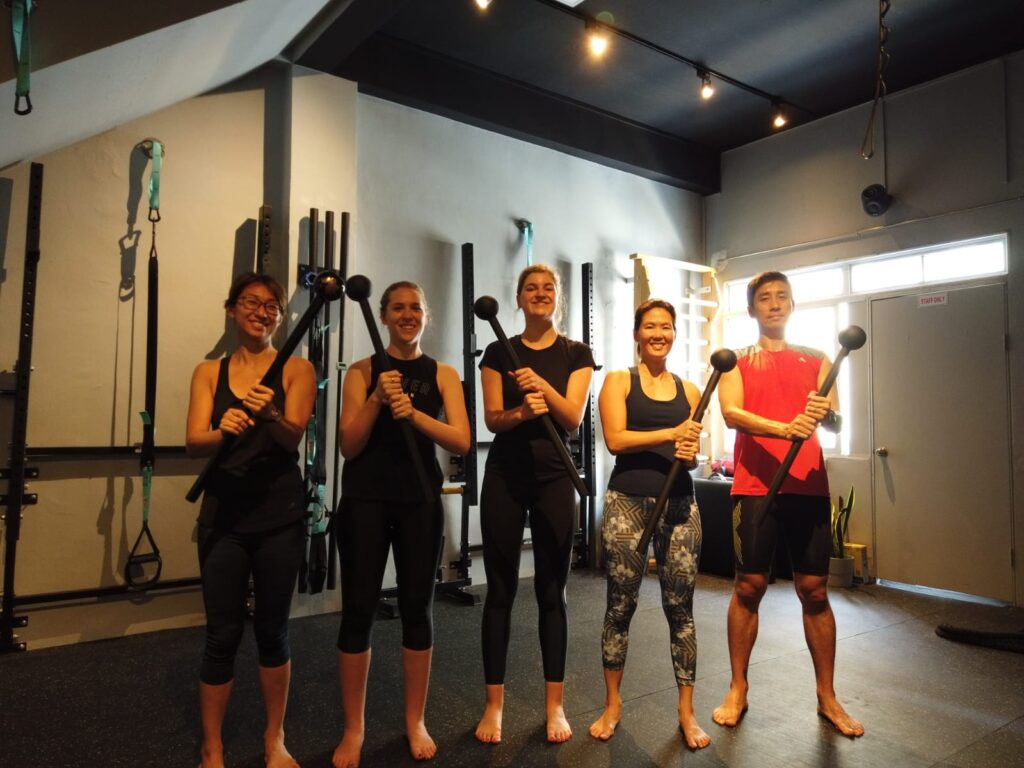
In Singapore, Indian clubs classes usually include:
- mobility preparation
- breakdown of basic swings
- partner feedback from trainers
- short workshop style learning
These classes are designed for students of all experience levels, including beginners, athletes, and those recovering from injury, making them inclusive and adaptable to diverse needs.
Students can book their spot in structured “Circular Strength” classes at the Movement & Sports Medicine Centre (MSMC), which has been offering Indian clubs classes in Singapore since 2019. MSMC is recognised as Singapore’s leading specialist provider of Indian clubs training. Classes at MSMC are led by certified trainers who provide cues and demonstrations for safety and effectiveness. MSMC offers both group classes and private sessions, & Indian club training at MSMC integrates biomechanics to ensure classes are grounded in movement science and anatomical precision.
This helps beginners build confidence before training alone.
My Perspective on Teaching Indian Clubs in Singapore
From my experience, Indian clubs work best when taught as a conversation between the body & the club, not as a rigid system. I focus on helping people feel the movement first, increase skills, then improve the exercises. Good coaching is less about showing many patterns & more about helping one pattern make sense in your shoulders, posture & breathing.
I blend what I have learned from sports medicine, stretch therapy & years of working with everyday clients in Singapore. The goal is always the same: move better tomorrow than you did today. Indian club training can bring greater resilience, happiness, and fulfillment to students’ lives by improving both physical and mental well-being.
A Personal Invitation
If this guide has sparked your curiosity, the next step is simply to put a club in your hand & feel the workout/ exercises for yourself. Whether you learn with me, another coach, other fitness studios, or on your own, start light, stay patient, & let the movement teach you.
I share Indian clubs because they changed the way I understand sustainable practices & longevity in training. I hope they do the same for you.
