


Singapore has over 100 Pilates studios as of 2026, and honestly, the sheer number can make your head spin. Reformer Pilates classes, mat Pilates, chair Pilates classes, hybrid cardio-reformer formats, clinical sessions-everyone seems to be offering something slightly different, and every studio claims to be the one you need. I get it. It’s confusing.
I’m writing this as someone who’s spent over 20 years in sports medicine, movement education and professional fitness coaching, and as the founder of Movement & Sports Medicine Centre (MSMC) here in Singapore. So yes, I have skin in the game-but I also have strong opinions about what actually makes a reformer class worth your time and money, and I’m going to share them with you straight.
For those unfamiliar, the Pilates reformer is a spring-based sliding carriage system with adjustable resistance, a footbar and straps. Reformer improves core strength and flexibility, enhances posture and mobility through targeted exercises, and offers low-impact workouts suitable for all levels. It uses adjustable resistance for personalised workouts, which is why it’s become so popular for everything from injury rehabilitation to full body workout programming. The core principles of Pilates-concentration, control, precision and breath integration-come alive on this machine in a way that mat Pilates simply can’t replicate.
But here’s the thing: the best reformer classes aren’t always the cheapest, the trendiest or the most Instagrammable. They’re the ones with experienced instructors who actually watch you move, safe progression that respects your body, and a setting you’ll realistically keep returning to. Throughout this article, I’ll keep coming back to seven evaluation priorities: instructor expertise, class size and individual attention, movement quality and progression, studio ambience and privacy, professionalism, equipment and maintenance, and value for money. Sports medicine fitness studios often incorporate mindfulness practices into their training.
My Top 3 Reformer Pilates Studios in Singapore
This is a curated, opinionated list-not a paid directory. There are plenty of good Pilates studios in Singapore, and I won’t pretend these three are the only ones worth visiting. But across different needs-assessment-led rehabilitation, structured clinical technique, and premium small-group coaching-these are three that consistently meet my professional standards for reformer Pilates classes.
Studio | Location(s) | Best Suited For | Class Format | 2026 Price Range (SGD) |
|---|---|---|---|---|
Movement & Sports Medicine Centre (MSMC) | Central – Kitchener Road | Injury-aware beginners, older adults, desk-bound professionals, athletes needing rehab | Private reformer Pilates (1:1), duet sessions, very small group (max 3–5) | Private from ~S$150–200; small group ~S$50–70/class (verify with MSMC) |
Breathe Pilates | Multiple locations (Novena, Marina area) | Clinical rehab, prenatal/postnatal, scoliosis management | Clinical Pilates, small group reformer (max ~6), private sessions | Group ~S$57–66/class on packs; private ~S$109+ (verify current rates) |
The Core Reformery | Purvis Street, North Bridge | Technique-focused development, classical to intermediate Pilates | Small group classes (max 5–7), private and duet sessions | Trial 3 classes S$120; 5-class pack S$275; unlimited from S$299/month |
No.1- Movement & Sports Medicine Centre (MSMC)
I’ll explain clearly why our approach suits readers who value medical oversight, personalised coaching and privacy-and you can decide whether it resonates with your own needs.
Every new client at MSMC begins with a sports-medicine-informed movement and posture assessment. We look at spinal alignment, hip and pelvis movement, shoulder mechanics, core activation, range of motion and breathing patterns before anyone touches a reformer machine. This isn’t a box-ticking exercise-it’s how we identify asymmetries, old injuries and risk areas so that your programme actually addresses what your body needs. Sports medicine fitness studios often incorporate mindfulness practices into their training, and at MSMC, breathwork and mindful movement are woven into every session, not bolted on as an afterthought.
Our reformer Pilates classes run as private sessions (1:1), duet sessions (1:2), and very small group classes capped at five clients. That ratio means our instructors can provide real-time adjustments tailored for individual fitness levels or injuries-something that’s simply impossible in a room with 15 reformers and one instructor. Our team is trained in Pilates alongside exercise science and sports therapy, with particular experience working with older adults in their 50s, 60s and beyond. They know how to regress and progress classical Pilates sequences intelligently, and they understand when controlled movement matters more than intensity.
Every session follows a clear warm-up, main workout and cool-down structure, and we follow structured progressions that prioritise safety over pushing harder for the sake of it. Several Pilates studios offer tailored programmes for corporate wellness initiatives, and MSMC is no different-we work with busy executives who need efficient, effective movement in limited time.
Think of someone like a 52-year-old executive with chronic neck and upper body tension from years of desk work. Or a runner rehabbing a knee injury who needs careful, progressive loading. Or a 65-year-old retiree working on balance, bone health and confidence. These are the people who tend to thrive with us-not because we’re flashier than other studios, but because our assessment-led approach catches things that a generic group class simply won’t.
If this sounds like the kind of approach you’re after, you’re welcome to explore our reformer class options. Fair warning though: we’re currently on a long waitlist, so if you’re interested, the best step is to leave your interest through our WhatsApp chat at +6587693235 and we’ll be in touch as spots open up.
No.2- Breathe Pilates

If your primary concern is pain management, scoliosis, post-surgical recovery or postnatal core rehabilitation, Breathe Pilates is a studio I’d genuinely point you towards. Their focus on clinical Pilates for injury rehabilitation and personalised rehabilitation approaches sets them apart from the typical boutique fitness experience.
Breathe Pilates offers clinical Pilates for injury management, and they provide prenatal and postnatal Pilates sessions-something that matters enormously for pregnant women and new mothers navigating body changes. They also offer one-on-one sessions specifically for injury management, which is valuable if you’re dealing with something complex. Clinical Pilates classes focus on injury management and rehabilitation in ways that go beyond what a standard group class can offer.
Many of their instructors hold STOTT Pilates or Merrithew certifications, and some come from healthcare backgrounds. Their small group classes cap at around six participants, which allows for meaningful individual correction. They’re not the only studio in this space-Focus Movement offers prenatal Pilates classes and injury rehabilitation too, and Central Pilates specialises in prenatal and postnatal Pilates classes-but Breathe has built a strong reputation specifically for clinical rigour.
Their locations across Singapore suit office workers and expatriates reasonably well. Pricing sits at the higher end: expect around S$57–66 per group class on packs, with private sessions starting from approximately S$109 including postural analysis. The potential limitation? It’s a clinical environment, which means the vibe is more therapeutic than high-energy. If you want a buzzy, music-driven flow playground atmosphere, this probably isn’t your place. But if you want careful, knowledgeable hands guiding your pilates journey back from injury, it’s excellent.
No.3- The Core Reformery
For my third recommendation, I wanted to highlight a specialised boutique Pilates studio that appeals to clients already somewhat active and looking for refined technique in a polished, disciplined environment.
The Core Reformery runs two studios: their Purvis Street location focuses on foundation group classes with a maximum of five participants, while their North Bridge studio handles intermediate and advanced sessions with up to seven. That’s a genuinely small group format. They emphasise classical Pilates technique development and offer varied classes across levels, along with private and duet sessions. Private and duet sessions are widely available at Pilates studios across Singapore, and The Core Reformery does this well-their private 1:1 trial starts at S$140.
For studios offering an even more traditional approach, Flex Studio uses authentic Gratz equipment for Pilates classes, which will appeal to purists interested in the classical lineage of traditional Pilates. BE. Studios provides private and duet sessions tailored to individual goals as well, giving you options depending on your location and preference.
The kind of client who thrives at The Core Reformery tends to enjoy disciplined technique work-someone who values correct form and movement principles over flashy choreography. Their pricing is transparent: a five-class pack runs S$275 (around S$55 per class), with off-peak options bringing that down to roughly S$40 per session. The realistic constraint? Limited locations. If you’re based on the east coast or in the heartlands, the commute may not be practical for regular attendance.
What I Personally Look for in a Reformer Pilates Class
After two decades in this field, I evaluate every Pilates class-whether at MSMC or anywhere else-against the same criteria. Here’s what matters to me.
Instructor expertise. This is non-negotiable. I look for internationally recognised certifications-STOTT Pilates, BASI, PAI, SITA or classical lineages-backed by genuine anatomy understanding. Quality instructors provide real-time adjustments tailored for individual fitness levels or injuries, and they can watch movement, adjust springs and modify ranges for different bodies without missing a beat. Top-quality Pilates studios focus on instructor expertise and class structure over aesthetics, and I couldn’t agree more.
Class size and individual attention. Small group classes ensure personalised attention from instructors. Small group reformer Pilates formats of four to eight people tend to hit the sweet spot for safety and technique. That said, a highly skilled teacher can manage larger group classes with intelligent cueing-it’s just harder to catch every compensatory movement when you’re watching twelve bodies simultaneously.
Movement quality and progression. Thoughtful sequencing in Pilates classes enhances core stability and proper technique. I want to see clear beginner classes with logical spring progressions, sensible regressions for injuries, and structured intensification-not random “let’s make it harder” sets. Quality Pilates classes follow structured progressions and prioritise safety over intensity.
Studio ambience and privacy. Clean Pilates equipment, non-slippery floors, good lighting, reasonable noise levels, and a layout that doesn’t make clients feel on display. This matters especially for older adults and those new to exercise. Body awareness develops better when you’re comfortable, not self-conscious.
Professionalism. Punctuality, clear booking systems, transparent cancellation policies, responsive communication. A well-rounded Pilates class balances personal attention with group dynamics, and professionalism is what holds the whole experience together.
Equipment and maintenance. Reformers should glide smoothly and feature a full set of resistance springs for effective workouts. I check carriage movement, strap condition, spring consistency between machines, and hygiene between back-to-back sessions. Hygiene and equipment maintenance are important for safety in Pilates studios-full stop.
Value for money. You’re not just paying for a spot in the room. You’re paying for safe coaching, thoughtful programming, and an experience that genuinely supports your wellness journey. Finding a suitable class involves considering individual goals and current fitness levels, not just chasing the lowest price tag.
Is Reformer Worth the Premium Price?
Reformer Pilates in Singapore tends to be more expensive than standard gym memberships or typical fitness classes, and many people wonder if the premium price is truly justified.
In my professional experience, the value of reformer Pilates lies in the specialised knowledge and expertise that instructors bring, combined with the unique capabilities of the reformer machine itself. This equipment offers adjustable resistance through springs and a sliding carriage system, enabling personalised workouts that can be precisely tailored to individual needs—whether for rehabilitation, injury prevention, or progressive strength and mobility development.
Moreover, reformer classes typically maintain smaller sizes compared to large gym classes. This smaller class size allows instructors to provide real-time, individualised attention, correcting form and adapting exercises on the spot. Such personalised coaching ensures safety, maximises movement quality, and supports effective progression.
So, when you invest in reformer class, you’re not just paying for a workout session; you’re paying for expert guidance, carefully structured programming, and access to specialised equipment that together create a highly effective and safe movement experience. For those who prioritise quality instruction, personalised attention, and a thoughtful approach to movement, reformer is absolutely worth the investment.
When does paying more make sense? When you’re dealing with complex injuries, significant spinal alignment issues, or you’re an older adult needing careful supervision. Also when you simply prefer privacy and quiet over a bustling, music-heavy atmosphere. Conversely, a well-run group option at a reasonable price is perfectly adequate for younger, joint-healthy individuals who mainly want a structured reformer based workout to complement their strength training. “Best value” is highly individual-a corporate executive might prioritise location and time efficiency, while a retiree values slower pace and personal rapport.
Reformer for Beginners – What Should You Expect?
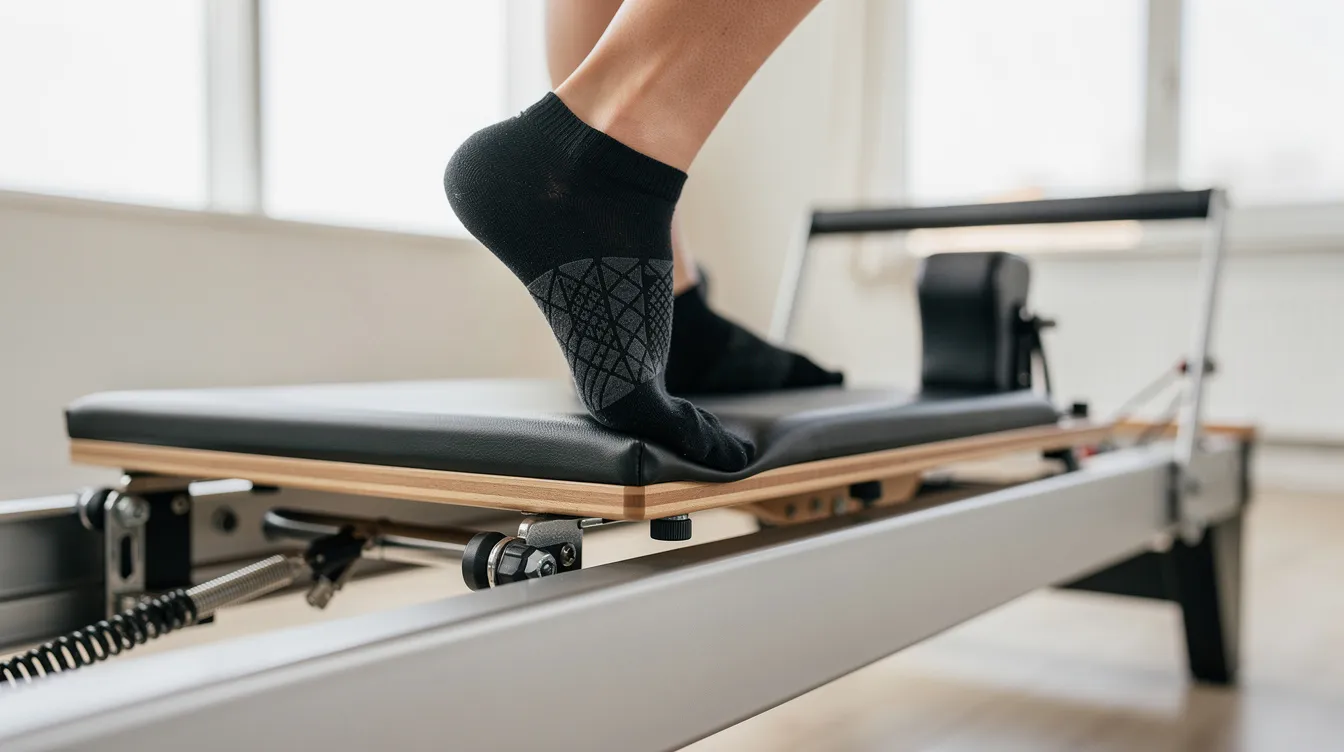
If you’ve never been on a Pilates reformer, the machine can look a bit intimidating. Don’t worry-that’s completely normal, and a good instructor will walk you through everything at your own pace.
In a typical beginner or foundation class at any decent reformer Pilates studio in Singapore, you’ll start with health and intake questions, a quick posture check, and an introduction to the reformer-the carriage, springs, footbar and straps. Your instructor will explain safety cues, particularly around shoulder rests and any standing work. Resistance works through springs: think of them as adjustable “weights.” Starting lighter teaches you control, and good instructors will adjust springs individually rather than forcing everyone to use the same load. Reformer Pilates aids in rehabilitation for old injuries, which is why many people start here rather than jumping straight into heavy strength training.
Wear grippy Pilates socks (mandatory in almost all Singapore studios-most sell them on-site), fitted but comfortable clothing, and tie your hair back. Arrive 10–15 minutes early and inform your instructor about any injuries or conditions. A well-structured beginner sequence typically includes breathing exercises, spinal articulation, footwork, basic core engagement, gentle hip mobility and shoulder stability work, finishing with short stretches. Classes should include clear warm-up, main workout and cool-down segments for safety and efficacy.
Common worries-not being flexible enough, being “unfit,” being the oldest in the room-are almost always unfounded. Good studios cater to every fitness level. If you have a recent surgery, complex back history, osteoporosis or severe deconditioning, consider starting with private Pilates before joining even a group session.
Reformer vs Traditional Strength Training
I see these two as complementary, not competing. There’s just some things where one does it better than the other, and smart programming uses both.
Reformers excels at multi-directional control, core and hip stability, joint-friendly full body workout sequences, spinal alignment and proprioception. It’s particularly valuable for runners, cyclists, older adults and anyone returning from injury. The use of a stability chair, ankle weights and Pilates equipment like the tower or Cadillac can extend the challenge significantly. Practices like tai chi and yoga movement share some of the movement philosophy, but the reformer’s spring resistance adds a unique loading dimension.
Traditional strength training-free weights, a rowing machine, a TRX suspension system-excels at heavier loading for muscle mass and bone density, clear progression in kilograms, and specificity for athletic performance. At MSMC, we often layer functional strength training on top of Pilates-informed movement patterns for exactly this reason.
One thing worth noting: some reformer Pilates classes marketed as high-intensity are closer to circuit training with springs. Strong Pilates combines reformer workouts with cardio elements, for instance, which appeals to people chasing fat burning muscle fibres and cardiovascular conditioning. That’s a valid choice-just know whether you want a classical Pilates emphasis or a hybrid strength-cardio format before you commit. For those on an injury rehabilitation pathway, starting with more Pilates and lighter strength work is generally the sensible route.
Frequently Asked Questions About Reformer Pilates Mvmt in Singapore
These are the questions I hear most often from people considering reformer Pilates for the first time.
Which reformer Pilates studio is best for beginners in Singapore? It depends on your starting point. MSMC’s assessment-led approach suits beginners with injuries, chronic pain or those who are nervous about group settings. Larger chains with structured beginner classes-such as Absolute Pilates across its six locations, or Club Pilates and Line Pilates-can work well for healthy beginners who enjoy community energy. Studios like Advantage Pilates Singapore, Pilates MVMT and Flow Studio also offer beginner friendly entry points. SG Pilates options are genuinely broad now, so visit a few and trust your instincts.
How much does reformer class cost in Singapore? Reformer class prices in Singapore vary considerably. Expect S$45–65 per drop-in group class, S$40–55 on bulk packs, and S$120–220 for private sessions. First-timer trials at places like Atelier Rael (S$99 for three classes) or Aluna Studios (S$79 for three) help you test the waters. Duty Pilates, Warrior Studios, Ally Singapore and other emerging brands are also competitive on introductory pricing.
Is private reformer Pilates better than group classes? Private sessions offer deeper individual coaching and are ideal for rehabilitation or complex conditions. Small group reformer Pilates gives you community, lower per-class cost, and can be excellent when led by experienced instructors. Many clients start private and transition to small group classes once confident.
How many times a week should beginners attend? One to two sessions weekly is realistic for most working adults. Consistency matters more than frequency. Combine Pilates with walking, strength training or another activity you enjoy for a well-rounded programme.
Is reformer Pilates suitable for older adults? Absolutely. In well-supervised settings with proper assessment, it’s excellent for joint health, balance and confidence. Disclose your full medical history, and consider starting with private sessions. A classic reformer session at a moderate pace can do wonders for someone in their 60s who’s never trained before.
Can reformer Pilates help improve strength and mobility? Yes-I observe improvements in control, range of motion and load tolerance regularly. It enhances upper body stability, hip mobility and overall movement confidence. But it’s not a cure-all; complex medical conditions need appropriate clinical care alongside exercise.
What should I look for in a Pilates instructor? Recognised training (STOTT Pilates, BASI, classical lineages), clear cueing, willingness to ask about injuries, ability to modify on the spot, and a calm, attentive teaching presence. The best Pilates studios invest in their instructors’ ongoing education. Whether you’re in Holland Village, River Valley, Novena Medical Centre or the east coast, the instructor is what makes or breaks your experience.
Final Thoughts – My Personal Recommendation
Consider your primary goal-pain relief, strength, stress relief, performance. Think about your preferred level of privacy, whether you want private classes or small group energy. Factor in location convenience-CBD, Orchard, multiple locations across the island, or your local heartland. And be honest about your budget comfort.
MSMC positions itself within this landscape as an assessment-led, sports-medicine-informed option for those who want expert eyes on their movement-especially if you’re managing old injuries, chronic aches, or age-related concerns. We also offer functional training, breathwork, and recovery services beyond just Pilates reformer classes. If that resonates, we’d genuinely love to hear from you.
The most important step is to start-ideally in a Pilates studio where you feel safe, seen and supported enough to keep showing up. That’s what turns a single class into a real wellness journey. And that’s worth more than any trendy studio will ever promise you.
