A good beginner strength training program is 2-3 full body workouts a week, built on six movements: squat, hinge, push, pull, carry & core. Do 2-3 sets of 8-12 reps of each, stop every set with about 2 reps still in the tank, rest 1-2 minutes, & add a little weight only when you’ve earned it. Below is the exact 4-week plan I’d give you: two workouts (Day A & Day B) you alternate, with sets, reps, rest, a warm-up, home swaps & what to change after week 4.
By Jab, sports medicine trainer. I’ve spent 20+ years helping people train, recover & move without pain, & I founded MSMC in Singapore & ITI, which trains physios, chiropractors & personal trainers. Putting together a beginner’s first workouts is everyday work for me. Last updated 26 November 2026.
Key facts: beginner strength training program
- How often: 2-3 full body workouts per week, with rest days in between.
- What to train: one exercise for each of six movement patterns (squat, hinge, push, pull, carry & core), which covers all the major muscle groups.
- Sets & reps: 2-3 sets of 8-12 reps for most exercises.
- How hard: finish each set with about 2 reps in reserve (an effort of 7-8 out of 10).
- Rest: 90 seconds to 2 minutes on the big lifts, 60-90 seconds on the rest.
- Progress: add the smallest weight jump once you hit the top of the rep range on every set with good form.
- Time: 50-60 minutes a session, including a 5-10 minute warm-up & a short cool-down.
Who this beginner strength training program is for
You’ve joined a gym, or bought a pair of dumbbells, & you’ve watched more workout videos than you can count. You want to go to the gym regularly, but you still walk in not knowing what to do first, how many sets to do or how heavy to go, & part of you worries about hurting your back or your knees. You’ve got about three hours a week, & you want a plan you can follow without thinking.
This is that plan. It suits beginners in their 20s to 50s at most fitness levels, men & women alike, & people coming back after a long break. If you’re older, managing a condition or coming back from an injury, read the red flags section first.
How to put a beginner workout together
Most beginners don’t need a fancy split (chest day, leg day & so on) or a mix of workout styles. You need a few simple rules, & then a plan that follows them:
- Train the whole body every session. Full body workout routines let you practise each movement 2-3 times a week, which is how you learn it, & they hit all the major muscle groups (legs, hips, back, chest, shoulders & core) in a single session.
- Cover six movement patterns. Pick one exercise for each: squat, hinge, push, pull, carry & core. That’s your whole workout. These are compound movements: each one works multiple muscle groups at once, which builds strength faster than an isolation exercise (like a biceps curl) that trains one muscle. Isolation exercises can come later.
- Big lifts first. Do the squat, hinge, push & pull while you’re fresh, then the carry, then core work last.
- Leave reps in the tank. Beginners progress best when sets are hard but never ugly. More on this below.
- Write everything down. Weight, sets, reps & how many reps you had left. Your notebook (or phone) is your coach between sessions.
The 6 movement patterns & the lifts I use for each
Every good strength training routine is built on the same handful of movements. Squat & hinge train your lower body; push & pull train your upper body; carry & core tie the two together. Here’s each one, the exercise I’ve picked for it & how to do it in a few lines. Each lift has its own detailed how-to.
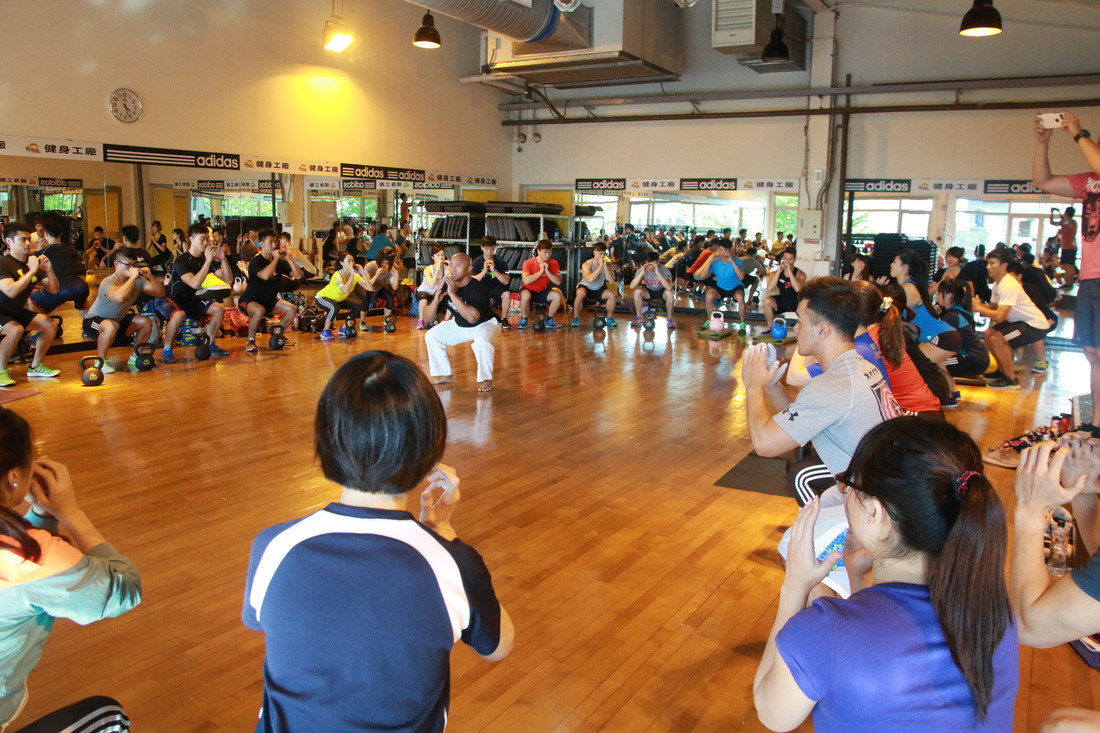
Squat: goblet squat or barbell back squat
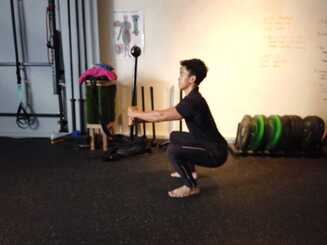
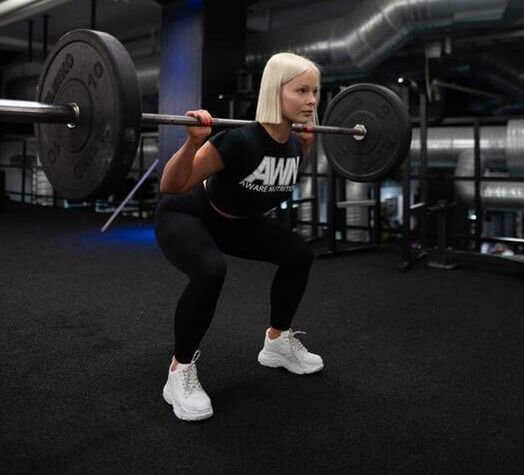
Starting position: feet shoulder width apart, toes turned out slightly. Brace your stomach, then sit down between your heels with your knees tracking over your toes & your chest up. Go as deep as you can while your back stays neutral, then drive the floor away. Start with the goblet squat (a dumbbell or kettlebell held at your chest); move to the barbell when that’s easy. Full guide: how to squat with a barbell. If your knees complain, read knee pain when squatting.
Hinge: dumbbell Romanian deadlift
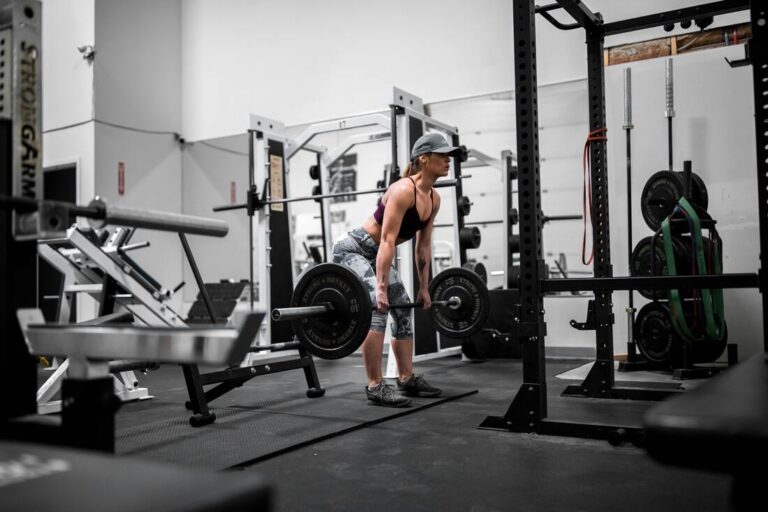
Starting position: feet hip width apart, dumbbells against your thighs. Keep a slight bend in your knees, then push your hips back as if closing a car door with your bottom. The dumbbells slide down your legs, your back stays flat & you stop when you feel a strong stretch in your hamstrings. It’s a hip movement, not a knee bend. Full guide: dumbbell Romanian deadlift, & if your back is sore afterwards, read lower back pain after deadlift.
Push: bench press or push-up
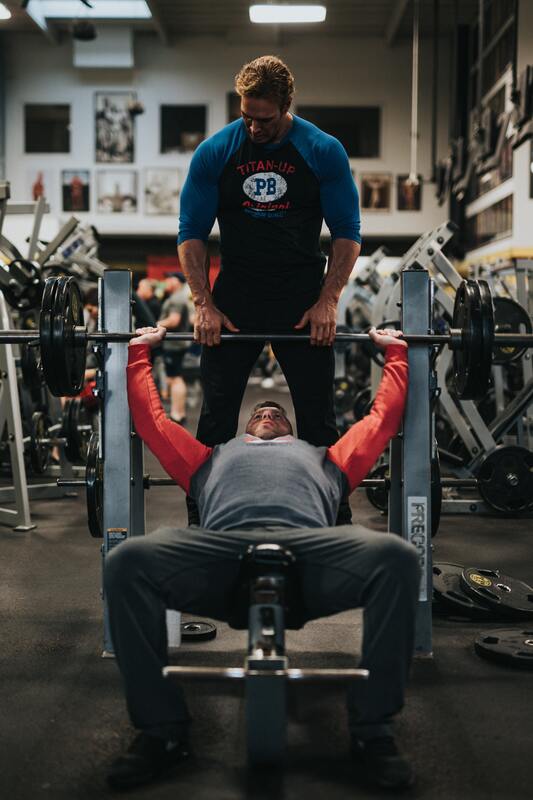
Lie on the bench with your eyes under the bar & your feet flat on the floor. Squeeze your shoulder blades back & down, & “bend the bar” by rotating your arms out slightly so your lats switch on & your shoulders stay stable. Lower the bar to your lower chest & press it back up. No barbell? The dumbbell bench press works the same way. No bench? Do push ups. Full guide: how to bench press properly.
Pull: one-arm dumbbell row or lat pulldown
Support yourself with one hand on a bench, keep your back flat & pull the dumbbell towards your hip, not your armpit. Pause, then slowly lower it. Pulling balances all the pushing & keeps your shoulders happy. Most beginners can’t do pull ups yet; the lat pulldown on Day B builds the strength for your first pull ups.
Carry: farmer’s carry
Pick up a heavy dumbbell or kettlebell in each hand, stand tall & walk with your core engaged. Shoulders down, ribs down, short steps. Carries build grip, upper back & core strength in one go, & they’re the most “real life” exercise in the plan: it’s the shopping bags test.
Core: dead bug & side plank
The dead bug teaches you to brace your trunk while your arms & legs move: lie on your back, press your lower back gently into the floor & slowly lower the opposite arm & leg. The side plank trains the sides of your trunk. One core exercise a session is plenty; together they protect your back during every other lift.
How many days a week should a beginner train? (& why rest days matter)
Two or three. The World Health Organization recommends muscle-strengthening activity on at least two days a week for adults, & three full body sessions is the sweet spot for learning the lifts quickly. Leave a day between sessions: rest days are when muscle repair & recovery happen, so they’re part of the plan, not a break from it. Sleep & nutrition (enough protein, enough food) matter just as much.
| Days a week | Example schedule | Who it suits |
|---|---|---|
| 3 days | Monday, Wednesday & Friday | Best for most beginners: fastest progress |
| 2 days | Tuesday & Saturday | Busy weeks, or if you’re also running or playing sport |
| 3 days, weekend-friendly | Tuesday, Thursday & Saturday | People who can’t train on Mondays |
How hard should each set feel? RPE & “2 reps in reserve”
RPE stands for “rate of perceived exertion”: how hard a set felt on a scale of 1 to 10. It’s the simplest way for a beginner to manage intensity without knowing their maximum lifts. The easiest way to use it is to ask yourself one question at the end of every set: “How many more good reps could I have done?” That number is your reps in reserve.
| RPE (out of 10) | Reps in reserve | What it feels like |
|---|---|---|
| 6 | 4 or more | Easy. The weight moves fast; you could chat |
| 7 | 3 | Working, but every rep looks the same |
| 8 | 2 | Hard. The last rep slows down, but form holds |
| 9 | 1 | Very hard. One more rep, maybe |
| 10 | 0 | Nothing left. Not needed in this plan |
In this plan you stay between RPE 6 & 8. Research suggests stopping with a couple of reps in reserve builds strength about as well as training to failure, with far less risk of your form breaking down. When you’re new, guess. You’ll get better at it within a couple of weeks.
How to pick your starting weights
Your first session is a “find your weights” session. For each exercise:
- Start lighter than you think: an empty bar, or light dumbbells.
- Do 10 reps. Ask yourself how many more good reps you could have done.
- 5 or more left? Rest, go up one step & try again. 3-4 left? That’s your week 1 weight. Fewer than 2 left? Go back down a step.
- Write the weight down. That’s your starting point.
Starting weights vary based on your size, age & training history, so don’t copy anyone else’s numbers. Ego is the enemy here. If you start too light, you’ll catch up in a week or two. If you start too heavy, your form suffers & you’ll stall early.
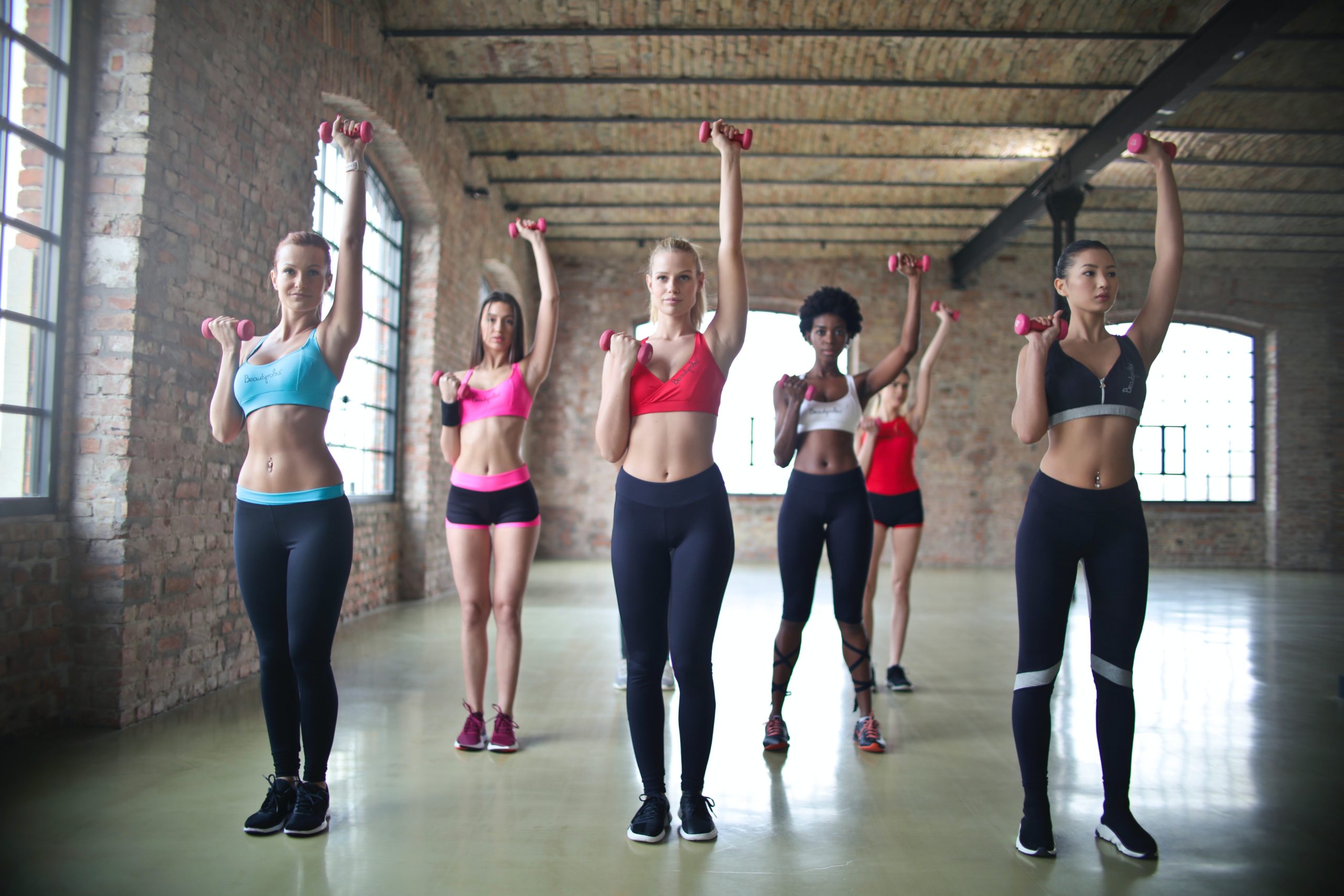
Your 5-10 minute warm-up: light cardio & dynamic stretches
Do this before you begin every workout. Light cardio raises your body temperature, dynamic stretches (moving stretches, not long holds) get your joints moving, & the ramp-up sets rehearse the first lift.
| Step | What to do | How long or how many |
|---|---|---|
| 1. Light cardio | Bike, rower or a brisk walk | 3-5 minutes |
| 2. World’s greatest stretch | Lunge, elbow to the floor, then rotate & reach up | 3 each side |
| 3. Bodyweight squat | Slow, to a comfortable depth | 8 reps |
| 4. Glute bridge | Squeeze your glutes at the top | 10 reps |
| 5. Hip hinge drill | Hands on hips, push them back, then stand tall | 8 reps |
| 6. Arm circles & band pull-aparts | Big circles, then pull a band apart to your chest | 10 each |
| 7. Ramp-up sets | First lift with a light weight, then about half & three-quarters of your working weight | 8, 5 & 3 reps |
The 4-week beginner strength training program: full body workout A & B
Here’s the plan. There are two workouts, Day A & Day B, & you alternate them. If you train three days a week, week 1 is A-B-A, week 2 is B-A-B, & so on. If you train twice a week, do A & B every week.
Day A
| Exercise | Pattern | Sets × reps | Rest |
|---|---|---|---|
| Goblet squat or barbell back squat | Squat (lower body) | 3 × 8-10 | 90 sec-2 min |
| Dumbbell Romanian deadlift | Hinge (lower body) | 3 × 8-10 | 90 sec-2 min |
| Bench press or push-up | Push (upper body) | 3 × 8-10 | 90 sec-2 min |
| One-arm dumbbell row | Pull (upper body) | 3 × 10-12 each arm | 60-90 sec |
| Farmer’s carry | Carry | 3 × 30 metres (or 30 sec) | 60 sec |
| Dead bug | Core | 2 × 6 each side | 45 sec |
Day B
| Exercise | Pattern | Sets × reps | Rest |
|---|---|---|---|
| Dumbbell split squat | Squat (lower body, one leg) | 3 × 8-10 each leg | 90 sec |
| Glute bridge or hip thrust | Hinge (lower body) | 3 × 10-12 | 60-90 sec |
| Dumbbell overhead press (standing or seated) | Push (upper body) | 3 × 8-10 | 90 sec |
| Lat pulldown or inverted row | Pull (upper body) | 3 × 10-12 | 60-90 sec |
| Suitcase carry (one dumbbell, one side) | Carry | 3 × 20 metres each side | 60 sec |
| Side plank | Core | 2 × 20-30 sec each side | 45 sec |
Week by week: sets, effort & what to focus on
| Week | 3 days a week | Sets | Effort | Focus |
|---|---|---|---|---|
| 1 | A, B, A | 2 sets of each | RPE 6 (about 4 reps left) | Learn the moves, find your weights |
| 2 | B, A, B | 3 sets of each | RPE 7 (3 reps left) | Same weights, add the third set |
| 3 | A, B, A | 3 sets | RPE 7-8 (2-3 reps left) | Add weight wherever you’ve earned it |
| 4 | B, A, B | 3 sets | RPE 8 (2 reps left) | Your best week; then do the check-in |
That’s 12 workouts in 4 weeks on three days, or 8 on two. Each 4-week workout plan for beginners like this works because it’s boring in the right way: the same lifts, done a little better each week.
Progression rules: progressive overload made simple
Progressive overload just means doing a little more over time. This plan uses “double progression”: you add reps first, then weight.
- Pick the rep range (say 8-10). Start at the bottom: 8 reps.
- Add reps each session until you hit the top of the range (10) on every set, with about 2 reps in reserve & clean form.
- Then add weight next session & drop back to 8 reps: 2.5-5 kg on the barbell squat, 1-2.5 kg on the bench press, or the next pair of dumbbells up (usually 1-2 kg).
- Carries: add 5-10 metres, or go up a dumbbell size.
- Core: add 1-2 reps or 5-10 seconds.
- Never add weight if your form breaks, even if you hit the reps. Repeat the weight next time.
Small jumps add up. A beginner who adds 2.5 kg to a lift every week or two is doing brilliantly.
Your 5-minute cool-down
- 2-3 minutes of easy walking or cycling to bring your breathing down.
- Hip flexor stretch in a half-kneeling lunge: 30 seconds each side.
- Hamstring stretch, one heel on a low step: 30 seconds each side.
- Chest stretch in a doorway: 30 seconds.
- One minute of slow breathing through your nose, lying on your back.
Gym & home swaps
No barbell? Training at home? Swap the exercise, keep the pattern.
| Pattern | Gym | Home with dumbbells | No equipment |
|---|---|---|---|
| Squat | Barbell back squat | Goblet squat | Bodyweight squat to a chair, slow tempo |
| Hinge | Dumbbell Romanian deadlift | Dumbbell Romanian deadlift | Single-leg hip hinge, or glute bridge |
| Push | Bench press | Dumbbell bench press (or floor press) | Push ups (on a table or wall if needed) |
| Pull | Lat pulldown or cable row | One-arm dumbbell row | Resistance band row, or a table row |
| Carry | Farmer’s carry with heavy dumbbells | Farmer’s carry with your dumbbells | Carry full shopping bags or water bottles |
| Core | Dead bug & side plank | Dead bug & side plank | Dead bug & side plank |
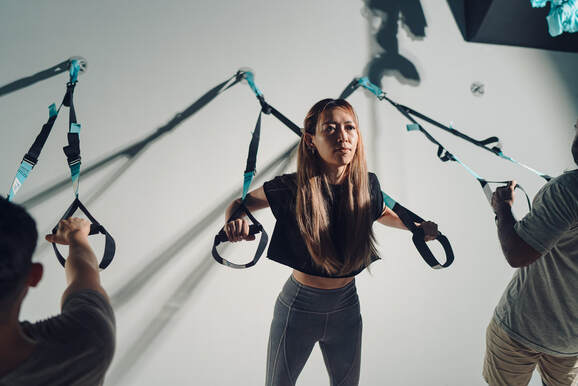
Suspension straps are a great home buy: they give you rows, push-ups & split squats you can make easier or harder by changing your angle.
What to do if you miss a session
Life happens. Here’s how to handle it without starting over:
- Missed one workout? Do the next one in the order when you can. Don’t try to fit two workouts into one day.
- Missed a whole week? Repeat the week you were on, with the same weights.
- Off for two weeks or more? Go back a week & drop your weights by about 10%. You’ll be back where you were within a few sessions.
The week 4 check-in & what to change after
At the end of week 4, sit down with your notes for five minutes & answer these:
| Question | If yes | If no |
|---|---|---|
| Did most of your lifts go up in weight or reps? | Run another 4 weeks with the same plan, starting at week 2’s effort with your new weights | Check your sleep, food & whether you skipped sessions; repeat weeks 3-4 |
| Do the lifts feel steady & the same every rep? | Keep going | Drop the weight about 10% & film yourself from the side |
| Do you feel worn out, sleep badly or ache all the time? | Make week 5 an easy week (a “deload”: 2 sets at RPE 6), then carry on | Carry on |
| Is the goblet squat easy with your heaviest dumbbell? | Move to the barbell back squat | Stay with the goblet squat |
| Are 3 sets of 12 push-ups easy? | Move to the bench press, or harder push-ups | Keep building reps |
| Any pain that didn’t settle within a few days? | Read the soreness vs pain section & get it checked | Carry on |

Signs your strength training routine is working
- The numbers in your notes go up: more weight or more reps on the same weight.
- A weight that felt like RPE 8 in week 1 feels like RPE 6 by week 4.
- Your form looks & feels steadier, & you think less about each rep: proper form starts to feel automatic.
- Everyday jobs get easier: stairs, carrying shopping, getting up from the floor.
- You sleep better & have more energy.
Muscle growth you can see (more muscle size & muscle mass) takes longer, usually a few months of steady weight training. In the first weeks, most of your gains come from your brain & nerves learning the movements. That’s not a sign it isn’t working; it’s exactly how it starts.
Soreness vs pain: what’s normal
| What you feel | What it usually is | What to do |
|---|---|---|
| Dull ache in the muscles you trained, both sides, 1-3 days after, eases as you warm up | Normal muscle soreness (DOMS) | Train as planned; go a little lighter if it’s strong |
| Sharp or pinching pain in a joint, one spot, during a lift | A movement or load problem | Stop that exercise, use a swap & check your technique guide |
| Knee pain in or after squats | Often depth, ankles or too much weight too soon | Read knee pain when squatting |
| Lower back pain after hinging | Often a rounded back or too much load | Read lower back pain after deadlift |
| Pain that lasts more than a week, swelling, numbness or tingling | Something that needs checking | See a doctor before you keep training |
Red flags: check with a doctor first
A quick word from me: strength training is safe for most people, but stop & see a doctor if you get any of these:
- chest pain, pressure or unusual breathlessness during exercise;
- dizziness or fainting;
- pain that wakes you at night or doesn’t ease with rest;
- numbness, tingling or weakness down an arm or leg;
- a joint that swells, locks or gives way.
If you’re pregnant, on medication or managing a condition such as heart disease, high blood pressure or osteoporosis, check with your doctor before you start. (Osteoporosis is not a reason to avoid lifting, done right: see can you lift weights with osteoporosis?)
In Singapore & not sure where to start?
If you’ve read all this & you’re still confused, a bit scared, or just don’t trust yourself to get the technique right, that’s normal. Plenty of people feel exactly the same before their first session. Here’s what I’d do:
- Get assessed first. At MSMC in Farrer Park, our sports medicine trainers start with a $190 full assessment: we test how you move & what’s holding you back, then build your plan around it. We test, we don’t guess. After that, personal training takes you through every lift until it’s yours.
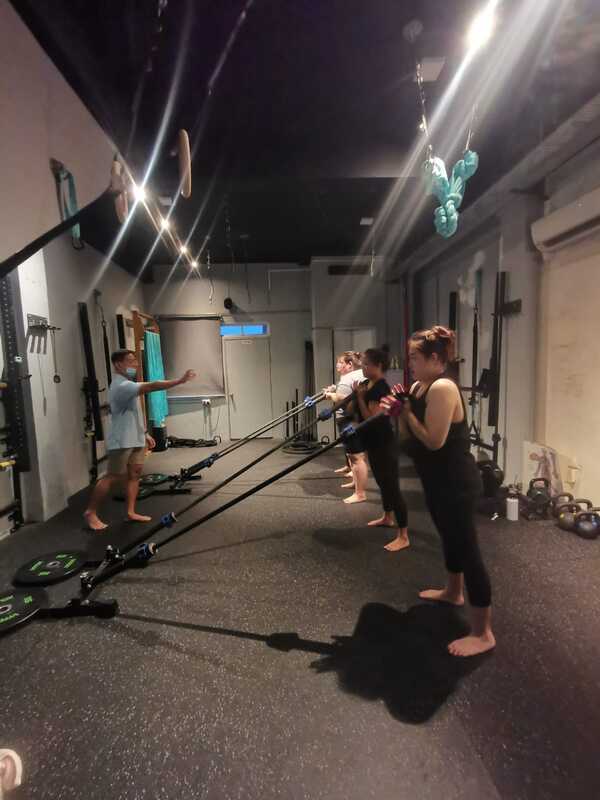
- Or learn in a class. If you’d rather start in a small group, book a strength class on our schedule & use the code READ10 at checkout for 10% off one class. Our beginner barbell lifting class & the other strength training classes in Singapore are good places to start.
- Then follow this plan between sessions, with someone checking your form.
See the class schedule (code READ10)
FAQs
How many days a week should a beginner do strength training?
Two to three days a week, with a rest day between sessions. Three full body workouts is the fastest way to learn the lifts; two is plenty if you’re busy or doing other sport. The World Health Organization recommends muscle-strengthening activity on at least two days a week.
Is a 4-week workout plan for beginners enough to see results?
Four weeks is enough to learn the six movements, find your working weights & see your lifts go up. If you want to build muscle you can see, that usually takes a few months of steady training, so treat week 4 as a check-in, not the finish line.
Is a beginner strength training program for women different from one for men?
No. Women & men train the same movement patterns with the same sets, reps & progression rules. What differs is the starting weight, & that depends on the person, not their sex. Women over 50 may like MSMC’s guide to strength training for women over 50.
Can I do this beginner gym workout plan at home?
Yes. Use the swaps table: a pair of adjustable dumbbells covers every exercise, & the no-equipment column works with your body weight, a chair & a towel. Keep the same sets, reps & effort.
How long should each workout take?
A workout duration of about 50-60 minutes: 5-10 minutes of warm-up, 35-45 minutes of lifting with rest, & a 5-minute cool-down. If you’re short on time, do 2 sets of everything instead of skipping exercises; on a really rushed day, two exercises (a squat & a push-up) still beat nothing.
Should I do cardio as well?
Yes, for your heart & overall fitness. The World Health Organization recommends 150-300 minutes of moderate activity a week, such as brisk walking or cycling. Do it on your non-lifting days or after lifting, & save hard sessions like high intensity interval training (HIIT) for days away from squats so your legs are fresh. If weight loss is one of your fitness goals, lifting weights, regular cardio & good nutrition work best together.
What if I can’t do a push-up yet?
Do them with your hands on a bench, a table or a wall. The higher your hands, the easier it is. Each week, lower the surface a little until you can do 3 sets of 8-10 on the floor.
My verdict
If you’re a beginner, you don’t need a clever programme. You need a fitness routine you can stick with: six movements, two workouts you alternate, sets that stop 2 reps short of failure & a notebook that shows you getting a little stronger every week. That’s this plan. My No.1 tip: start lighter than your ego wants & let the numbers climb. Four weeks from now, the exercises that feel strange today will feel like yours, & your fitness journey will have a real starting point.