
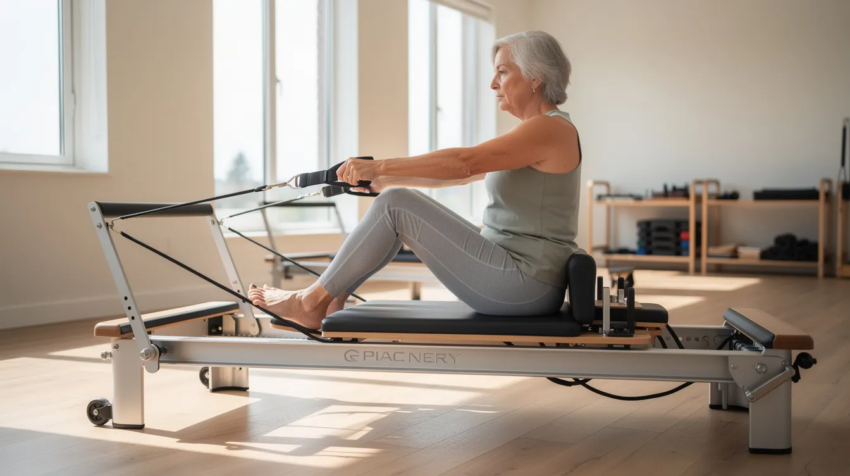
Why Is Everyone Recommending Reformer Pilates for Joint Pain?
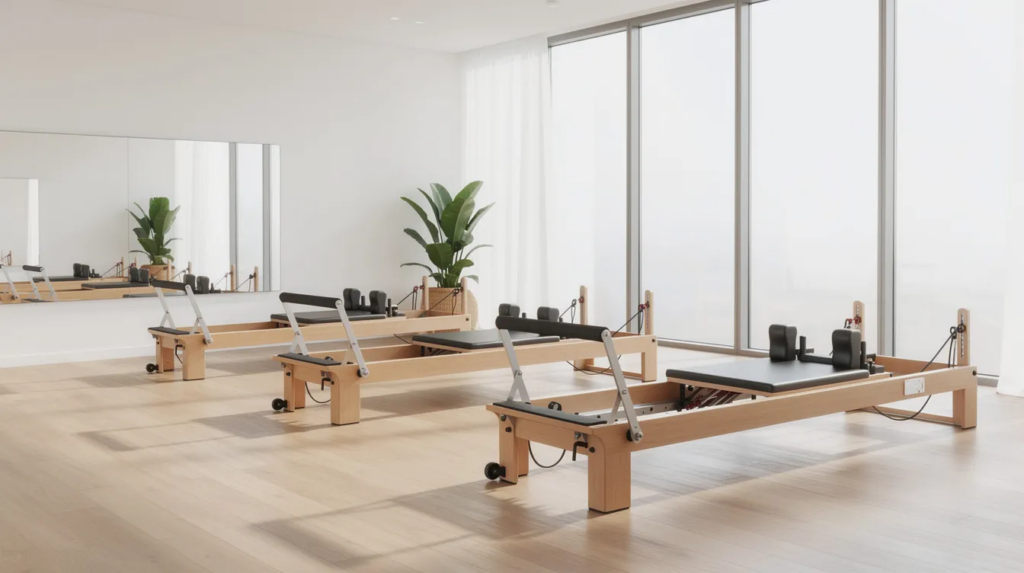
Is reformer Pilates good for joint pain? After 20-plus years working in sports medicine & movement education here in Singapore, my honest answer to the question is Reformer Pilates Best for joint pain?: it depends entirely on how it’s used. Reformer Pilates provides low-impact, closed-chain movements for joint pain relief, and that’s genuinely useful for many people. But “low-impact” is not code for “zero joint stress,” and the distinction matters more than most studios will tell you.
People with knee pain, hip stiffness, lower back discomfort & arthritis are drawn to the reformer because it looks controlled, the carriage supports your weight, and the branding feels gentle. Singapore’s ageing population (roughly 14% aged 65 and above, and climbing), combined with our desk-bound work culture & long commute hours, means musculoskeletal conditions are everywhere, and so are first class promotions at new Reformer Pilates studios. The appeal is real.
Here’s the thing, though. A Reformer is a tool, not a treatment plan. A study on Reformer jumping showed that even “gentle” jumping on the carriage produces peak hip reaction forces around 1.2 times body weight, similar to brisk walking. Whether a reformer exercise helps or hurts your joint depends on your symptoms, your fitness levels, your movement tolerance, and how the exercise is prescribed by someone who understands loading.
How Does a Pilates Reformer Actually Work for Joint Mobility & Loading?
The Pilates reformer has a sliding carriage that moves along a frame, connected to springs of varying tension. You push or pull against these springs using a footbar (for your legs) or straps (for your upper body & lower body). Shoulder blocks and a headrest keep you positioned. The carriage system in reformer Pilates reduces the impact of gravity on joints because you’re often lying down or supported, rather than standing under full body weight.
Equipment features like adjustable footbars and springs enhance reformer Pilates for joint pain by letting you change resistance, range of motion & the direction of force through each joint. Adjusting the springs can help alleviate joint pressure; but here’s where it gets interesting. A lighter spring does not always mean a safer exercise. When the spring is too light, the reformer carriage accelerates freely, you lose control, and your muscles must work harder eccentrically to decelerate it. That can increase shear forces at the knee joint or stress the lower back. A 2024 Korean biomechanics study on experienced instructors found that as spring load increased during footwork, monoarticular knee extensors (vastus medialis, vastus lateralis) showed higher activation, while biarticular muscles like the hamstrings responded differently. The point: spring selection changes which muscles work and how much load passes through each joint.
Controlled movements in reformer Pilates protect joints and support mobility when alignment is right. They also enhance circulation and joint lubrication by promoting synovial fluid movement around the joint surfaces. But forced or misaligned movement on the carriage can irritate the very structures you’re trying to protect.
Here’s what I think people often overlook: individual differences in joint structure, prior injury, pain thresholds & degeneration stage mean the same Pilates exercises could feel therapeutic for one person and provocative for another. Your body position, the direction you push, the range you use; all of it interacts with the spring load in ways that a one-size-fits-all class cannot always account for.
Is Reformer Pilates Good for Knee Pain & “Bad Knee Conditions”?
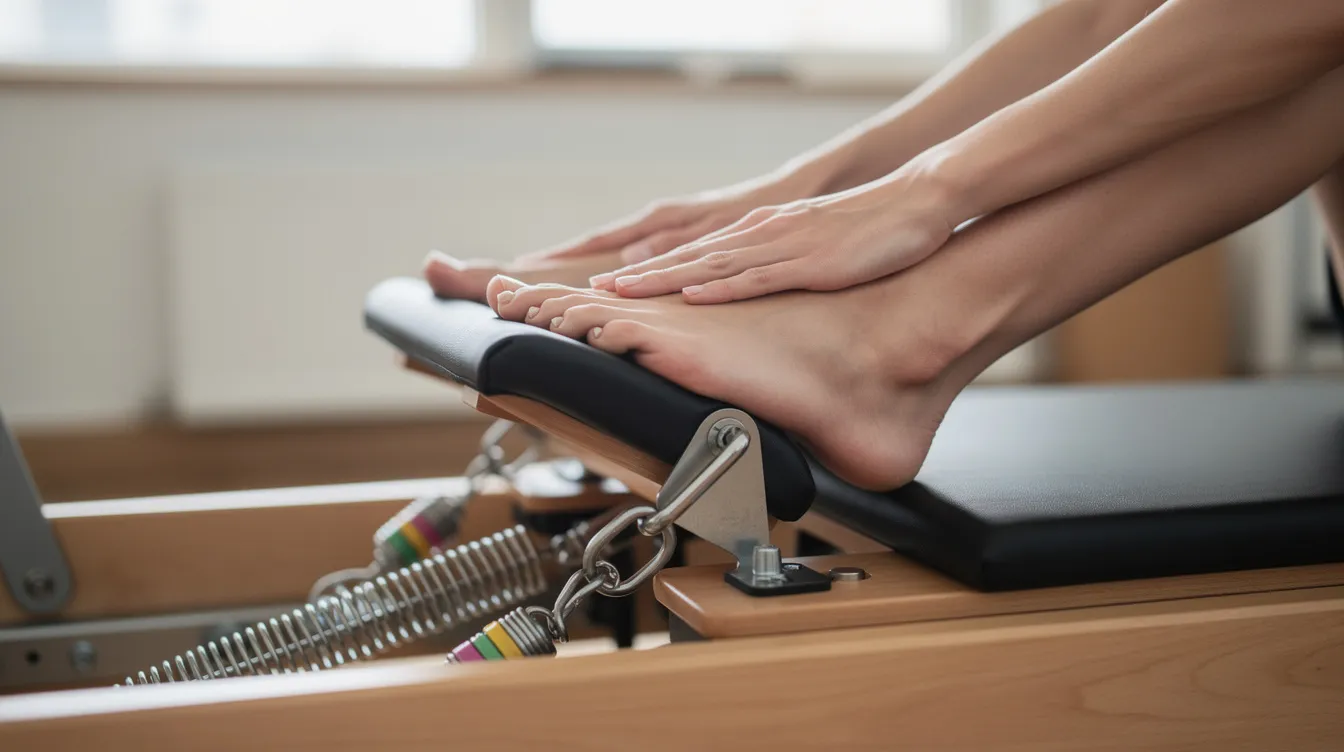
The question isn’t simply whether Pilates is good for your knees. It’s whether the exercise is appropriate for your knees, given your specific knee conditions right now. Reformer Pilates strengthens muscles around joints to reduce pain, and for many people with chronic knee pain, that’s exactly what they need. Reformer Pilates strengthens quadriceps and glutes without impact, which is why it appeals to those who find running or even stair climbing painful.
For knee osteoarthritis, the research is encouraging with caveats. A 2025 meta-analysis of 8 randomised controlled trials involving 322 participants found Pilates helps with knee osteoarthritis: it reduced pain and improved overall function compared to no intervention. A separate network meta-analysis of 38 studies placed Pilates among the most effective mind-body exercise modes for pain reduction in knee osteoarthritis compared to usual care. But when Pilates was compared against other exercise modalities like structured training, the advantage was less clear. Evidence quality remains low to moderate across most studies.
Footwork exercises in reformer Pilates improve knee and ankle stability when performed lying supine with appropriate spring tension, controlled tempo & mid-range knee flexion. Reformer Pilates allows controlled, low-impact knee rehabilitation by letting you adjust exactly how much the knee bends, how fast, and under what load. Clinical evidence shows Pilates improves quadriceps strength in 8-12 weeks, which is central to knee rehabilitation and patellofemoral pain management. Regular Pilates sessions can lead to noticeable pain relief, especially when combined with consistency and gradual progression.
Here’s what I’d consider helpful vs unhelpful for knees:
- Helpful: mid-range knee flexion footwork, slow controlled carriage travel, springs matched to your strength (not too heavy, not too light), alignment cues to keep knees tracking over your second and third toes, performed lying supine for support
- Unhelpful: deep knee flexion under heavy springs, rapid tempo where momentum takes over, ignoring inward collapse (valgus) at the knee, pushing through sharp or burning pain, skipping recovery days after a hard session
If your knee hurts when you climb stairs or squat, tell your Pilates instructor before your first session. Describe the diagnosis if you have one, which movements are worst, whether there’s swelling or giving way, and your current activity level. A qualified instructor will use that information to modify your programme rather than handing you the same routine as everyone else.
Can Reformer Pilates Help Pain Reduction and Stiffness?
Hip joint mobility, glute strength and movement control don’t just affect your hip; they influence your knees, your lower back & your balance. Weak hip muscles, particularly the glute medius, can cause your thigh to drift inward during walking or squatting, putting extra load on the knee joint further down the chain. If you sit at a desk 8-10 hours a day (hello, Singapore office life), your joints stiffen, your hip flexors shorten, and your glutes switch off.
Reformer Pilates improves joint mobility and reduces stiffness through exercises like side-lying leg work in straps, Eve’s Lunge variations & hip bridges. Using straps in exercises facilitates smooth hip joint movement in reformer Pilates because the strap provides partial support, reducing compressive load while your legs move through abduction, adduction or rotation. Pelvic curls in reformer Pilates enhance glute and hamstring strength, and they’re one of the first exercises I’d introduce for someone with general hip stiffness.
But there’s a difference between stiff hips from too much sitting and structural pathology. Hip osteoarthritis involves cartilage loss and joint space narrowing; deep flexion combined with rotation under load can flare it badly. Greater trochanteric pain syndrome causes lateral hip pain when lying on your side or climbing stairs; aggressive outer thigh stretching on the reformer can make it worse. What feels like the best exercise for one hip might irritate another.
- Positions many people love: supine hip bridges, side-lying abduction with strap support, gentle seated hip openers, low lunge at the footbar
- Positions that often need care: deep flexion plus internal rotation, heavy-spring standing lunges, wide straddle in straps, aggressive external rotation when OA or labral issues are present
Monitor how your hip joints feel 24 hours after class. A delayed spike in groin pain or a limp the next morning is a sign the exercise dose or range was too much.
Reformer Pilates Exercises for Lower Back Pain: Helpful or Overrated?
Lower back pain is the condition I hear about most from Singapore clients. Desk workers, taxi drivers, parents hauling kids around; everyone seems to have a back story (pun intended). And most of them have been told at some point to try Pilates exercises for their back.
Reformer Pilates targets pelvic stability through controlled resistance, and it improves pelvic alignment and muscle engagement safely when progressed at the right pace. For people with SI joint dysfunction, reformer Pilates retrains pelvic control through exercises like knee stretches, bridging & single-leg footwork. Controlled movements in Pilates enhance pelvic stability during exercise, which helps build core strength and trunk confidence over time.
A randomised trial of 168 people with chronic non-specific low back pain found that high-intensity and low-intensity Pilates produced similar improvements in pain, disability & fear of movement, but the low-intensity group reported fewer adverse effects. That’s useful information: pushing harder isn’t always better for your back.
Spinal flexion, extension and rotation are not automatically bad for you. Stomach massage, long spine & the knee stretch series all involve spinal movement, and for many people with chronic back pain they build tolerance and reduce fear of movement. For someone with an acute disc herniation or nerve symptoms (numbness running down one leg, weakness in the foot), those same exercises may need to be avoided or scaled back until symptoms settle. The core muscles work best when they’re trained through the range your spine can tolerate right now, not through the range an Instagram video shows.
- Reformer Pilates for lower back pain is one option among many: walking, gym-based strength training, yoga & clinical exercise all have evidence behind them
- Match movements to individual tolerance rather than following blanket rules about what’s forbidden
Reformer Pilates for Arthritis and Adults Over 50 (and 60+) in Singapore
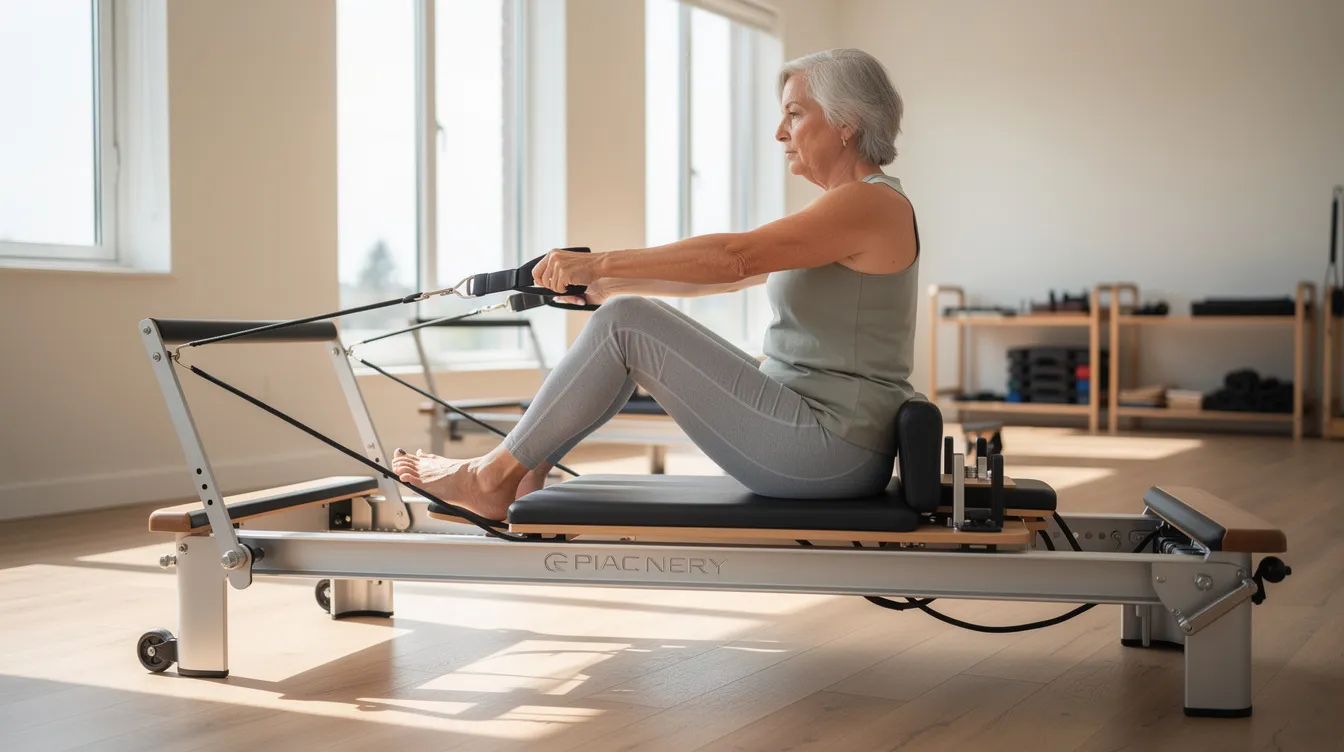
Osteoarthritis means cartilage has thinned, the joint surfaces have changed, and stiffness plus pain show up with weight bearing or after sitting still. A 2015 review found exercise improves pain and function in osteoarthritis, and that finding has been reinforced repeatedly since. The question is which exercise, at what dose.
A meta-analysis of 30 studies involving adults over 60 found Pilates improved dynamic balance, strength, mobility & functional capacity while reducing fall risk. A separate RCT with participants averaging 77 years old showed that once-weekly Reformer sessions for 10 weeks improved balance, timed up-and-go performance, and active range of motion in hip extension and ankle dorsiflexion. Regular practice of reformer Pilates can improve joint health, and joint-friendly Pilates routines focus on gentle strength building and stability, which is exactly what ageing joints need.
We already cater to those in their prime 60s and above, and the approach I use is straightforward: start below the symptom threshold with small ranges, lighter springs & more supported positions. Progress resistance and range over weeks if the joint tolerates it, and back off if pain or swelling increases within 24-48 hours. Reformer Pilates offers low-impact movements and adjustable resistance that suit adults over 50 who want to maintain physical function, improve balance & stay active.
Realistic benefits include stronger legs, better balance, improved confidence on stairs & reduced stiffness. Reformer Pilates is not going to regenerate damaged cartilage or reverse arthritis. It should complement walking, cycling, other exercise & aerobic activities, not replace them.
What to expect in your first class if you have arthritis:
- A health history screen asking about affected joints, severity, previous surgeries
- Lighter springs, shorter carriage travel, blocks or bolsters for joint support
- Slower pace with focus on alignment & breathing
- Possibly a private or small-group format for closer attention
Five Reformer Pilates Mistakes That Could Make Knee Osteoarthritis & Joint Pain Worse
These are the patterns I see most often. None of them are catastrophic on their own, but repeated over weeks, they can turn a helpful programme into a painful one.
- Choosing exercises for looks rather than capacity. That standing lunge variation on the carriage looks great on video. If your knee hurts walking down stairs, it’s probably not your starting point. Build quadriceps strength and joint stability first with simpler reformer exercises, then earn the harder movement patterns over time.
- Assuming lighter springs always mean less joint stress. I covered this above, but it bears repeating. Too little spring tension can make the carriage unpredictable, forcing your muscles to absorb sudden loads. Light spring resistance in reformer Pilates is recommended for joint stability in many cases, but “light” should still give you enough control to move the carriage smoothly through your full range.
- Forcing uncomfortable ranges of motion. Deep knee flexion under load when your knee hurts at 60 degrees is not “working through it.” Reformer Pilates should involve movements within a pain-free range. Explore mid-range work that builds tolerance, then gradually extend the range over sessions as your joint adapts.
- Progressing too quickly. More springs, more Pilates classes per week, harder variations before your tissues adapt; this is how injury recovery stalls or existing pain flares. Joseph Pilates himself emphasised precision over volume. Give your body time.
- Ignoring warning signs. New swelling, a knee that gives way, sharp pain, numbness or pins and needles down your legs; these are not things to push through. They should trigger reassessment, scaling back, or a visit to a healthcare professional.
What to do instead: communicate honestly with your Pilates instructor, track how your joints feel during class and for 1-2 days after, and accept that gradual, assessment-led progress beats fast, painful progress every time.
Reformer Pilates Versus Strength Training for Joint Pain
Both reformer Pilates and resistance training can reduce pain and improve physical function when programmed well. They share the same foundational principles: progressive overload, specificity, consistency & symptom-guided loading.
Where reformer Pilates offers an advantage: multi-plane movement control, spring-based feedback that teaches your body to stabilise, and supportive positions (supine, side-lying) that reduce compressive load on painful knees or backs. Reformer Pilates may relieve pain and improve function for people who find standing exercises difficult, or who need to rebuild confidence in movement after injury.
Where training stands out: gyms are more accessible and often cheaper in Singapore, free weights and machines can load muscles heavier (which matters for bone density and building real functional strength in your lower body), and you can target specific muscle groups; inner thighs, hamstrings, hip muscles; with more precision when needed.
Comparative studies in knee osteoarthritis show Pilates does not consistently outperform well-structured strength training for pain and function. The question isn’t which is the best exercise. It’s which approach, or combination, fits your joints, preferences & fitness goals right now. Some of my clients alternate gym sessions and Reformer classes for a balanced programme that covers strengthening, joint mobility & movement confidence.
Group Reformer Classes or Private Sessions: Which Is Better for Joint Pain & Injury Recovery?
Group classes cost less, offer social accountability, and work well for people with mild, stable aches and reasonable fitness levels. If your pain is predictable and you know how to self-regulate (backing off when a movement doesn’t feel right), a well-taught group class with a competent instructor can be perfectly appropriate.
Private or semi-private sessions give your instructor time for assessment, detailed technique correction & real-time modification. If your knee conditions are complex, you’ve recently had ACL reconstruction or meniscus surgery, you have moderate to severe osteoarthritis, or you’re dealing with new back pain that includes leg numbness, individual attention matters.
- Consider private first: recent surgery, sharp pain with certain movements, multiple painful joints, neurological symptoms, post-injury recovery phases, never used Pilates equipment before
- Okay to start in group: mild stable knee or hip stiffness, previous movement experience, no sharp or worsening pain, instructor known to offer variations
Neither format is automatically safe or unsafe. What matters: the instructor’s skill, their willingness to modify, and your own ability to speak up when something doesn’t feel right.
What Should Singaporeans Look for in a Reformer Pilates Studio for Joint Pain?
A practical checklist:
- Instructor qualifications & experience: look for training in exercise science, anatomy, corrective exercise & experience with older adults or people with musculoskeletal conditions
- Initial screening: a health questionnaire asking about joint pain, surgeries, medical clearance, what movements hurt and your current activity level; not just jumping into the first session
- Visible exercise modifications: lighter springs, reduced ranges, alternate positions, support props. Reformer Pilates can be safely practiced with guidance from a qualified instructor who knows when and how to modify
- Class size: small enough that the instructor can watch your posture, alignment & movement patterns
- Equipment maintenance: well-maintained springs, clean straps, secure footbar; basic but overlooked, especially in humid Singapore with high studio traffic
- Communication: instructors who ask about pain, encourage you to self-regulate, and explain why they choose each exercise
- Transparent pricing & trial options: trial classes let you test instructor style and studio fit without committing to a large package
When Should You Avoid or Modify Reformer Pilates with Joint Pain?
See a healthcare professional before continuing if you experience:
- Sudden severe joint pain (not mild post-exercise soreness)
- Major swelling, joint locking or repeated giving way
- Numbness, tingling or weakness in a limb
- Fever or unexplained weight loss alongside joint pain
- Loss of bowel or bladder control (rare but urgent in spinal compression)
Persistent aches does not automatically mean you must stop all exercise. It does mean you should adjust intensity, range & exercise type. An acute ankle sprain, a knee immediately post-surgery, a recent fracture, or an uncontrolled inflammatory arthritis flare all call for temporary modification or avoidance; not permanent fear of movement.
A responsible instructor will scale back, avoid pushing you into pain, and refer you to a doctor or physiotherapist when needed. If an instructor tells you to just push through sharp sensation, that’s a red flag, not motivation. Track your symptoms during class and for 24-48 hours after; that data tells you whether your current programme is right for your joints.
FAQs: Reformer Pilates for Joint Pain
Is Reformer Pilates good for joint pain?
Is Reformer Pilates safe for bad knees?
When should I see a doctor or physiotherapist before starting Reformer Pilates?
What is the best exercise for arthritis pain; Pilates, yoga, or resistance training?
Do I need a Reformer, or is mat Pilates enough for joint problems?
How often should I do Reformer Pilates if I have arthritis?
Is Reformer Pilates good for lower back pain?
Can Reformer Pilates help with hip aches or stiffness?
My Final Thoughts: It’s Not Just the Reformer. It’s How You Use It.
After two decades in sports medicine & movement education, I’ve seen reformer Pilates help people with joint pain move better, feel stronger & stay active well into their 60s, 70s and beyond. I’ve also seen it flare up knees, hips and backs when exercises were chosen poorly or progressed too fast. The reformer is not inherently gentle, and it is not inherently risky. It is a piece of Pilates equipment that responds to how you use it.
Just because an exercise looks gentle doesn’t mean it’s suitable for everyone. My approach is assessment-led: start from your symptoms, your goals & your tolerance, then decide which exercises, what spring load, what range and what other activities fit best. Reformer Pilates addresses joint pain well when it’s part of a broader plan that includes strengthening, movement variety & honest self-monitoring.
If you’re in Singapore and considering reformer Pilates for joint pain, be curious, ask questions, and choose instructors who can explain why they picked each exercise for you. Stay active, adjust as your body changes, and remember: a Reformer is a tool. You are the plan.
