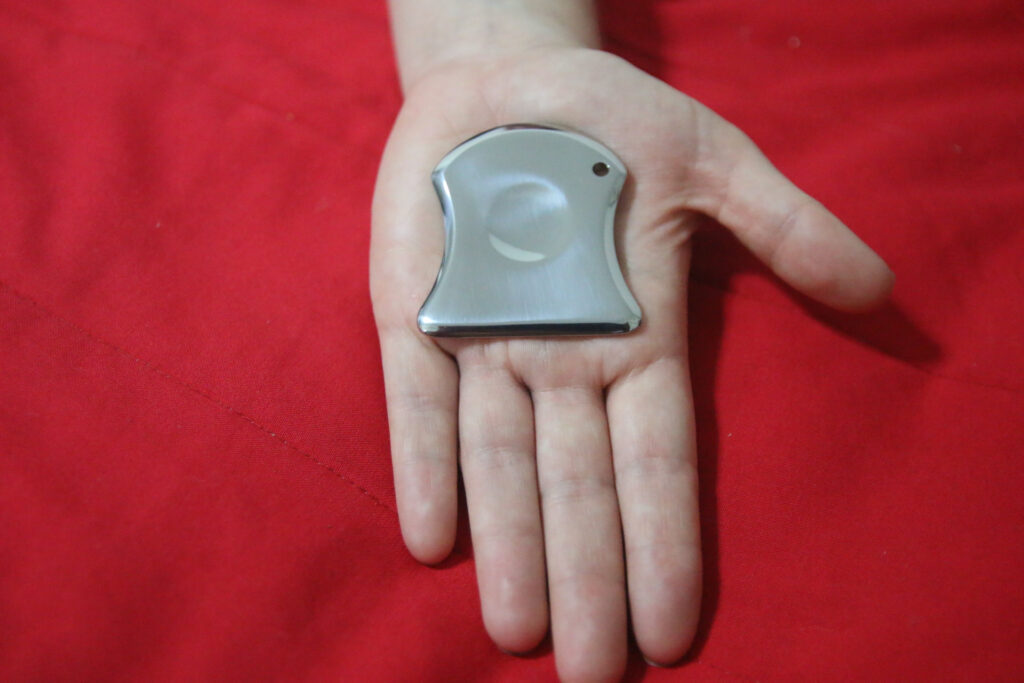
An IASTM course teaches you instrument assisted soft tissue manipulation: using smooth steel tools to scan soft tissue for restrictions & then treat them, and how to fit that into the rest of your rehab or training. In ITI’s 16-hour IASTM Clinic you learn tool choice & handling, the techniques for each body area, modifying them for the person in front of you, and where IASTM fits alongside exercise. It suits physiotherapists, manual therapists & rehab specialists, and personal trainers who already work with people in pain & are ready to add a hands-on tool.
By Jab, founder of the Integrated Training Institute (ITI) & Movement & Sports Medicine Centre (MSMC) in Singapore. Last updated 21 November 2026.
Key facts: ITI’s IASTM Clinic
- Length: 16 hours
- Covers: Gua Sha & IASTM, types of tool & how to choose them, tool anatomy, handling & techniques, treatment & prognosis, the S.C.M protocol, modifying techniques, kinetic chain release & practitioner positioning
- Before you come: gross anatomy knowledge helps; ITI recommends an online basic anatomy & physiology source
- Tools: provided for practice, and you can bring your own; the techniques work with other IASTM tools
- You receive: practice sessions, a certificate, an e-manual, a listing as an IASTM practitioner & post-course support in ITI’s Facebook group
- Award: IASTM Practitioner Certificate (credential: IASTM Prt)
- Next steps: IASTM II (advanced concepts, 8 hours) & the Advanced IASTM Practitioner certificate
- Course information: dates & pricing are on the course page

Why I teach IASTM
I’ve coached & taught for more than 20 years, and I founded ITI in 2010 to train fitness professionals & therapists. Instrument assisted soft tissue work became part of how I work because it does two things well: it lets me feel what’s going on in the tissue quickly, and it gives the client something they can feel too. So read this with that in mind. I’m not neutral about IASTM, but I’ll be straight about what it is & who it’s for.
Instrument assisted soft tissue mobilisation (IASTM) in plain words
IASTM stands for instrument assisted soft tissue manipulation; you’ll also see it called assisted soft tissue mobilisation. It’s a form of manual therapy & soft tissue treatment. The practitioner glides a smooth, rigid tool, usually stainless steel, over the skin with a lubricant. The tool picks up texture under the skin better than bare hands, so you can scan an area & find spots that feel restricted, thickened or tender. Then you treat those spots with controlled strokes. ITI’s course description puts it this way: the tools help clinicians locate & treat soft tissue dysfunction, detect & treat fascial restrictions, and work on areas of fibrosis, chronic inflammation or degeneration, always alongside exercise & other methods such as joint mobilisation.
It grew out of older scraping traditions like Gua Sha, but it’s used differently. In our clinic, IASTM is a tool that helps manual therapists scan for tissue dysfunction, then work on it, as one part of a plan that also includes exercise. It’s used for scar tissue, myofascial restrictions & range of motion, and to support rehabilitation. I always say “support”: the tool doesn’t replace the strength & movement work that follows it.
Being honest about the evidence: research on IASTM is still limited & mixed. Some studies show short-term gains in range of motion & pain, others show little difference from other manual therapy. That’s why I teach it as part of a treatment, never the whole treatment.
What you learn on an IASTM course
A good IASTM course should teach you the tool, the techniques, and the judgement to know when not to use them. Here’s what ITI’s IASTM Clinic covers, taken from the course page:
- Gua Sha & IASTM: where the method comes from & how IASTM differs.
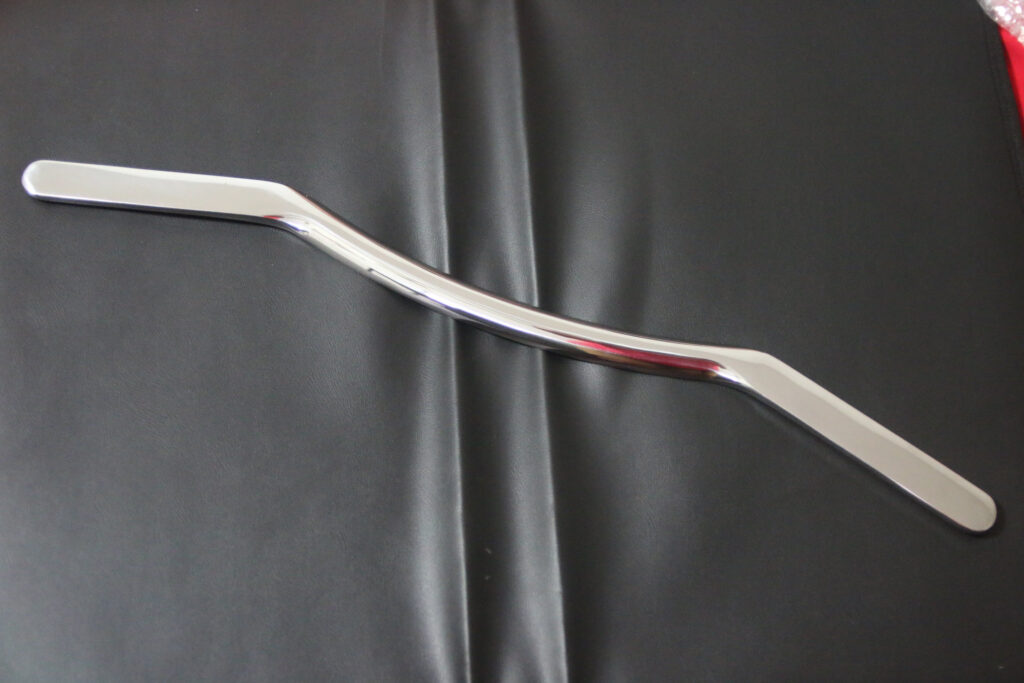
- Types of tool & how to choose them: shapes, edges & what each is good for, so you pick the most practical tool for your work.
- Tool anatomy: the edges, curves & angles, and why they matter on different body parts.
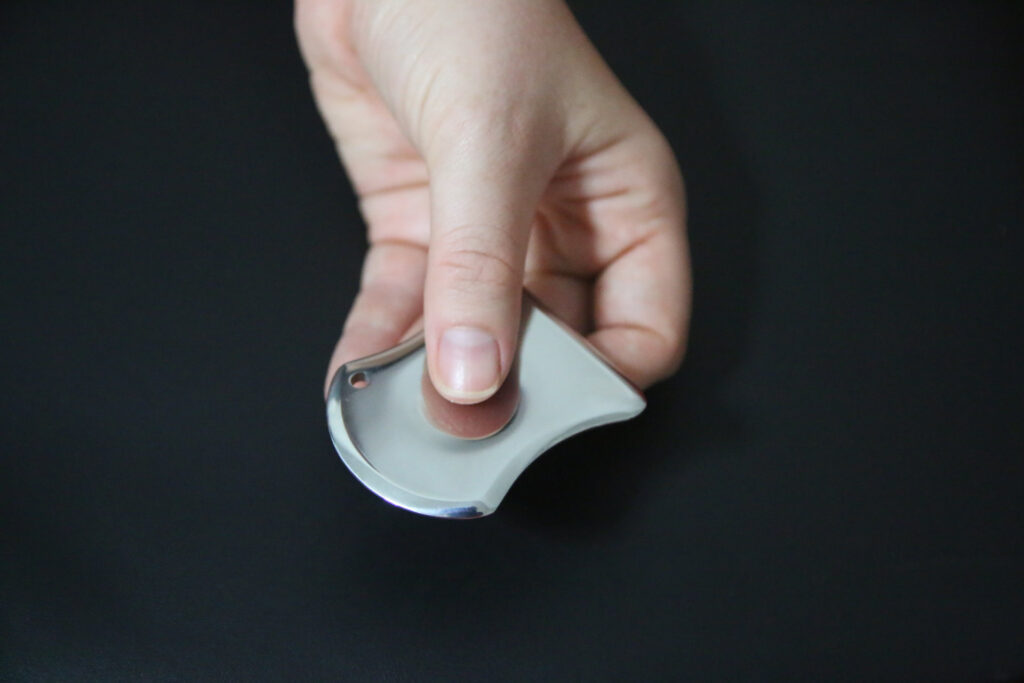
- Handling & techniques: grip, angle, pressure, stroke direction & speed.
- Treatment & prognosis: how a session is structured & what to expect from it.
- The S.C.M protocol, as taught in the clinic.
- Modifying techniques: adjusting for the person, the area & how they respond.
- Kinetic chain release: treating the whole chain, not just the sore spot.
- Practitioner positioning: so you work well & protect your own back, wrists & hands.
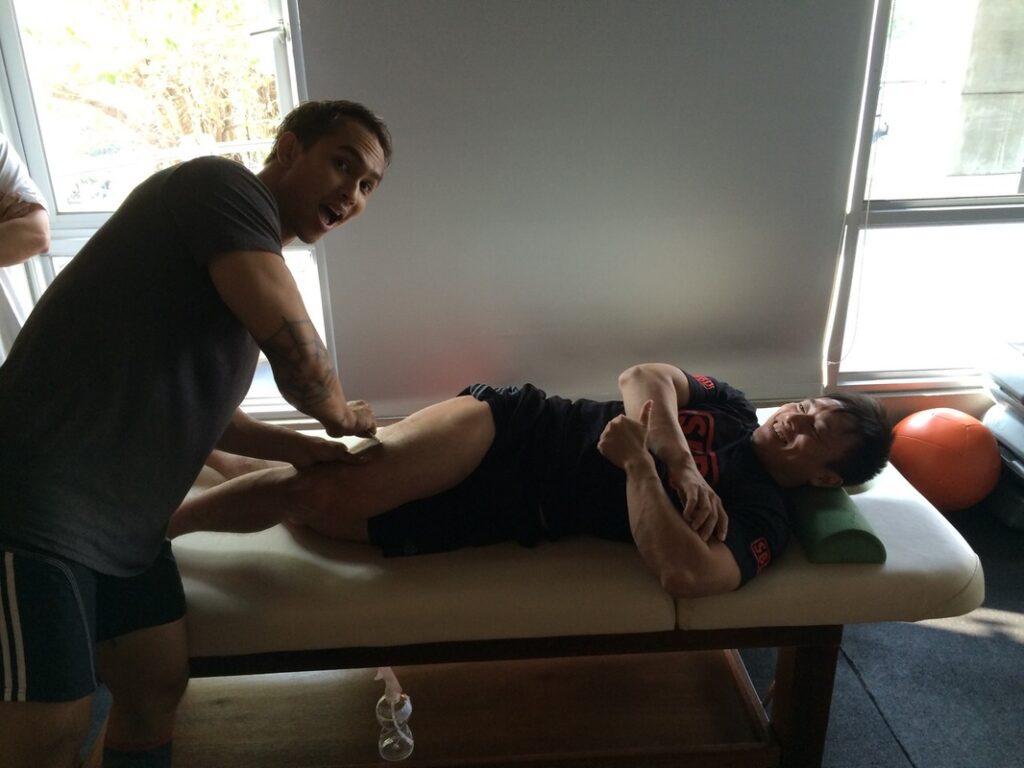
You practise on most of the body: the plantar fascia, Achilles tendon, calves & shins; the thighs, hamstrings, IT band, piriformis, SI joint & glute medius; the erectors & lats along the back; the rhomboids, rotator cuff & upper traps; and the ribs, diaphragm, chest, shoulders & forearms. Because of that, you’ll expose areas like the thighs, glutes, chest & ribs, so wear sports shorts & a sports top.
How I teach IASTM techniques & the application of IASTM
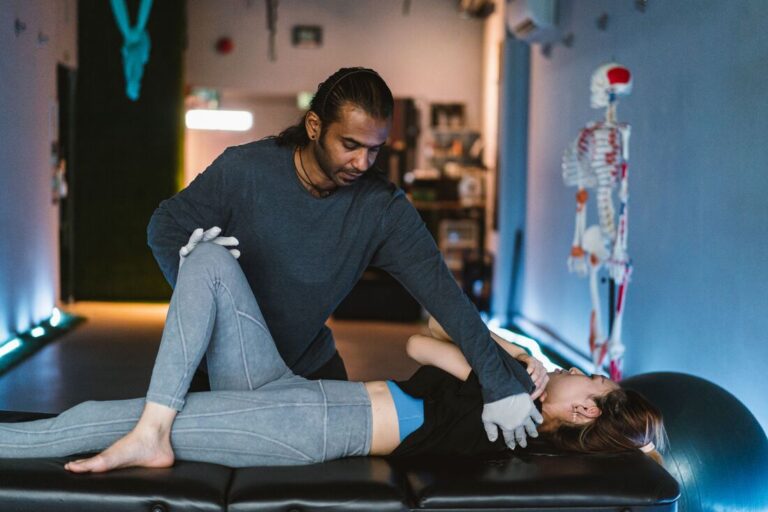
The practical part takes most of the time. I demonstrate specific techniques on one body area, you practise on a partner, then I correct your angle, pressure & speed while you work. That last part is the reason to take a live course. Videos show you a stroke; they can’t feel how hard you’re pressing. If your learning style is hands-on, you’ll like it. If it isn’t, it’s still the right way to learn the right techniques with a tool.
The order I teach in a treatment is simple:
- Assess. Watch how the person moves & test the range that bothers them.
- Scan. Light, broad strokes to find where the tissue feels different.
- Treat. Focused strokes on those spots, at a pressure the person can relax into.
- Re-test. If nothing changes, move on. The tool isn’t the answer that day.
- Move. Follow with exercise for strength & mobility, so the change has a reason to stay.
You’ll also learn the common mistakes: pressing too hard, working too long on one spot, and chasing redness. Redness is normal, but too much pressure can bruise, and more isn’t better. Successful completion means showing a clear understanding of the tool & its effective application: to graduate, you need to understand & correctly apply it.
Which conditions IASTM therapy is used for
The course page lists musculoskeletal conditions where practitioners use IASTM treatment, including plantar fasciitis, Achilles & patellar tendinitis, rotator cuff tendinitis, IT band syndrome, shin splints, muscle strains, ligament sprains, chronic ankle sprains, chronic joint swelling after sprains & strains, back pain, and post-surgical & traumatic scars, myofascial pain & restrictions. In clinics it’s also commonly used around the tendons of the elbow, as in lateral epicondylitis (tennis elbow), and on the neck & upper back. Scar tissue is one of the areas where I find the tool most useful, because you can feel the texture change through the steel. The aim in every case is to reduce pain & help movement, not to chase the tissue. For personal trainers, I’d add a line here: you’re not diagnosing any of these. If a client has a diagnosis from a doctor or physio, IASTM can be one part of how you help them move. If they don’t, & something isn’t right, see a doctor first.
Who should take an IASTM course: entry requirements & prior experience
ITI’s IASTM Clinic is designed for physiotherapists, chiropractors, osteopaths, medical practitioners, Rolfers, licensed or registered manual therapists, exercise & rehab specialists, strength & conditioning coaches, athletic trainers, and personal trainers. In my experience it’s most useful for:
- Physiotherapists & manual therapists who want a faster way to scan & treat soft tissue.
- Rehab & exercise specialists who already know anatomy & want a hands-on tool to pair with exercise.
- Personal trainers & coaches who work with clients after injury, alongside their doctor or physio.
- Massage therapists, including those in remedial massage & sports massage therapy, who want to save their hands & thumbs.
- Sports therapists working in sports therapy with athletes & teams.
On entry requirements: there’s no formal qualification listed, but gross anatomy knowledge is strongly recommended, and ITI points you to an online basic anatomy & physiology source. Healthcare professionals & clinicians usually have that already. Trainers with an exercise science background are in a good place too.
Who should wait: a new trainer in the fitness industry who can’t yet name the muscles of the hip or coach a clean hinge. Learn your anatomy first; you’ll get far more out of the course. And if you’re hoping a tool alone will give you a new career, it won’t. It adds to a skill set you already have.
When not to use IASTM
Whatever course you take, learn the precautions before the strokes. As a general rule, don’t use a tool over broken skin, open wounds, rashes or infection, over varicose veins, over a recent fracture or a fresh injury with heavy swelling, or on someone with unexplained pain, numbness or a condition that makes them bruise easily (including people on blood-thinning medicine) without their doctor’s advice. When in doubt, see a doctor first. The skin will tell you a lot: if it’s reacting badly, stop.
IASTM training options compared
There’s more than one way to learn instrument assisted soft tissue work. Here’s how ITI’s IASTM pathway compares with learning on your own. I’ve left the course fee out on purpose: dates & fees change, and they’re always current on the course page.
| Option | Length | Hands-on feedback | Before you start | What you get | Best for |
|---|---|---|---|---|---|
| Web videos | Any | None | Nothing | No certificate | Curiosity only |
| Online IASTM course (ITI lists an online IASTM Clinic course) | Self-paced | Limited | Basic anatomy helps | See the online course page | People who can’t attend live |
| IASTM Clinic (live) | 16 hours | Live, while you practise | Gross anatomy helps | IASTM Practitioner Certificate, e-manual, listing | Therapists, rehab specialists & trainers starting out with tools |
| IASTM II (advanced) | 8 hours | Live | The IASTM Clinic fundamentals | Advanced concepts | Practitioners adding IASTM to movement |
| Advanced IASTM Practitioner certificate | Your own time | None; assessed by an online exam & an MCQ exam | A 2,500-word research thesis & 150 documented clinical cases | Advanced IASTM Prt certificate | Experienced practitioners |
IASTM II builds on the first clinic with three stages of loading used together with manual therapy & exercise: the shortened state, the lengthened state & the dynamic state (movement). That’s where IASTM becomes part of how someone moves, not just something done to them on a table.
IASTM tools: do you need your own?
Not to learn. Tools are provided for practice, and the techniques we teach work with most IASTM tools on the market, so you don’t have to buy ours. If you already own tools, bring them: we compare the types available & what makes them different. Ours are made of surgical grade stainless steel, which is easy to clean, hypoallergenic for all skin types & gives clear feedback through the tool. Participants get an exclusive price if they want to buy, but there’s no pressure to.
How to integrate IASTM with training & other skills
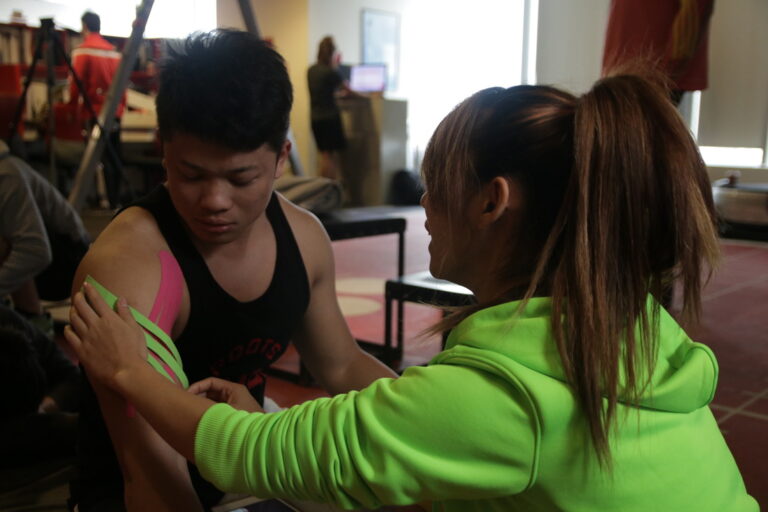
IASTM works best next to other skills, not on its own. It sits well with taping, stretching & strength work, and with functional movement training that gives the change somewhere to go. Some clinicians pair it with dry needling, but that’s a separate course with its own eligibility rules. Whatever you combine it with, adapt it to each person’s specific needs. If you’re weighing up short courses, I wrote about whether a kinesiology taping course is worth it for personal trainers, which is a good first hands-on course for many trainers. IASTM is also one of the methods inside ITI’s Sports Medicine Trainer certificate, and the IASTM Clinic is one of the ITI courses that can be combined & converted towards it. I explain that pathway in what a sports medicine certificate adds to a personal trainer’s career.
If you’re in Singapore & you’re looking for help with pain yourself, rather than a course, MSMC’s guide explains how a sports medicine approach to training helps people in pain.
Questions to ask before you book any IASTM course
- How many hours are hands-on, and will someone correct my pressure & angle?
- Are contraindications & precautions taught, not just mentioned?
- Will I practise on every major body area?
- Do I have to buy a particular brand of tool to use what I learn?
- What do I get on completion, and is there support afterwards?
- Is there an advanced level when I’m ready?
My verdict
If you already work hands-on with people, or you’re a trainer who works with clients after injury alongside their medical team, an IASTM course is a practical skill you’ll use every week. Learn it live, learn the judgement as well as the strokes, & keep it as one tool in a plan built on movement. If you’re new to the industry, get your anatomy & coaching basics first, then come back to it.
To see the next dates & pricing, or ask whether it suits your work, enquire about this course on the ITI IASTM Clinic page.
FAQs about IASTM courses
What does IASTM stand for?
Instrument assisted soft tissue manipulation (also called mobilisation). It means using a rigid tool, usually stainless steel, to scan & treat soft tissue.
How long is ITI’s IASTM course?
The IASTM Clinic is 16 hours. IASTM II, the advanced course, is 8 hours.
Can personal trainers take an IASTM course?
Yes. Personal trainers are on the list of people the IASTM Clinic is for. Gross anatomy knowledge helps beforehand, and you should use it within your scope, alongside a client’s doctor or physio when there’s an injury.
Do I need to buy IASTM tools for the course?
No. Tools are provided for practice, and the techniques work with other IASTM tools. You’re welcome to bring your own.
What certificate do I get?
An IASTM Practitioner Certificate (credential: IASTM Prt), once you show you understand & correctly apply the tool. You also receive an e-manual & a practitioner listing.
Is IASTM the same as Gua Sha?
They’re related, but not the same. Gua Sha is a traditional scraping practice; IASTM uses purpose-shaped tools to scan for & treat soft tissue restrictions as part of rehab & training.
Is there an online IASTM course?
Yes, ITI lists an online IASTM Clinic course for people who can’t attend live. I still recommend a live course if you can, because pressure & angle are hard to judge without feedback.
Can a massage therapist do IASTM?
Yes. Massage therapists & licensed or registered manual therapists are among the people the IASTM Clinic is designed for, and many use the tools to protect their hands.
What is IASTM in physiotherapy?
In physiotherapy, IASTM is one manual therapy option: a tool is used to find & treat soft tissue restrictions, usually followed by exercise. Physiotherapists are one of the main groups who take the course.
What does the course fee include?
The course page lists practice sessions, a certificate, an e-manual, an IASTM practitioner listing, post-course support in ITI’s Facebook group & an exclusive price on tools for participants. The current fee & dates are on the course page.
What’s the refund policy?
Please read ITI’s course policies before you register: https://www.itigrad.com/course-policies.html