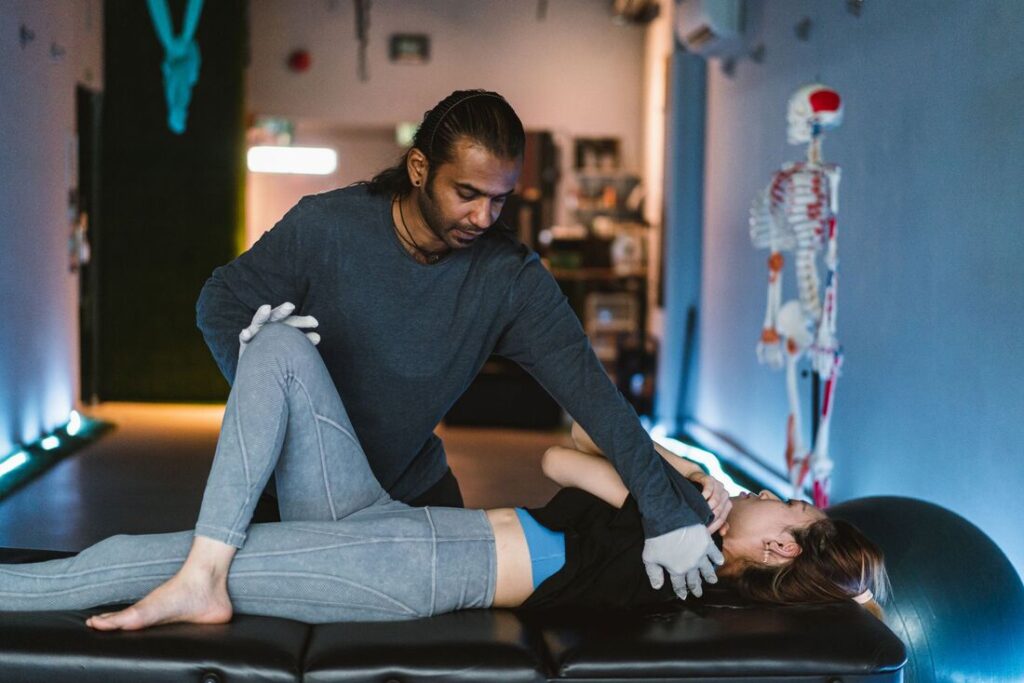
A sports medicine certificate adds three things to a personal trainer’s career: a bigger set of skills for people in pain or recovering from injury, the language to work alongside doctors & physiotherapists, and supervised hours with real clients. It doesn’t make you a medical professional, and it isn’t an easy shortcut. What it does is move you from “the one who counts reps” to the coach clinics, athletes & people with niggles want to train with.
By Jab, founder of the Integrated Training Institute (ITI) & Movement & Sports Medicine Centre (MSMC) in Singapore. Last updated 21 November 2026; course facts checked against the updated ITI course pages.
Key facts: ITI’s Sports Medicine Trainer (SMT) Certificate
- Three levels: Level 1 Foundation, Level 2 Intermediate, Level 3 Advanced Specialisation
- Each level: 20 days of intensive training, then a 5-month mandatory internship (about 43 hours) at Movement & Sports Medicine Centre
- Graduation: a theory exam after the internship, with a 100% pass mark required
- Level 1 prerequisites: none; Level 2 follows Level 1, Level 3 follows Level 2
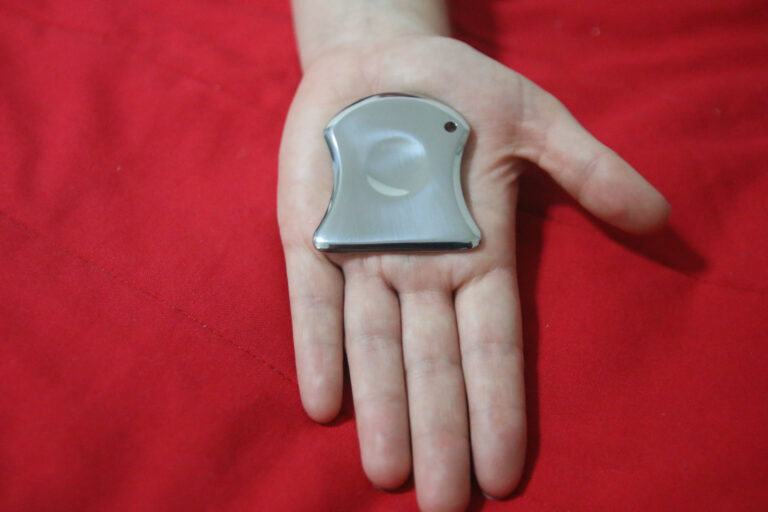
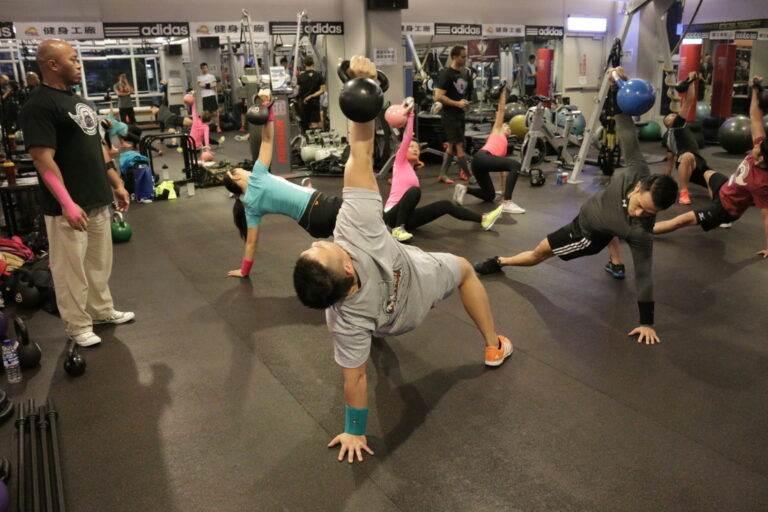
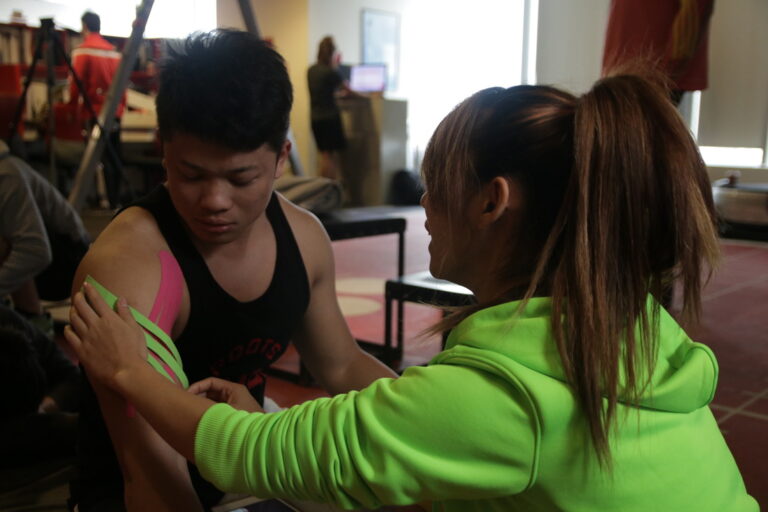
- Methods covered: kettlebells, barbell, battle ropes, suspension, dead ball, cupping, IASTM, BFR training, kinesiology taping, stretch therapy, breathing & programming
- Earlier ITI courses: CKC 1 & 2, the Kinesiology Taping Clinic, F.S.T, Neuro-MSK Cupping, IASTM & BreathEra can be combined & converted towards it
- Intake right now: intern intake only, by invitation. There’s no open sign-up; you register your interest on ITI’s certificate page
- Scope: it does not make you a doctor, physiotherapist or allied healthcare provider; it teaches you to work alongside them

Why I care about this question
I started out as a PT. Over the years I kept meeting people who’d been through physio, osteopathy or TCM and were still stuck, and who got better through regular, well-coached movement. That’s what pushed me to study osteopathy in Canada & then sports medicine, and to open MSMC in 2019.
It’s also why I built a sports medicine course for PTs & coaches through ITI, the institute I founded in 2010. So I’m not neutral here. But I can tell you honestly what a sports medicine certificate changes in your day, and what it doesn’t.
What a sports medicine certificate adds to your career
1. A bigger toolbox for people in pain
Most PT certifications teach you to programme for healthy adults. Then the first real people you train arrive with a sore back, a stiff shoulder or a knee that “goes” on the stairs. A sports medicine certificate gives you more ways to help them keep moving & provide better care: kinesiology taping, cupping, IASTM, blood flow restriction (BFR) training, assisted stretching & breathwork, alongside proper strength training.
2. The language to work alongside medical professionals
This is the part most PTs underrate. When you understand basic medical terms, anatomy & scope of practice, a physiotherapist or doctor can give you input on someone you train and you can follow it. You also know when to refer. That builds trust, and in this industry, trust is where referrals come from.
3. Real client hours under supervision
Each level of ITI’s certificate includes a 5-month internship at MSMC, at least once a week for two hours. You apply what you learn in a real setting, with someone experienced watching. In my view, this is what turns knowledge into skill & confidence in the real world.
4. Programming that goes beyond “3 sets of 10”
The certificate overview also lists the theory underneath: anatomy & physiology, pathophysiology, biomechanics, ethics & scope of practice. Level 1 teaches weekly programme design for strength, hypertrophy & endurance. Level 2 adds more exercise physiology, 4-week periodisation blocks and mixed-goal programmes. Level 3 expands to a six-month progression model. That’s the difference between a session & a plan.
5. A clearer place in the market
Singapore’s training industry has a lot of PTs. Fewer can coach confidently with someone who has been discharged from physio and still doesn’t feel ready. That gap is where you fit.
Where a sports medicine trainer fits in sports medicine
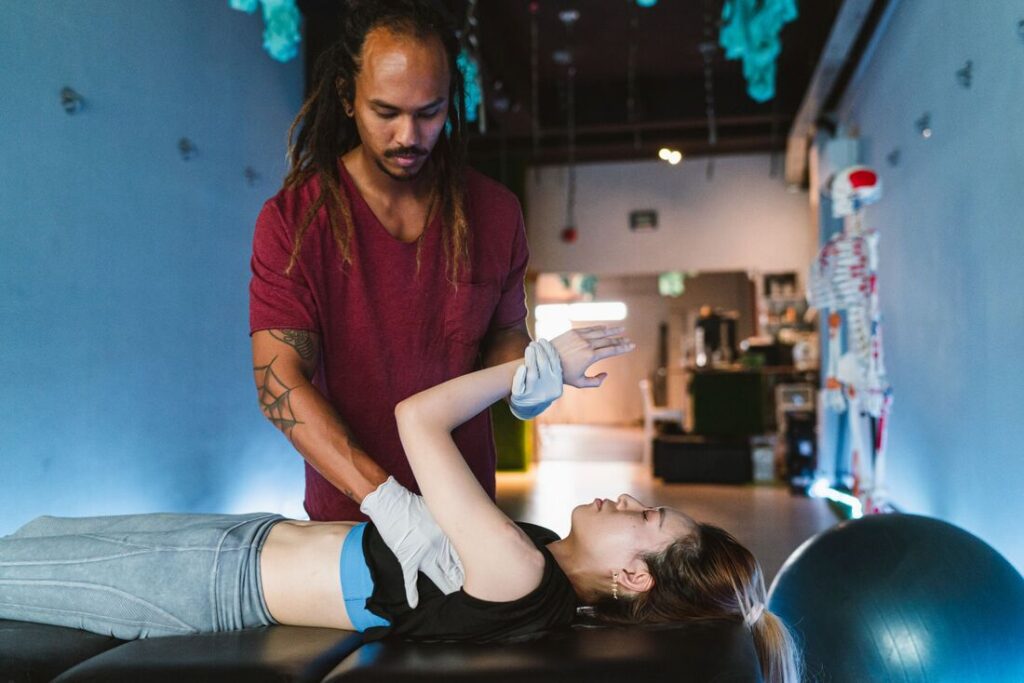
“Sports medicine” covers a lot of jobs. Common roles include team physicians, sports physiotherapists & athletic trainers, and those need a medical, physiotherapy or other healthcare degree. Some university sports medicine programmes ask for a medical or bachelor’s degree before you can enrol, so check what any programme requires.
In Singapore, sports medicine is a recognised medical specialty. Doctors who specialise in it complete a medical degree, then specialist training that includes 3 years of Sports Medicine Advanced Specialist Training, and NTU’s one-year, part-time Graduate Diploma in Sports Medicine is aimed mainly at doctors registered with the Singapore Medical Council, with injury prevention & chronic disease among its focus areas. A certificate or diploma on its own doesn’t give anyone the right to practise medicine, and that includes ours.
A sports medicine certificate for PTs sits in a different place. It bridges a gap the industry has always had between general health & fitness training and specialised care: injury prevention, rehabilitation support, exercise prescription, return-to-training, recovery & athletic performance, for professional athletes & recreational exercisers alike. ITI’s Level 1 needs no prior degree, and like many good programmes it includes field experience, in our case the internship.
Day to day, that means you still do what a good PT does: assess, design customised programmes for each person’s goals, make sure every exercise is done safely, then track progress & adjust. You just do it with more methods & a better understanding of health, physiology & what’s going on underneath.
What it doesn’t do (please read this part)
- It isn’t a medical qualification. The course page is clear: it will not make you a doctor, physiotherapist or any allied healthcare provider.
- It doesn’t qualify you to give medical treatment or diagnose. Red flags like sharp or worsening pain, numbness or unexplained swelling mean a doctor first.
- It doesn’t guarantee income. It gives you skills. How you use them, and how well you look after people, is what builds a living in this industry.
Sports Medicine Certificate Level 1 vs 2 vs 3
The certificate is a 3-tier system. Each level builds on the last.
| Level 1: Foundation | Level 2: Intermediate | Level 3: Advanced Specialisation | |
|---|---|---|---|
| Who it’s for | PTs, therapists, people moving into fitness & beginners | Level 1 graduates & practising coaches | Experienced coaches, rehab professionals & Level 2 graduates |
| Format | 20 days + 5-month internship | 20 days + 5-month internship | 20 days + 5-month internship |
| Strength tools | CKC Level 1 kettlebells, barbell basics, suspension, dead ball, battle ropes | CKC Level 2, barbell with chains, Olympic lifts, MetCon | Advanced barbell methods, functional suspension systems |
| Recovery tools | Static cupping, IASTM basics, BFR basics, I-strip taping, stretch straps | Dynamic cupping, pin-and-stretch IASTM, BFR pressures, Y-strip taping, PNF | F.S.T, fan taping, integrated IASTM, BFRT & cupping |
| Breathing | Breathing basics & diaphragmatic breathing | SpO2 tracking & structured breathwork | Tool-induced breathwork |
| Programming | Weekly programmes for strength, hypertrophy & endurance | 4-week periodisation & mixed goals | Six-month progression models |
| Graduation | Theory exam, 100% required | Theory exam, 100% required | Comprehensive theory exam, 100% required |
Which fitness professional should take it?
From the course pages, Level 1 is designed for:
- fitness professionals who want to deepen their skills;
- chiropractors, physiotherapists & manual therapists who want to use exercise tools in sessions;
- career changers who want a strong foundation before entering the fitness industry;
- massage therapists, wellness coaches & yoga teachers with a strong interest in movement & recovery;
- beginners who want to learn proper technique from day one.
My honest view: it suits coaches who already enjoy the “why” behind movement, and who are willing to be told they’re wrong in front of someone & grow from it. If you mainly want to run high-energy group classes, you may get more from a single short course first.
Sports medicine course Singapore: how to choose
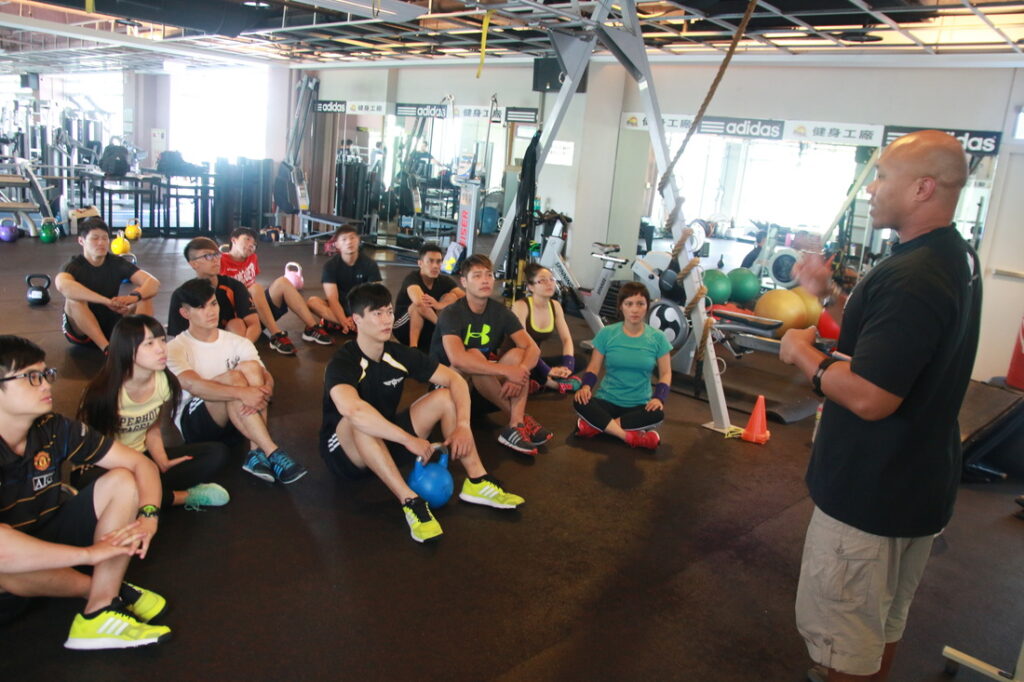
Search for a sports medicine course in Singapore and you’ll find everything from university programmes for doctors to short online modules, and the industry uses the same words for very different things. Whichever provider you explore, here’s what I’d check before you commit. It’s easy to be impressed by a long list of techniques; these questions are more important.
- Supervised hours with real people. Does the programme offer an internship or placement, or is it all classroom?
- Clear scope of practice. Does it say plainly what you can & can’t do afterwards? A good course is honest that it doesn’t make you a clinician.
- A real assessment. Is there an exam or practical test you can fail? If everyone passes, the certificate means less.
- Programming, not just add-ons. Techniques are easy to learn. Knowing when to use them, and how to build a plan around them, is the hard part.
- Who teaches it. Ask who will provide the teaching & supervision, and what their own background in the industry is.
- Substance over social media. A slick social media page tells you little; the course outline, the assessment & the supervision tell you a lot.
- How you get in. Is it open sign-up, an application or an invitation? Know the route & the course policies before you commit.
How do I join the Sports Medicine Certificate? (invite-only intern intake)
I want to be clear about this before you get excited: right now the Sports Medicine Certificate runs as an intern intake, by invitation only. There’s no open sign-up & nothing to book. Here’s the process, in order:
- Register your interest. Use the Sports Medicine Course Interest form on ITI’s Sports Medicine Certificate page. The page also has ITI’s email & WhatsApp contact if you’d rather ask a question first.
- Tell us about yourself. In the comment box, share your background, the people you train or want to train, and which level you’re thinking about.
- Wait for an invitation. Interns are invited from the people who’ve registered interest. If you’re invited, we’ll talk through which level fits you, the 20 days of training & the 5-month internship at MSMC.
Registering interest isn’t a confirmed place, and I can’t promise you a date. What I can promise is that every intern who comes in trains real people with someone experienced watching, which is the whole point of the certificate.
Where the internship happens: MSMC
The internship for each level takes place at Movement & Sports Medicine Centre, my studio in Singapore. You see what a sports medicine approach looks like day to day: assess first, then train, then re-check. If you want a feel for that approach from the other side of the table, MSMC’s guide to what a sports medicine trainer does is an easy read. I’ve also written about the role on this blog: sports medicine personal trainer in Singapore.
My verdict
If you want a long career as a personal trainer, especially with adults who have aches, old injuries or a history of “I tried everything”, a sports medicine certificate is one of the most useful things you can add. It won’t make you a physio. It will make you the coach a physio is happy to refer to, and better prepared for the people the industry usually turns away.
If that sounds like you, register your interest on ITI’s Sports Medicine Certificate page. It’s an invite-only intern intake for now, so there’s nothing to book. The course pages are updated as intakes change. The Level 1, Level 2 & Level 3 pages have the details for each stage.
FAQs about sports medicine certificates
Does a sports medicine certificate make me a physiotherapist?
No. ITI’s course page states clearly that it will not make you a doctor, physiotherapist or allied healthcare provider. It teaches you to work & communicate with them.
Do I need a personal trainer certification first?
Level 1 has no prerequisites. It’s designed for fitness professionals, therapists, career changers & beginners. Level 2 is for those who complete Level 1, and Level 3 follows Level 2. For now, entry to every level is by invitation, so registering your interest comes first.
Can I sign up for the Sports Medicine Certificate now?
Not through an open sign-up. Right now it’s an intern intake by invitation only. You register your interest on ITI’s Sports Medicine Certificate page, and interns are invited from there.
Which certification is best for a fitness trainer?
Start with a recognised entry-level personal trainer certification so you can work safely with healthy adults. After that, the best certification is the one that fits the people you want to help. If that’s people in pain, older adults or athletes, a sports medicine certificate is a strong next step.
What is the best degree for sports medicine?
It depends on the role. Sports physicians need a medical degree, and sports physiotherapists need a physiotherapy degree. If you want to coach rather than treat, a sports or exercise science background helps, and a practical sports medicine certificate builds the hands-on side.
Is 40 too old to become a personal trainer?
In my view, no. Plenty of people start personal training later in life, and clients over 40 often prefer someone who understands what their body is going through. A sports medicine background helps even more with that age group.
Where do sports medicine trainers work?
The course page lists settings such as gyms, personal training studios, performance centres, sports medicine centres, physiotherapy, rehabilitation & chiropractic clinics, wellness facilities and sports teams, usually working alongside medical professionals.
What’s the refund policy?
Please read ITI’s course policies before you register: https://www.itigrad.com/course-policies.html