Is pilates good for osteoporosis? Yes, for most women with osteopenia or osteoporosis it’s generally safe & genuinely useful, as long as you skip the moves that curl your spine forward under load. Pilates is very good for posture, balance & the back muscles that hold you upright, which helps prevent falls. What it doesn’t do well on its own is build bone density, so I’d pair it with simple strength training twice a week.
By Jab, sports medicine trainer. I’ve spent 20+ years helping people train, recover & move without pain, & I founded MSMC in Singapore & ITI, which trains physios, chiropractors & personal trainers. I’ve hired pilates instructors for my studio, & much of my work is with people in their 50s & 60s. Last updated 26 November 2026.
Key facts: is pilates good for osteoporosis?
- Yes, with changes: pilates is generally safe for osteoporosis sufferers if you avoid loaded or repeated spinal flexion (curling forward) & deep twisting.
- Best for: posture, balance training, back extensors & confidence, so it helps prevent falls.
- Not enough alone: for bone health, the strongest evidence is for progressive resistance training & some impact, plus weight bearing activity like walking.
- My 50/50 week: 2 pilates sessions plus 2 strength sessions, with daily walking.
- See a doctor first if: you’ve had a spinal fracture, sudden new back pain, or you’re losing height.
Pilates & bone health: if you love pilates, keep it
If you’ve been told “pilates is safe” & then heard a friend say some moves can crack a vertebra, both are partly true. The pilates itself isn’t the risk. A few specific movements are, & you can learn to do pilates safely without them.
Osteoporosis thins the bones, usually with no symptoms until a bone breaks. After menopause, bone loss speeds up, so women in their 50s & 60s are at increased risk of fractures, & the bones of the spine are the ones most likely to break with everyday bending. Vertebral fractures often happen with a forward bend plus a load, like lifting a bag of groceries from the car with a rounded back. That’s why exercise guidance such as the UK consensus statement from the Royal Osteoporosis Society (“Strong, Steady & Straight”) asks for care with bending forward, while still encouraging people to stay active. Its three goals match what I’d want for you: strong bones, steady balance & a straight spine.
Pilates scores well on steady & straight. With regular practice, its many benefits include better posture, stronger back muscles, joint mobility, body awareness & breathing control. Strong muscles along your spine help you stand taller & protect the spine in daily life. Better balance means fewer falls, & most hip & wrist fractures come from a fall.
Is pilates enough to build bone density?
Probably not on its own. Bones respond to load: the body responds to heavier resistance & impact by laying down bone. Most pilates is low load, so its effect on bone mineral density is small. A few small studies in postmenopausal women suggest pilates may help bone a little, but the clearest results come from progressive resistance training, the best-proven way to improve bone health & muscle strength together. The LIFTMOR trial in Australia, for example, found that supervised heavy strength & impact training improved bone density in postmenopausal women with low bone mass, & it was well tolerated when supervised.
So keep pilates for posture & balance, & add strength work for bone strength. Yoga is similar: good for balance & the body, but many yoga poses are deep forward folds & twists, so the same rules apply. Reformer pilates with heavier springs adds some resistance, but it’s still not the same as a well-coached strength session.
| Pilates | Strength training | Walking & stairs | |
|---|---|---|---|
| Bone density & bone mass | Small effect | Strongest evidence | Helps maintain |
| Balance & preventing falls | Very good | Good | Some |
| Posture & back extensors | Very good | Good, with rows & back work | Little |
| Main risk with osteoporosis | Loaded spinal flexion & deep twists | Poor technique, too heavy too soon | Trips & falls |
| How often | 2 sessions a week | 2 sessions a week | Most days |
The pilates moves to keep & skip: watch the spinal flexion
Here’s the list I give women with osteoporosis who already love their classes.
| Keep (spine neutral or extending) | Modify | Skip (loaded or repeated spinal flexion) |
|---|---|---|
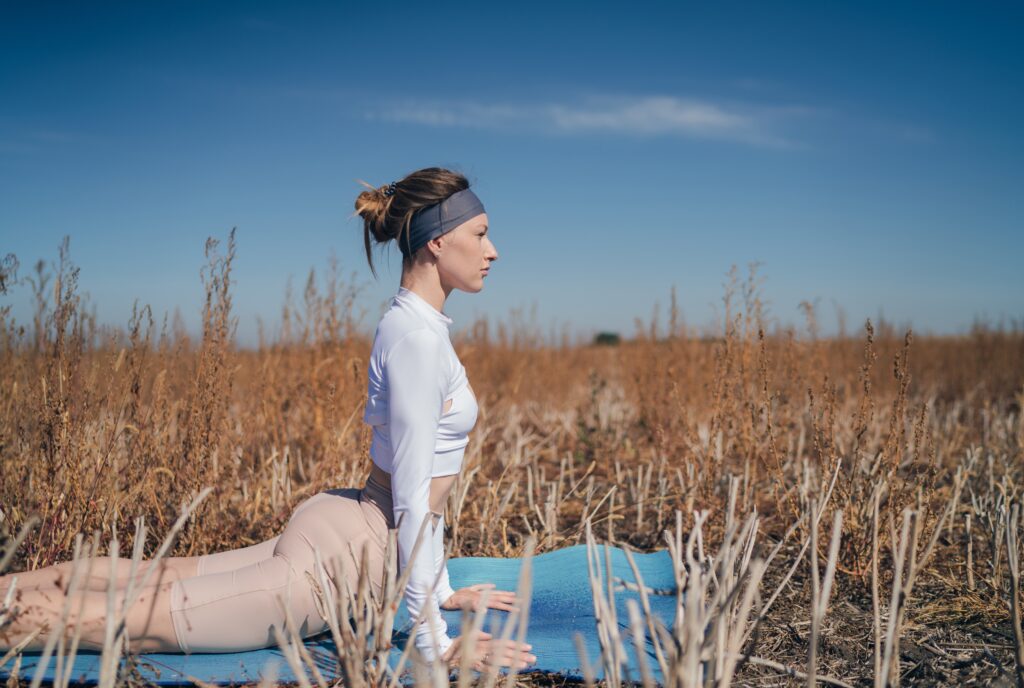
| Swan prep & prone back extension | Bridge: lift the hips with a neutral spine, don’t roll up bone by bone | Roll-up & roll-over |
| Swimming (lying face down, prone) | Single-leg stretch: keep your head down on the mat | Teaser & jackknife |
| Bird dog on hands & knees | Side bend: small range only | The hundred with head lifted, ab curls & crisscross |
| Side-lying leg series & clams | Spine twist: sit tall, turn gently, no forward lean | Spine stretch forward & the saw |
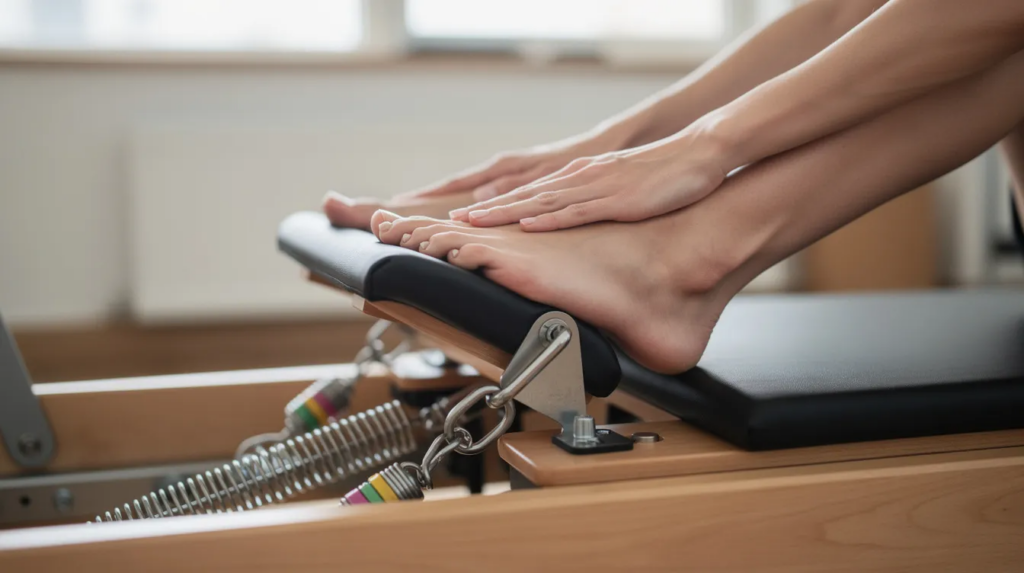
| Footwork on the reformer | Planks: from the knees or on forearms | Rolling like a ball & open leg rocker |
| Seated arm work sitting tall | Leg circles: smaller circles | Toe touches & deep forward bends |
If you’ve had a vertebral fracture or your T-score is very low, ask your doctor which group you’re in before class, & tell your instructor before you start. An instructor used to teaching pilates to people with osteoporosis will offer you an alternative without fuss.
A quick self-check for osteoporosis sufferers before your next class
- Know your numbers: your T-score, & whether you’ve had any fracture since 50. Fracture history matters more than the number.
- Wall test: stand with your heels & bottom against a wall. Can the back of your head touch the wall without tipping your chin up? If not, focus on back extension & posture work.
- Balance test: stand on one leg next to your kitchen counter. Under 10 seconds means balance training is a priority.
- Forward bend check: if bending to pick something up already hurts your back, skip all flexion until you’ve been checked.
My best pilates exercises for balance training & posture, with sets & reps
Do these 2-3 times a week as a short workout at home, with no equipment except a mat. They should feel like steady effort in your muscles, not pain in your spine.
- Prone back extension (swan prep): lie face down, forearms on the mat, lift your head & chest a few centimetres. 2-3 sets of 8, hold 2-3 seconds. Easier: just lift your head. Harder: arms by your sides.
- Neutral-spine bridge: 2-3 sets of 10. Easier: a smaller lift. Harder: hold for 3 seconds at the top, or march one leg at a time.
- Bird dog: 2 sets of 6-8 each side, hold 3 seconds. Easier: move only an arm or only one leg. Harder: a light ankle weight.
- Side-lying clams & leg lifts: 2 sets of 12 each side, for the hips. Harder: add a band.
- Standing balance: on one leg by the counter, 3 holds of 20-30 seconds each side. Harder: turn your head slowly side to side.
Add resistance training: the strength work pilates can’t give you
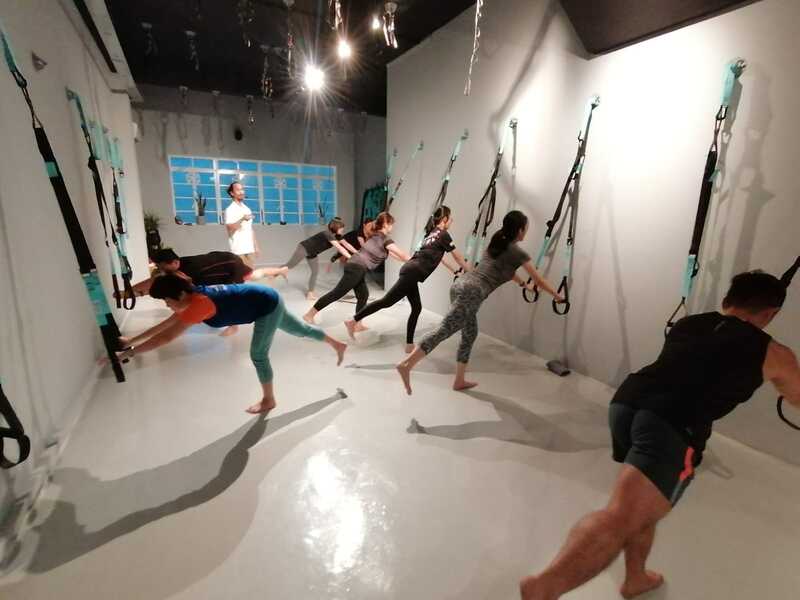
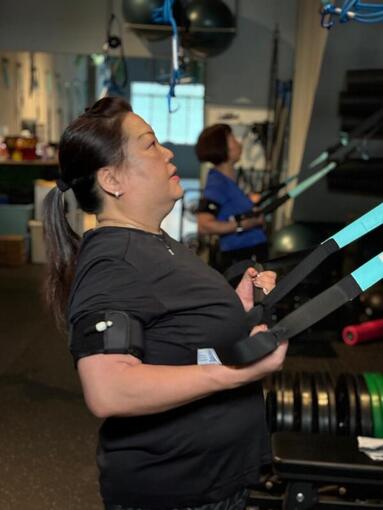
Twice a week, add simple resistance training: sit-to-stand or goblet squats (3 sets of 8-10), step-ups on a sturdy step (2 sets of 8 each leg), band or cable rows (3 sets of 10) & wall push-ups (2 sets of 10). Build the weight slowly. If your doctor agrees, add heel drops: rise onto your toes & drop onto your heels, 2 sets of 10. Walk most days, & in Singapore take the HDB stairs or the MRT stairs instead of the escalator when you can; that’s weight bearing exercise for free. Walk early in the day to avoid the heat.
What to avoid in physical activity outside class
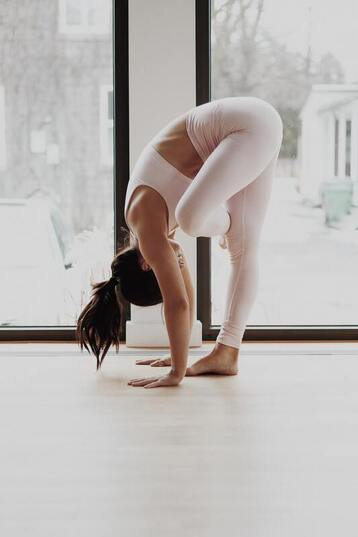
Bending forward to lift with a rounded back, sit-ups, toe touches & twisting to reach while you hold something heavy. Hinge at the hips instead. Staying active is still your friend; it’s the shape of the movement that counts.
Red flags: see a doctor first
See a doctor before you exercise if you have sudden new back pain after a minor bump, lift or cough, you’ve lost height, your upper back is curving forward more, you’ve had a fall with pain, or you have pain at night or at rest. If you’re at high risk, your doctor will also talk to you about osteoporosis treatment, medication, calcium, vitamin D & nutrition, & whether you have other medical conditions that change your exercise programme.
What to do this week
| Day | What to do |
|---|---|
| Mon | Pilates class: tell your instructor about your bones; swap any flexion move for a keep move |
| Tue | Strength: sit-to-stand, rows, wall push-ups, step-ups |
| Thu | Pilates or the 5 exercises above at home, 20 minutes |
| Fri | Strength again; add a little weight if Tuesday felt easy |
| Every day | Walk 20-30 minutes & take the stairs when you can |
If you’d rather have someone guide you
If you’re not sure which moves are safe for your bones, my team of sports medicine trainers at MSMC can help, including a trainer with a physiotherapy background. We start with a $190 full assessment: we look at your scan results & fracture history, test your posture, balance & strength, & build personal training that adds the bone loading pilates misses. We don’t diagnose, & we’ll tell you if you should see your doctor first.
Prefer to start with a class? Use my code READ10 for 10% off one class at MSMC (once per person). Book on MSMC’s class schedule, pick a class, enter READ10 at checkout & let the trainer know about your bones.
Worried about a fracture, or don’t know where to start? This is for you
It’s normal to feel scared after a bone scan, especially if your mother broke a hip. But doing nothing is the riskier choice: weaker muscles & poorer balance make falls more likely. Here’s what happens if you come to us:
- Book the full assessment or message MSMC with your questions first.
- We listen: your scan, your history, what you enjoy (keep your pilates!) & what scares you.
- We test gently: balance, posture, how you bend & lift, & your strength.
- You get a clear plan: what to keep, what to skip, & the strength work to add, with guidance every session until you feel confident.
FAQs
Is pilates good for your bones?
Pilates is good for the muscles & balance that protect your bones, & it may help bone a little. To build bone, add progressive resistance training & weight bearing activity.
What exercises should I avoid if I have osteoporosis?
Loaded or repeated forward bending (sit-ups, roll-ups, toe touches), deep twisting, & lifting with a rounded back. Ask your doctor about high-impact jumping if you’ve had a fracture.
Is reformer pilates safe for osteoporosis?
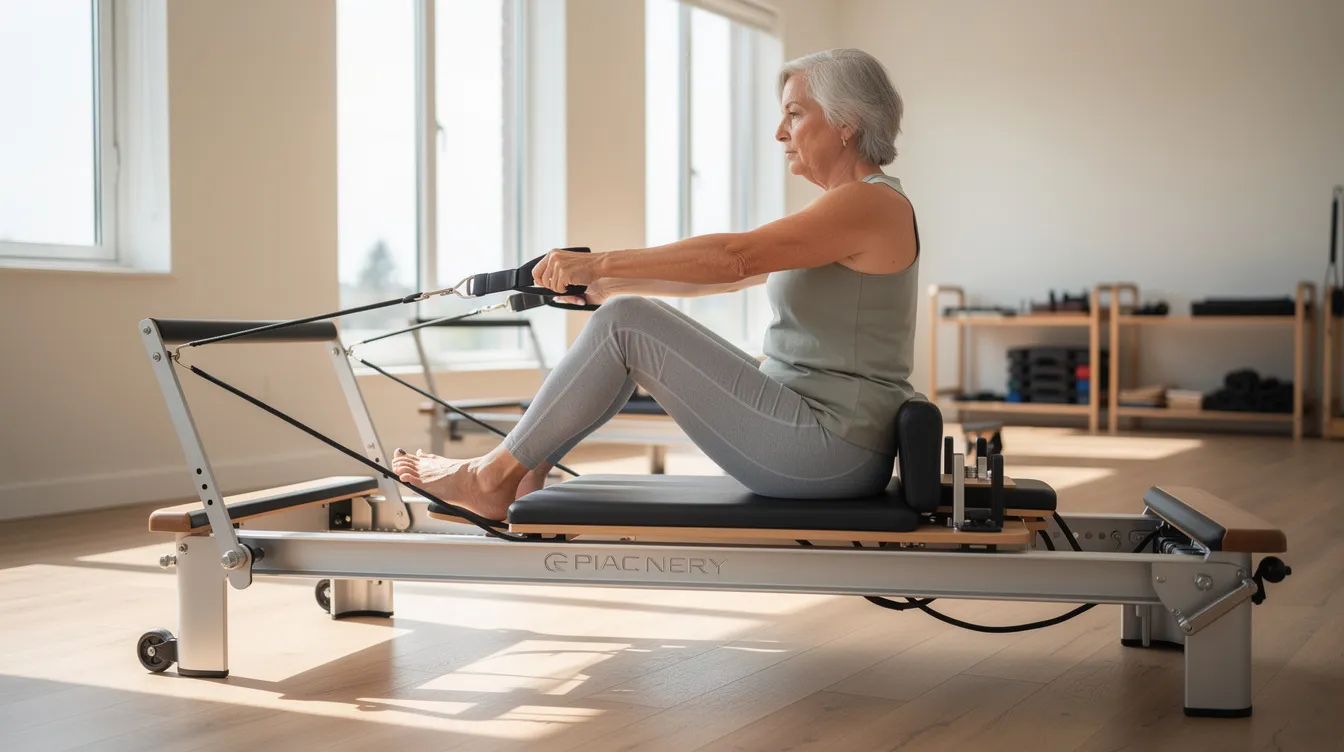
Generally yes, with the same rules: keep your spine neutral, skip the rolling & curling moves, & tell your instructor. The springs add useful resistance for your legs & arms.
What are the best exercises for people with osteoporosis?
A mix: strength training (squats, step-ups, rows), balance training such as single-leg stands or tai chi, back extension work, & walking. Yoga can help balance too, but skip deep forward folds & twists.
Are there any downsides to pilates?
The main downside is that classic mat classes include lots of spinal flexion, & group classes move fast. Choose an instructor who adapts, & don’t rely on pilates alone for bone health.
Is it too late to start at 60?
No. Muscles & bones respond at any age. Start light, progress slowly, & get guidance if you’ve had a fracture.
Should I tell whoever is teaching pilates that I have osteoporosis?
Always, before class: your T-score, any fracture & any medication. A good instructor will pay special attention to your spine, swap the flexion movements & keep the rest of the class the same for you.
My verdict
Pilates is good for osteoporosis when you keep the extension, balance & hip work, & skip the curling & twisting moves. It’s not enough alone for bone density, so give your week a 50/50 split: pilates for posture & balance, weights for bone. If you’re unsure where your body sits, get assessed before you guess.
Book your $190 full assessment at MSMC