A good kettlebell certification in Singapore should teach you to coach people, not just to lift. That means assessment before load, a whole lot of time on the swing, clear progressions & regressions, safe technique for the clean, press & squat, and a real test of your coaching at the end. If a kettlebell course only teaches you a workout, it’s a class, not a certification.
By Jab, founder of the Integrated Training Institute (ITI) & Movement & Sports Medicine Centre (MSMC) in Singapore. Last updated 21 November 2026.
Key facts: ITI’s Certified Kettlebell Coach (CKC)
- Level 1: 16 hours over 2 days; no prerequisites
- Day 1: the swing, from assessment & trajectory to progressions, regressions & corrections
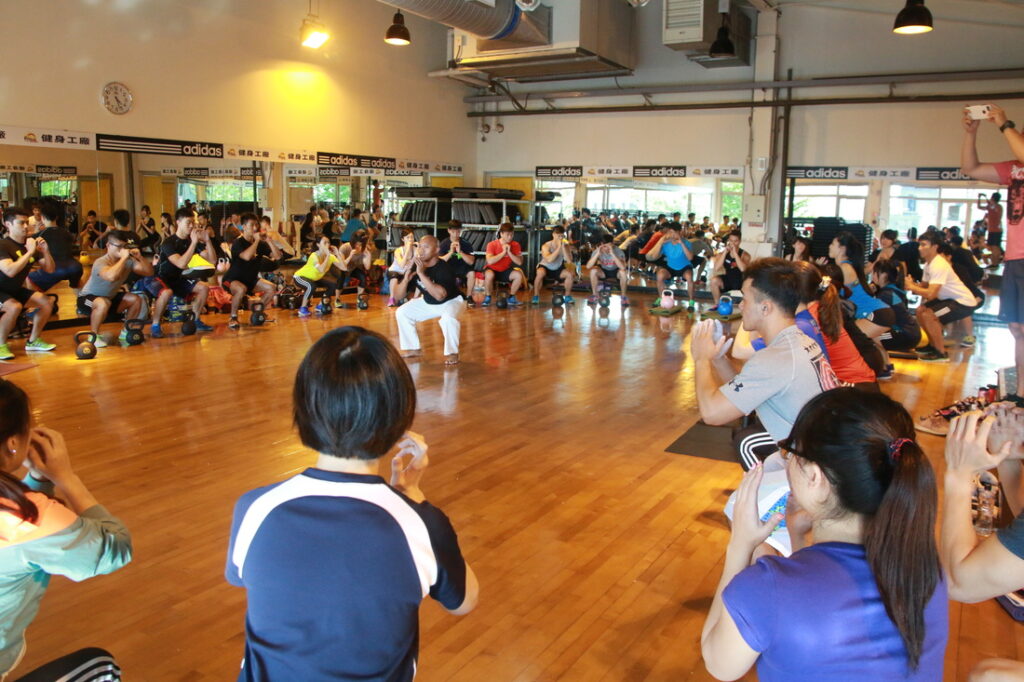
- Day 2: rack, clean, press, squat, breathing, force absorption, load distribution & warm-up specifics
- Testing: separate from the course, a booked one-hour slot online or in person, within three months, maximum two attempts
- Test bell: 8kg for women, 16kg for men
- Level 2: needs CKC Level 1; 16 hours over 2 days of snatches, windmills, Turkish get-ups, clean & jerk, hard style & GS (kettlebell sport)
- Credentials: CKC I & CKC 2, plus a listing on ITI’s CKC locator after Level 1 testing

Why I care about kettlebell certification
Kettlebells have been part of my coaching for a long time, and I teach kettlebell coaching to trainers through ITI, the institute I founded in 2010. The kettlebell is one of the most useful pieces of equipment a coach can own. It’s small, it builds strength, power & conditioning, and it teaches the body to move as one unit.
The kettlebell is also easy to teach badly. A swing that’s really a squat, a press with the shoulder shrugged up, a clean that bangs the forearm every rep. None of that is the client’s fault. It’s the coach’s. Good kettlebell technique has to be taught, effectively & patiently. That’s why I think the certification you choose matters more than the brand on the certificate. If you’ve searched for a kettlebell certification in Singapore, you’ll have seen a range of options from all over the world. Use what follows to sort them.
What kettlebell training does for clients
Before the checklist, a word on why it’s worth the effort. The benefits of kettlebell training are the reason so many personal trainers & instructors want to teach it well:
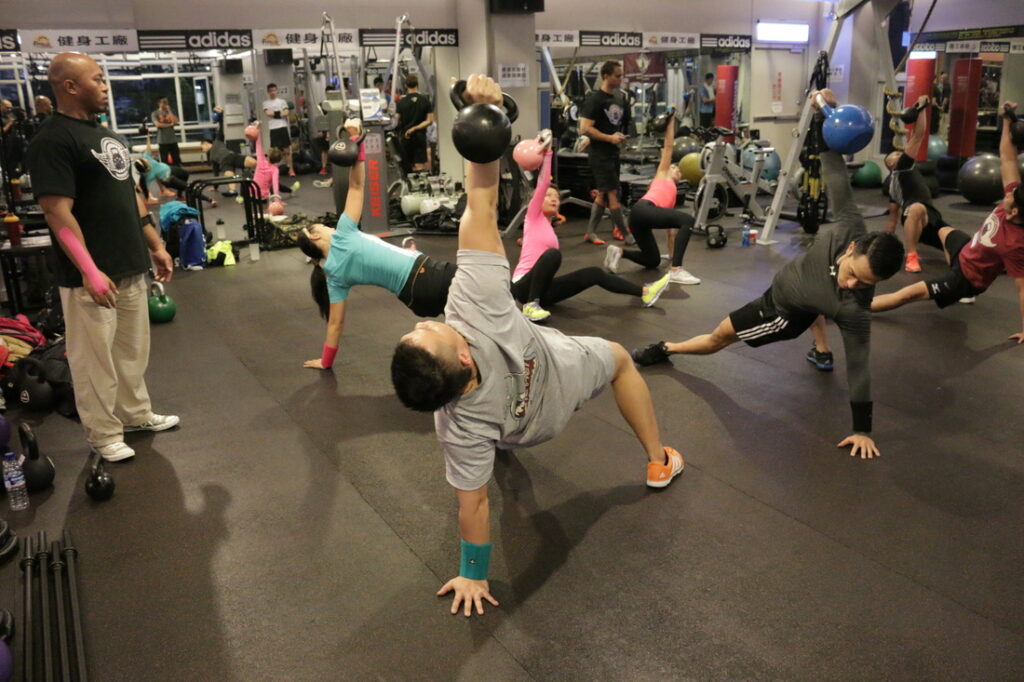
- Strength & power in one tool. Swings, cleans & snatches train the hips to produce power, while presses & squats build strength.
- Mobility & stability together. Get-ups & windmills ask the body to move through a full range while staying stable.
- Balance & coordination. Single-arm work challenges the whole body to stay balanced.
- Muscle mass & conditioning. With sensible weights & volume, kettlebell workouts build muscle & fitness in a short session.
- Versatility. One bell can serve a beginner’s first lesson, an athlete’s power work & a client’s long-term health.
None of those benefits arrive if the kettlebell technique is poor. That’s the coach’s job.
What a good kettlebell certification should teach
Here’s my checklist. Use it to judge any kettlebell course in Singapore or anywhere in the world, and to decide whether it’s comprehensive enough for the clients you train.
1. Assessment before load
Before a client swings, you should know whether they can hinge, how their hips & spine move, and which style of lifting suits their body. A good course teaches assessment protocols, not just exercises. Ours starts with assessments prior to swings, because the right kettlebell movements depend on the body in front of you, and on its mobility & stability.
2. Serious time on the swing
The swing is the foundation of kettlebell training. If you can’t teach a swing, you can’t teach a clean or a snatch, and you can’t build safe kettlebell movements on top of it. In our Level 1, the whole first day is the swing: mechanics, trajectory, progressions, regressions, corrections, single-arm swings, and the biomechanics of swings in different individuals.
3. Progressions, regressions & corrections
Every client needs a different entry point. Beginners, older adults, athletes & people coming back from injury all start in different places. A certification should give you variations & progressions for every major lift and the ability to step a client up or down on the spot. That’s how you create kettlebell exercises that fit each client.
4. The basic kettlebell movements, done safely
Rack, clean, press & squat. Day 2 of our Level 1 covers the rack position & its alignment, the clean, load distribution for the press, shoulder mechanics, kettlebell squats, breathing techniques & force absorption.
5. Coaching skills, not just lifting skills
Can you coach one person? Can you coach a group of fifteen effectively, at their own pace, without losing anyone? Can you explain what you see? Good teaching methods are what clients pay for, and demonstrating a lift well is only half of it. The other half is seeing what the client’s body is doing & correcting it.
6. A real test
Watching a course isn’t the same as passing a standard. A good kettlebell certification tests your kettlebell technique & your coaching, and lets you fail & try again. Without a test, there’s always some doubt about what the certificate means.
How ITI’s CKC Level 1 is built
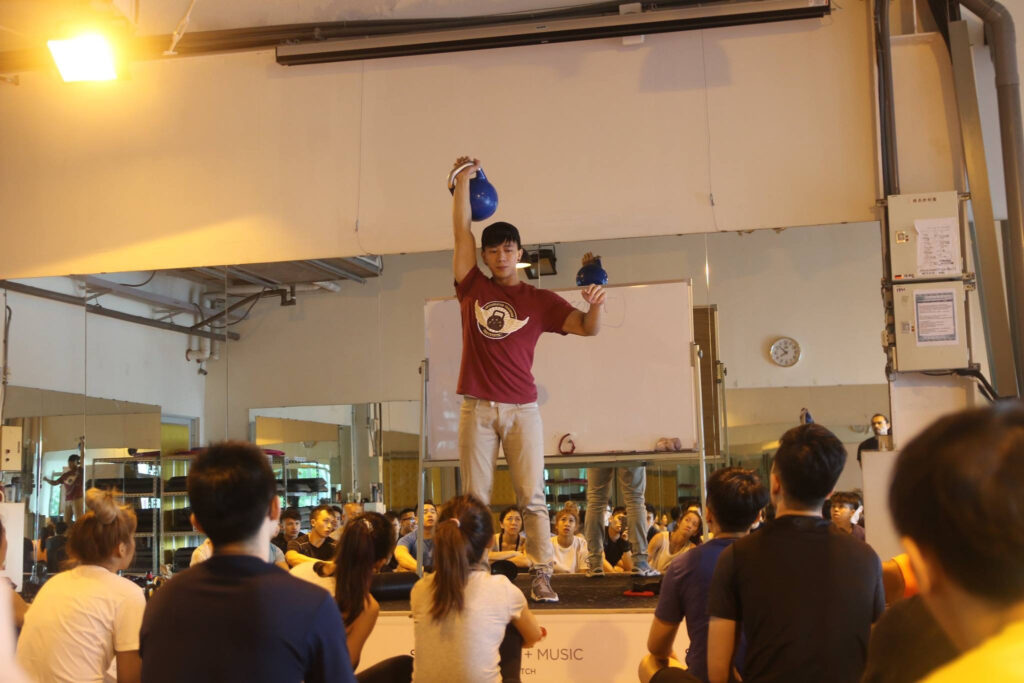
I’ll be specific, because vague course pages are one of my pet hates. CKC Level 1 is a practical based class over two days, 16 hours in total, with no prerequisites. It’s open to physiotherapists, exercise specialists, rehab specialists, strength & conditioning coaches, personal trainers, group instructors, chiropractors, medical practitioners, fitness enthusiasts, firemen, policemen, army & CrossFit coaches.
What students receive: the CKC manual & a certificate of completion. The course materials also cover professional development, guidance on ethics in coaching, a business approach to fitness, and integrating kettlebells for clinical use in rehab settings. In other words, it’s built for fitness professionals who want kettlebell knowledge they can use for the rest of their working life, not just a weekend. The aim, in the course page’s words, is a graduate who can design “a safe and effective programme for personal training, small group training, boot camps and team building training.”
Testing is kept separate from the course on purpose. That way every hour of the two days goes into teaching & practice, and you prepare for the test at your own pace afterwards. You book an hour with a tester online or in person, within three months of the course. You get a maximum of two attempts; after that you re-sit the course.
To complete the certification & graduate, you need to:
- pass a circuit-based drill;
- show individual & group coaching evaluation skills;
- explain & demonstrate coaching skills, with strong participation;
- show efficiency & safe technique in kettlebell training;
- show proper exercise correction in common techniques;
- regress & progress efficiently.
The test bell is 8kg for women & 16kg for men. On successful completion of the course & testing, you earn CKC I and a listing on the CKC locator. As the course page puts it, it’s “not always about being strong first.”
Kettlebell certification Singapore options: a quick map
Kettlebell courses range from short foundational workshops to advanced, multi-level certifications. Some are online, some are a practical based class in person. Some offer continuing education credits that help fitness professionals keep other certifications current, and some courses in Singapore can be paid partly with SkillsFuture Credit. Ask each provider exactly what applies, and check the CKC course pages for ours.
Whatever the format, the content should cover both ballistic lifts (swings, cleans, snatches) and slower grinds (presses, squats, get-ups), with unilateral & bilateral work. Employers in fitness tend to look for recognised credentials, but in my experience what keeps you employed is how well you coach.
CKC Level 1 vs Level 2: a comparison
| CKC Level 1 | CKC Level 2 | |
|---|---|---|
| Prerequisite | None | CKC Level 1 |
| Length | 16 hours, 2 days | 16 hours, 2 days |
| Main lifts | Swing, single-arm swing, rack, clean, press, squat | Snatch, windmill, Turkish get-up, clean & jerk, jerk |
| Styles | Fundamentals of kettlebell training | Hard style & GS (kettlebell sport) |
| Coaching focus | Assessment, corrections, programming for PT, small groups & boot camps | Breaking down complexes, applied functional movement assessment, programming for sport, martial arts, athletes & rehab |
| Students receive | CKC manual, certificate | CKC manual, certificate, student T-shirt |
| Testing | Separate, within 3 months, max 2 attempts | Separate, within 3 months, max 2 attempts |
| Credential | CKC I | CKC 2 |
Which personal trainers & instructors should take a kettlebell course?
In my experience, kettlebell certification is most useful for:
- Personal trainers who want a versatile tool for strength, power & conditioning in a small space, and a system for functional training with one piece of equipment.
- Group instructors running fitness classes & boot camps, who need to coach many bodies at once.
- Rehab & exercise specialists who want loaded functional training that respects mobility, stability & balance.
- Fitness enthusiasts who train seriously and want to master the technique properly before they teach anyone.
- Strength coaches & other instructors who want to develop their expertise in power work for athletes.
When to step up to Level 2: once your swing, clean & press are solid under the test standard and you can coach them to a group without thinking. Level 2 is for coaches ready to master the snatch, windmill, get-up & jerk, plus their variations, and who want to understand both hard style & kettlebell sport.
How to prepare for a kettlebell course
You don’t need to be an expert to start Level 1, but a little practice makes the two days easier. Here’s what I’d tell any fitness enthusiast or trainer to do first, so you get the most from the two days:
- Practise the hinge. If you can hinge at the hips with a flat back, the swing comes much faster.
- Get used to the volume. There’s a lot of swinging, so build some grip & conditioning in your own workouts first.
- Bring your coaching questions. Think of the clients you find hardest to teach. Those are the best case studies.
- Plan time for testing. Testing happens after the course, within three months. Book it while the knowledge & the manual are fresh.
It’s a challenge, and it should be. That commitment is what separates a coach with real expertise from someone who did one workshop.
Red flags when choosing a kettlebell course
- No assessment. If the first thing you do is a workout, the course is teaching workouts, not coaching.
- One style for everyone. Different bodies & goals need different approaches.
- No regressions. Beginners & clients with a history of back pain need a safe way in.
- No test, or a test you can’t fail. Then the certificate means attendance, not ability.
- No support afterwards. Materials, a manual & a way to ask questions matter once you’re using your new skills with clients on your own.
One safety note I give every trainer: kettlebell exercises suit most healthy people, but anyone with sharp pain, numbness, a recent injury or a health condition they’re unsure about should see a doctor first. Coaching around pain is a separate skill for trainers & instructors, and it’s part of why I built a sports medicine pathway for trainers (right now an invite-only intern intake: you register your interest rather than sign up). I explain that side in what a sports medicine personal trainer does.
What about kettlebell training classes?
If you don’t want to coach & just want to learn to train with kettlebells, a class is the better place to start than a certification. MSMC has a guide on finding a good kettlebell training class in Singapore.
And if kettlebells lead you to other circular & flowing tools, I’ve also written about Indian club certification for trainers.
My verdict
For personal trainers, fitness instructors & students, a good, comprehensive kettlebell certification teaches you to assess, to coach the swing until it’s second nature, to progress & regress every lift, and then makes you prove it, so your clients get the benefits safely. That’s the standard I hold ITI’s CKC to, and it’s the standard I’d hold any course to. Develop the skills, build the knowledge, practise until you’ve mastered the fundamentals, and the confidence with clients follows.
For the next intake, dates & pricing, or to ask whether Level 1 or Level 2 suits you, enquire about this course on the ITI course page. Level 2 details are on the CKC Level 2 page.
FAQs about kettlebell certification in Singapore
How do I become a certified kettlebell instructor?
Choose a kettlebell course that tests your coaching, complete it, practise, then pass the test. With ITI’s CKC, you attend the 2-day Level 1 course, then book a one-hour test within three months. Passing earns CKC I.
Do I need experience before a kettlebell certification?
Not for Level 1. There are no prerequisites. It helps to have done some kettlebell training, because there’s a lot of swinging over the two days. Level 2 needs CKC Level 1.
How much does a kettlebell certification cost?
It depends on the course & level. I don’t list pricing here because it can change. The current fees for the course & the separate test are on the ITI course page.
What weight do I need for the test?
For CKC Level 1, the test bell is 8kg for women & 16kg for men.
Can I fail the kettlebell test?
Yes, and that’s the point of a real test. You get a maximum of two attempts within three months of the course. If you don’t meet the graduation requirements, you re-sit the course before testing again.
What’s the difference between hard style & GS kettlebell?
They’re two approaches to kettlebell lifting. Hard style focuses on maximal tension & power per rep; GS (kettlebell sport) focuses on efficiency over many reps. CKC Level 2 covers both, so you can teach the differences.
Is kettlebell training good for beginners?
Yes, with good coaching. Kettlebell training suits beginners when they get assessment, a light bell & regressions. That’s exactly what a good kettlebell certification teaches coaches to give them.
What’s the refund policy?
Please read ITI’s course policies before you register: https://www.itigrad.com/course-policies.html