Yes, a cupping therapy course is worth it for trainers & therapists who already work hands-on with people & want a simple, portable tool for tight, sore tissue, as long as it’s a clinical, hands-on course that teaches safety as well as technique. It isn’t worth it if you’re hoping cups will replace good training or assessment, or if you won’t use them every week. Learned properly, cupping is a useful add-on; learned from videos, it’s mostly marks on a back.
By Jab, founder of the Integrated Training Institute (ITI) & Movement & Sports Medicine Centre (MSMC) in Singapore. Last updated 21 November 2026.
Key facts: ITI’s Cupping Therapy Clinic (CTC)
- Length: 3 days (20 hours) with more than 6 participants, or 2 days (14 hours) with fewer than 6
- Approach: a clinical approach, with both the Eastern & Western views covered
- Cups: plastic & medical grade silicone
- Covers: types of cups & how to choose them, mechanics & principles, the physiology of suction on the body, handling & techniques, treatment & prognosis, modifying techniques, kinetic chain release, practitioner positioning & common mistakes
- Before you come: gross anatomy knowledge helps but isn’t compulsory
- You receive: a plastic cup set (about 20 pieces), an exclusive price on silicone cups & a certificate of participation
- Credential: CTC
- Course information: dates & fees are on the course page

My short answer, as someone who teaches it
I’ve coached & taught for more than 20 years, and I founded ITI in 2010 to train fitness professionals & therapists in Singapore & abroad. I also run MSMC in Singapore, where I see what clients respond to week after week. Cupping is one of the tools I teach & use, so I’m not neutral about it. But I’ll give you the same answer I give anyone who asks me after a class: it depends on who you work with & what you’ll do with it.
It’s worth it when:
- You already do hands-on work, or you work with clients who come to you sore, stiff or recovering.
- You’ll practise between sessions until your hands know the pressure.
- You see it as one tool inside a plan that includes movement & strength.
If those aren’t true yet, wait. Spend the money on your coaching basics first. A cupping therapy certification on its own won’t bring you clients; what you do with it every week will.
What cupping therapy is, and what it isn’t
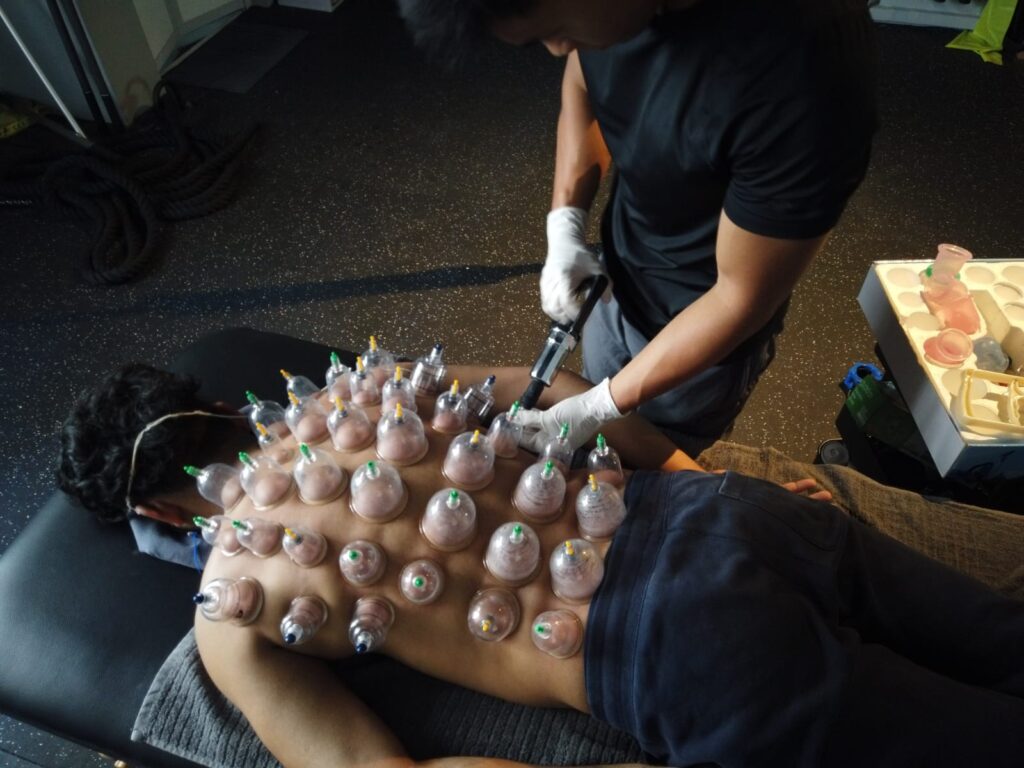
Cupping therapy uses suction to lift the skin & the tissue under it, instead of pressing down like massage. The cups can stay still (static) or glide over oiled skin (moving). Traditional Chinese medicine has used it for a very long time, and today you’ll see it in physiotherapy, sports & massage clinics too. In our clinic we use two kinds of cups: plastic cups with a hand pump, & silicone cups you squeeze. Silicone cups are light & take up little space in a kit bag, which makes them handy for mobile work. Some practitioners also use cups while the person moves, to work on range of motion.
What it isn’t: a cure, a detox or a replacement for diagnosis. The research is mixed. Some studies suggest short-term relief for muscle pain & neck or back pain, but many are small, and it’s hard to run a “fake cupping” comparison. So I teach it honestly: it can help someone feel looser & more comfortable, which can make the training that follows easier. That’s a good reason to use it. It’s not a reason to promise anything.
What you learn on a clinical cupping course
ITI’s clinic takes a clinical approach. You’re taught basic, fundamental techniques you can use straight away, and how to use the vacuum to work on restrictions, pain & range of motion as part of a wider plan. The course page describes an immersion in plastic & silicone cups that teaches their mechanics alongside the physiology of the body, with both the Eastern & Western approach. In practice, here’s what that covers:
- Introduction to cupping & types of cups: how to choose them, and the anatomy of a cup.
- Cupping mechanics & principles: how much suction, for how long, & why.
- The physiology of cupping on the body.
- Handling & techniques: the different techniques you’ll use alongside your current practice.
- Treatment & prognosis, and how to assess someone in line with cupping protocols.
- Modifying techniques & positioning for the person in front of you.
- Kinetic chain release: working along the chain, not just on the sore spot.
- Practitioner positioning, so you look after your own body too.
- Common mistakes that practitioners repeat without realising.
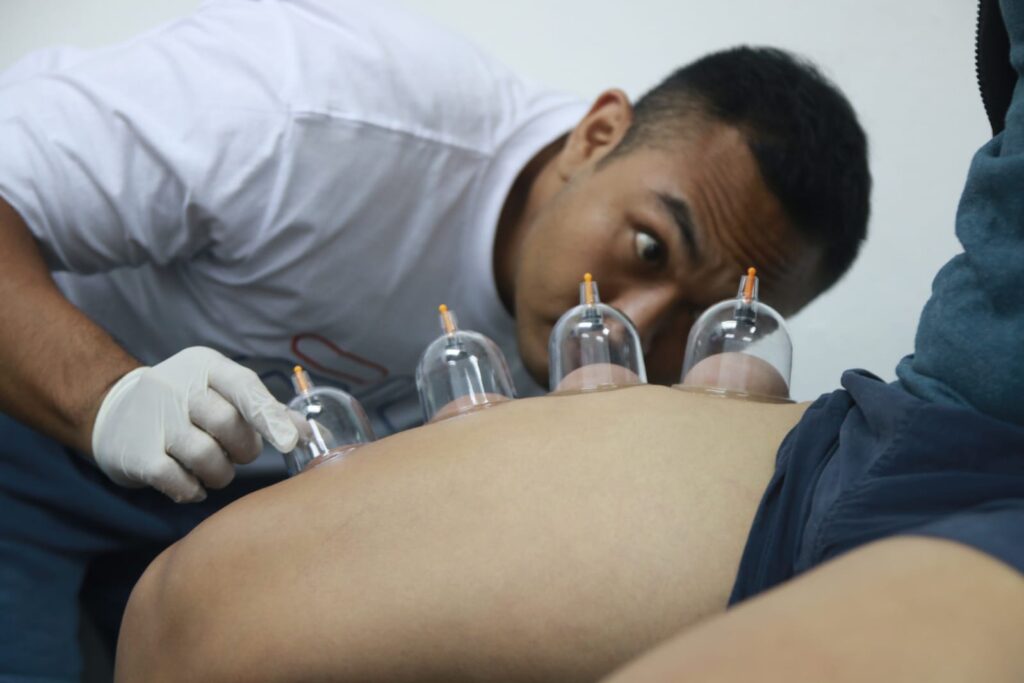
The practical work runs through every session, so you build the knowledge in your hands, not just in your notes. You practise on most of the body, from the plantar fascia, calves & hamstrings to the back, ribs, shoulders & forearms. Wear sports shorts & a sports top, because you’ll be working on areas like the thighs, glutes, chest & ribs.
How I teach cupping safely
Good cupping therapy training is mostly hands-on, and ours gives you plenty of practice so you leave confident. If you want to learn cupping therapy properly, these are the three things I care most about:
- Screen first. Ask about health conditions, medication & skin before any cup goes on.
- Less suction than you think. Most beginners pull too hard & leave cups on too long.
- Re-test & move. Check the movement that bothered them, then get them moving. The cups open a window; training uses it.
As a general rule, don’t cup over broken or irritated skin, a fresh injury, varicose veins or areas of unexplained swelling, and get a doctor’s advice first for anyone who’s pregnant, bruises easily, takes blood-thinning medicine or has a medical condition you’re unsure about. Get these fundamentals right first. A note on marks: tell clients about them before you start. They’re common, usually fade within days, and some people don’t want them before an event or a holiday.
Is it worth it for personal trainers?
For many personal trainers, yes, with one condition: you stay within your scope. Personal trainers are on the list of people the clinic is for. Used before a session, a few minutes with the cups on tight calves, hips or upper back can help a client feel ready to move. Used after, it can be part of a cool-down. What it shouldn’t become is the session. Clients pay a trainer to get stronger & move better. If they have pain you can’t explain, see a doctor first, then work alongside their physio.
Is it worth it for therapists?
For physiotherapists, massage therapists, osteopaths, chiropractors & other manual therapists, this course is often the easier decision. If you’ve already done a manual therapy course, you have the assessment skills, the anatomy knowledge & the hands-on time with clients, so cupping therapy slots straight into what you do. It gives you another way to work on soft tissue that’s gentle on your hands, works on larger areas, and is easy to carry to a client’s home or a sports event.
Which therapy course first: cupping, IASTM or kinesiology taping?
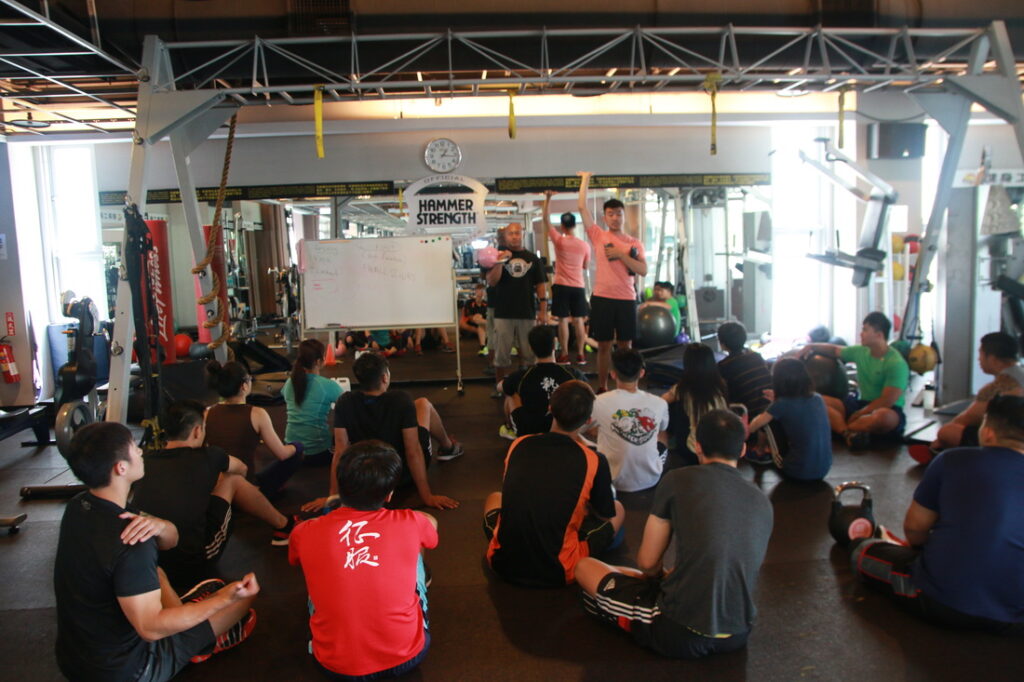
Trainers often ask me which hands-on course to start with. Here’s an honest comparison of three short courses I teach through ITI.
| Course | Length | Before you come | What you take home | Feels like | Best first choice if… |
|---|---|---|---|---|---|
| Cupping Therapy Clinic | 14-20 hours (2-3 days) | Gross anatomy helps, not compulsory | A plastic cup set (about 20 pieces) & a certificate of participation | Suction lifts the tissue | You do hands-on recovery work & want a portable tool |
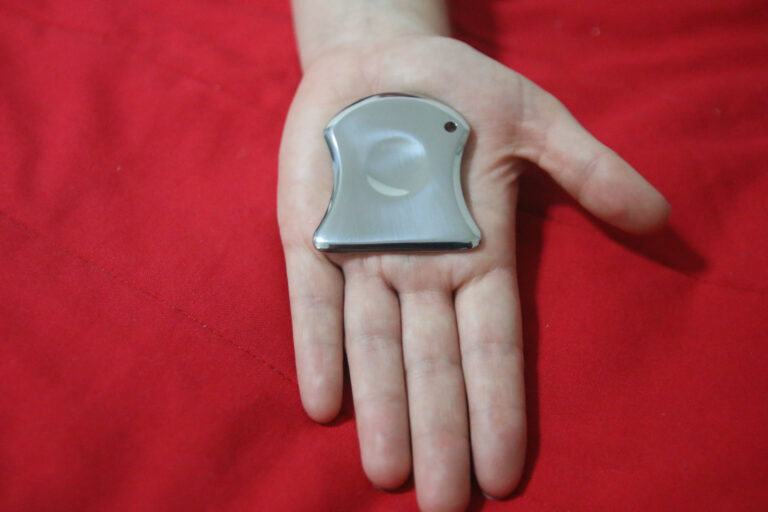
| IASTM Clinic | 16 hours | Gross anatomy helps | IASTM Practitioner Certificate & e-manual | A steel tool scans & treats the tissue | You want to find & treat restrictions more precisely |
| Kinesiology Taping Clinic | 14 hours (2 days) | None | An e-certificate & an ebook | Tape supports while the client moves | You’re a trainer starting your first hands-on skill |
If you’re a personal trainer with no hands-on experience, I’d usually start with taping: I explain why in is a kinesiology taping course worth it for personal trainers? If you already do soft tissue work, cupping is a good next step. And if you’d like all of these inside one pathway, cupping, IASTM & taping are all methods within ITI’s Sports Medicine Trainer certificate, which I cover in what a sports medicine certificate adds to a personal trainer’s career.
What to check before you book a cupping course in Singapore
There are many options in Singapore, from traditional practice to clinical & sports work. Ask for this information before you pay:
- Is it dry cupping only, or does it include wet methods? (Ours is dry, with plastic & silicone cups.)
- How much of the time is hands-on, and how many people per instructor?
- Are screening & contraindications taught & practised?
- Do you keep a set of cups, and which kind?
- What do you receive at the end, & is it a participation or a practitioner award?
- Who is the course for, and does that include your profession?
If you live in Singapore & want help for your own aches rather than a course, MSMC’s guide to choosing a personal trainer for joint pain & injury recovery is a good place to start.
So, is a cupping course worth it?
For therapists, usually yes. For trainers who work with sore, stiff or recovering clients & will use it every week, yes. For a new trainer still learning to coach the basics, not yet. Whichever you are, choose a clinical, hands-on course that teaches you when not to cup as clearly as how to.
To see the next dates & fees, or ask whether it suits your work, enquire about this course on the ITI Cupping Therapy Clinic page, or contact ITI through that page. If you’re outside Singapore, ask there too: ITI has taught courses abroad.
FAQs about cupping courses
How long does a cupping course take?
It varies by provider, from a single day to several days. ITI’s clinic is 3 days (20 hours) when there are more than 6 participants, or 2 days (14 hours) when there are fewer than 6.
Do I need experience before the course?
No. Gross anatomy knowledge helps but isn’t compulsory; a short introduction to anatomy beforehand helps you get more from the details. Trainers, therapists & medical practitioners all attend.
Can personal trainers do cupping?
Personal trainers are among the people the course is designed for. Use it within your scope, screen every client, and send anyone with unexplained pain to a doctor first.
Do the cupping marks hurt?
Usually not. The round marks are common & tend to fade within days. Tell clients before you start, and use less suction if they’re worried.
What cups are used on the course?
Plastic cups with a pump & medical grade silicone cups. You receive a plastic set of about 20 pieces, and participants get an exclusive price on silicone cups.
Can I use it with clients straight after completion?
The clinic is designed so you can start applying the basic techniques the next day. Start with simple, low-suction applications on people you know well, screen everyone first, & build up as your confidence grows.
Is there a downside to cupping?
Yes, a few. Cupping therapy leaves round marks, can bruise or irritate sensitive skin, and isn’t suitable for everyone. The evidence is still mixed, so it shouldn’t replace assessment or exercise.
Do I have to be certified to do cupping?
The rules depend on your profession & where you work, so check your own scope of practice & your insurance. Either way, proper hands-on training before you cup clients is the safe & professional choice.
Can I do cupping therapy myself?
Simple self-cupping with silicone cups on areas you can reach, like the forearms or calves, is possible once you’ve learned safe technique. For anything more, or if you have a medical condition, see a trained practitioner.
What comes out when you do cupping?
With dry cupping, nothing comes out. The suction draws blood towards the surface of the skin, which is what leaves the round marks. They aren’t “toxins”, and I don’t teach it as a detox.
Does cupping pull out knots?
No. It doesn’t remove anything. It can help a tight area feel looser & more comfortable for a while, which is a good moment to get the person moving.
How do I become a cupping therapist?
Most people add it to a qualification they already have, such as physiotherapy, massage or personal training. Take a hands-on course, practise with feedback, & use it within the scope of your main profession.
Can I learn cupping online?
You can learn the theory online, but suction, timing & positioning are hard to judge without someone watching your hands. ITI’s clinic is a hands-on course for that reason.
What certificate do I get?
On completion, a Certificate of participation in the Cupping Therapy Clinic, with the credential CTC. Note that the graduation requirements are being revised on the course page, so check the details there.
What’s the refund policy?
Please read ITI’s course policies before you register: https://www.itigrad.com/course-policies.html